SAY: The Stuttering Association for the Young launched 'In the Spotlight' in September 2021, a pro-bono BBDO PSA that debuted on NBC's Today show to spark a

The Stuttering Association for the Young Demands America Listen
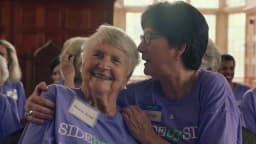
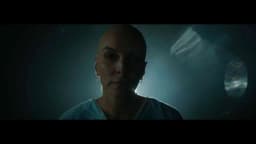
SAY: The Stuttering Association for the Young launched 'In the Spotlight' in September 2021, a 60-second pro-bono public service film created with BBDO New York and directed by Alex Gorosh of Hungry Man, designed to ignite a national conversation in the United States about how listeners can better support people who stutter by giving them the time they need to speak.
The campaign addresses a deeply human communication gap. For the more than 70 million people who stutter worldwide, every conversation can carry the weight of a performance — the sensation of standing in a spotlight, fully aware of what needs to be said but unable to get the words out on demand. SAY, a national 501(c)(3) nonprofit that has served young people who stutter between the ages of 3 and 18 for over 20 years, identified this emotional reality as the foundation for its first major documented public-awareness platform. The objective was not simply to announce SAY's existence but to educate the broader American public on how to listen supportively — a behavioural shift rather than a transactional ask.
The PSA premiered on the third hour of NBC's Today show, reaching a mass television audience across the United States before extending its presence through digital channels under the hashtags #SpacetoStutter and #stutteringawareness. The campaign positioned SAY alongside its core programs — summer camp, regional day camps, speech therapy, and creative arts programming — as an organization committed to the physical, social, and emotional dimensions of stuttering, not merely its clinical definition. 'In the Spotlight' earned a Clapboard Score of 74 out of 100, reflecting strong creative and strategic execution within the public service category.
 ARCHIVE
SAY identified listener behaviour, not stutterer silence, as the central problem the campaign needed to solve. The strategic premise is precise: people who stutter know exactly what they want to say. The barrier is not comprehension or intent — it is the social pressure created when listeners interrupt, finish sentences, or visibly signal impatience. By reframing the audience as the party whose behaviour must change, BBDO and SAY shifted the burden of communication away from the person who stutters and placed it, correctly, on the culture surrounding them.
This positioning distinguished the campaign within a competitive landscape that includes organizations such as the National Stuttering Association, the Stuttering Foundation of America, and the American Speech-Language-Hearing Association, which, according to stutteringhelp.org, represents more than 140,000 audiologists, speech-language pathologists, and speech and hearing scientists across the United States. Where many awareness efforts focus on the clinical or therapeutic dimensions of stuttering, 'In the Spotlight' pursued a social and empathic angle — asking not what people who stutter should do, but what everyone else should do differently.
The choice of a 60-second film format, debuting on a high-reach broadcast platform in the United States, reflected a deliberate effort to reach general audiences who may never encounter stuttering-specific resources. According to the National Association of Broadcasters' public service advertising guidelines, documented via Psa Nab, broadcast PSA placement on major networks carries significant reach advantages for awareness-stage campaigns. SAY's decision to use real members of its own community rather than actors grounded the message in authentic experience, lending the campaign a documentary credibility that scripted alternatives could not replicate.
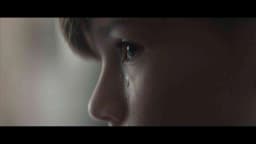
Alex Gorosh directed 'In the Spotlight' for production company Hungry Man. The film places real members of the SAY community in recognisable, high-stakes speaking situations — including a job interview — where the emotional weight of stuttering becomes visible not through dramatic staging but through the unedited, human experience of trying to be heard. The spotlight metaphor is rendered literally and emotionally: subjects appear as if isolated by light and attention, capturing the internal experience of knowing what you want to say while the words resist arrival. The film asks viewers to sit with that pause rather than fill it, making the audience's discomfort itself a teaching tool.
The creative genesis of the campaign carries particular authority. Aaron Marshall, a junior copywriter at BBDO New York who grew up with a stutter, was instrumental in bringing the project to life. As Marshall told Willamette Week in July 2022, he had long hoped that if the opportunity arose to work on something connected to stuttering and a nonprofit in that space, he would pursue it. His personal stake gave the campaign an internal compass that purely external creative teams could not replicate. As Marshall also noted, people from the stuttering community reached out after the PSA launched to say it was gratifying to see themselves represented in the right way — a response that affirms the film's authenticity, as reported by Muse by Clios and shots.
The production was executed on a pro-bono basis, as documented by Muse by Clios, meaning every creative and production decision served the message rather than a commercial brief. The 60-second runtime — a relatively extended format for broadcast PSA — allowed the film to let moments breathe, mirroring its own argument about patience and time. The hashtag #SpacetoStutter functioned as both a campaign identifier and a behavioural instruction, extending the film's core directive into social media language.
The campaign accumulated 13,548 views and 152 likes on its documented digital distribution, reflecting its function as a seeding asset accompanying the broader broadcast premiere rather than a standalone viral play. Its primary performance moment was the debut on NBC's Today show in September 2021, a placement that delivered mass reach across the United States to an audience that includes exactly the general public SAY needed to educate.
According to shots and Muse by Clios, the PSA drew meaningful response from within the stuttering community itself — a qualitatively significant outcome for a campaign whose core objective was representation and behavioural change rather than direct response. Aaron Marshall's account of community members expressing that the work represented them correctly indicates the film achieved a core ambition: credibility with the audience whose lives it depicted.
No independently audited reach, earned media valuation, or clinical behaviour-change data for the 'In the Spotlight' campaign is publicly available. What the structural evidence supports is a campaign that made intelligent use of broadcast premiere placement, authentic casting, and a sharply defined behavioural ask to advance SAY's mission beyond its existing supporter base. For a 501(c)(3) nonprofit with no child ever turned away due to inability to pay, the decision to invest in a pro-bono major-network PSA represents a leverage strategy well matched to SAY's resources and ambitions. The campaign's Clapboard Score of 74 out of 100 reflects the strength of its creative framing, authentic execution, and strategic clarity within the public service category in the United States.
SAY's 'In the Spotlight' is a 60-second public service film launched in September 2021 to raise stuttering awareness in the United States. Created with BBDO New York, it asks listeners to give people who stutter the time they need to speak, using real SAY community members in everyday speaking situations to deliver the message.
Alex Gorosh of production company Hungry Man directed 'In the Spotlight.' The film was produced on a pro-bono basis for SAY: The Stuttering Association for the Young, with creative work by BBDO New York. BBDO copywriter Aaron Marshall, who grew up with a stutter, played a key role in developing the campaign's concept and direction.
The 'In the Spotlight' PSA premiered on the third hour of NBC's Today show in September 2021, reaching a broad United States television audience. The campaign then extended digitally using the hashtags #SpacetoStutter and #stutteringawareness to continue building awareness beyond the initial broadcast placement.
SAY is a national 501(c)(3) nonprofit organization serving young people who stutter, ages 3 to 18, across the United States. For over 20 years, SAY has delivered summer camps, speech therapy, and creative arts programming addressing the physical, social, and emotional impacts of stuttering. No child has ever been turned away due to a family's inability to pay.
The strategy placed listener behaviour, not the act of stuttering itself, at the centre of the problem. BBDO New York and SAY argued that people who stutter know what they want to say and that supportive listening — giving them time without interrupting — is the behavioural change needed. Real SAY community members appeared on screen to anchor the message in authentic experience.
'In the Spotlight' by SAY and BBDO New York received a Clapboard Score of 74 out of 100. The score reflects the campaign's strong creative framing, use of authentic community casting, and clear behavioural ask, positioning it as an effective public service film within the United States nonprofit and social-awareness advertising landscape in 2021.
.webp)
Creative Collaboration Platform: The Backbone of Modern Creative WorkWhat is a creative collaboration platform?Clapboard defines a creative collaboration platform as the operational core for today’s distributed creative teams. This is not a collection of digital collaboration tools stitched together; Clapboard’s system


Understanding the Creative Production MarketplaceWhat is a Creative Production Marketplace?Clapboard defines a creative production marketplace as a structured ecosystem where brands, agencies, and production talent converge to execute video, advertising, and branded content at scale. Unlike the legacy agency or freelanREAD FULL ARTICLE

The Urgent Need for a Creative Production Operating SystemWhy Traditional Creative Production Models Break DownClapboard sees the creative production landscape shifting under pressure. Content velocity is no longer a buzzword—it’s a mandate. Modern advertising demands relentless output across dozens of channels, each wREAD FULL ARTICLE