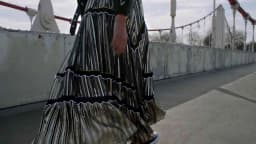
The Survivors Trust and Marvelous launched the Guilty Clothes collection in Russia in 2017, turning a seven-minute fashion show into a social awareness

How The Survivors Trust Used Fashion to Confront Victim Blaming in Russia
The Survivors Trust Guilty Clothes campaign is a 2017 experiential advertising project created by Moscow agency Marvelous in which ordinary clothing worn by sexual assault survivors was presented as a fashion collection to challenge the cultural assumption that victims bear responsibility for attacks against them, produced in Russia and planned for international visibility during London Fashion Week.
The campaign operates on a single, devastating premise. The clothes displayed on the runway were not couture pieces. They were the everyday garments survivors had been wearing at the time of their assaults — the kind of items that, in victim-blaming discourse, are frequently cited as provocation. By presenting these garments under the conventions of a fashion show, complete with runway staging and all the visual grammar the fashion industry uses to confer desirability and meaning onto clothing, the campaign forced audiences to confront the absurdity of that logic directly. The question posed was explicit: can a garment be guilty? The answer, structured into every frame of the seven-minute presentation, was unambiguous.
Published in Russia in March 2017, the campaign was created for The Survivors Trust, a sexual-violence charity, by Marvelous, a Moscow-based creative agency. As documented by Campaigns of the World, the work was entered in the Clio Awards 2017 under the Public Relations — Cause Related category, signalling the campaign's positioning at the intersection of advocacy, earned media, and experiential advertising. The Guilty Clothes collection stands as the earliest directly documented major creative execution under The Survivors Trust's platform, and it earned recognition across multiple award bodies in the same year of its release, establishing Russia in 2017 as the origin point of one of that year's most debated social awareness campaigns in the global advertising conversation. Clapboard rates the campaign 79 out of 100.
Marvelous built the Guilty Clothes campaign on a cultural insight specific to Russia and broadly recognisable across many societies: that public and legal discourse around sexual assault routinely places scrutiny on the behaviour and appearance of victims rather than the actions of perpetrators. Chief Creative Officer Artem Sinyavskiy, as documented by campaignsoftheworld.com, initiated the campaign concept explicitly to address victim blaming. The strategic decision to use the fashion show format was not decorative — it was argumentative. Fashion shows exist to make clothing meaningful, aspirational, and culturally legible. By routing survivors' ordinary garments through that format, Marvelous made the fashion industry's own language into a rebuttal of the idea that clothes carry moral culpability.
The choice to plan the campaign's launch around London Fashion Week, as reported by campaignsoftheworld.com, reflects a deliberate attempt to place a Russian-originated social awareness campaign inside the international fashion industry's most visible calendar moment. That positioning created a contrast between the glamour economy the fashion world sustains and the reality the campaign was surfacing. Competing campaigns addressing gender-based violence in this period tended toward documentary or social media formats — the experiential advertising approach Marvelous chose was structurally differentiated, placing the audience physically or visually inside the fashion show experience rather than presenting data or testimony in isolation.
In Russia in 2017, conversations about gender-based violence and institutional accountability were navigating a constrained civic environment, which made the campaign's framing through the relatively culturally neutral territory of fashion all the more strategically considered. Globally, the womenswear segment represented a substantial share of the apparel market in 2017, according to Statista, underscoring how much cultural and economic weight the fashion industry carried as a vehicle for the message. The campaign's production required one and a half years of work, according to campaignsoftheworld.com, a timeline that reflects the depth of community engagement at its core.
Two women producers conducted approximately two hundred interviews with sexual assault survivors during the production of the Guilty Clothes campaign, according to campaignsoftheworld.com. Eight of those survivors agreed to appear in the campaign film. That figure — two hundred conversations distilled into eight participants, across eighteen months — defines the production's ethical and creative centre of gravity. The final execution was a seven-minute fashion show presentation in which the survivors' own clothing moved down a runway, each garment carrying the weight of a specific story without that story needing to be narrated explicitly in the room.
The creative team at Marvelous assembled for this campaign included Chief Creative Officer Artem Sinyavskiy, Creative Group Head Marat Shakirov, Strategist Bulat Ayupov, Copywriter Alina Dmitrieva, and Art Director Elisey Soloviev, as credited by clios.com. Designers Svetlana Solovieva, Kristina Koroleva, and Margarita Nikolaeva contributed to the collection's physical realisation, with additional production credits going to Zarya Production and individuals Yana Sadovnikova and Irina Stroeva, also per clios.com. The breadth of that credit list — creative, strategic, design, and production disciplines all represented — reflects how much the campaign's effectiveness depended on the garments being presented with genuine fashion-world craft rather than as props in a social awareness video.
The seven-minute runtime is not incidental. A fashion show operates on duration: the audience is held in a space, garment follows garment, and meaning accumulates. By committing to that format in full rather than producing a compressed advertisement, the Guilty Clothes campaign created the conditions for the emotional argument to land cumulatively rather than as a single shock moment. Campaigns of the World documented and published the work on March 30, 2017, extending its reach beyond the live event into the global advertising and creative community's awareness.
The Guilty Clothes campaign received substantive recognition across multiple independent award bodies, providing the clearest available measure of its creative and strategic standing. The campaign was entered in the Clio Awards 2017 in the Public Relations — Cause Related category by Marvelous LLC, as documented by clios.com. At the Tagline Awards 2017, Guilty Clothes by Marvelous and The Survivors Trust won Best Social Project, as reported by the Tagline Awards. At the MAA Globes 2018, Marvelous received recognition for Best Business to Business or Trade Marketing Campaign for the same work, per the MAA Globes. In Russian awards competition in 2017, the campaign received both Gold and Grand Prix in the Nonprofit, Social Funds and Charitable Organizations category, as documented across Russian industry sources.
No single consolidated third-party performance metric — such as verified reach figures or documented shifts in public attitudes — is publicly available for the Guilty Clothes campaign beyond its award record. What the award pattern does confirm is that the campaign was evaluated positively across both national and international juries representing public relations, social impact, and marketing effectiveness disciplines simultaneously, an unusual combination that reflects the campaign's structural ambition. The experiential advertising format, the fashion industry setting, and the survivor-centred production methodology each contributed to a campaign that operated in several registers at once: cultural provocation, community testimony, and media-ready spectacle. That convergence is the most likely structural explanation for why work originating in Russia in 2017 reached award bodies across multiple geographies and categories within a single cycle.
The Guilty Clothes campaign is a 2017 experiential advertising project by Moscow agency Marvelous for The Survivors Trust. It presented ordinary clothing worn by sexual assault survivors as a fashion collection on a runway in Russia, directly challenging the cultural practice of victim blaming by asking whether clothes — not people — could be considered guilty.
Moscow agency Marvelous created the Guilty Clothes campaign for The Survivors Trust. Chief Creative Officer Artem Sinyavskiy initiated the concept, as documented by campaignsoftheworld.com. The core team included Creative Group Head Marat Shakirov, Art Director Elisey Soloviev, Copywriter Alina Dmitrieva, and Strategist Bulat Ayupov, with designers and production collaborators also credited by clios.com.
The Guilty Clothes campaign required one and a half years of production work, according to campaignsoftheworld.com. During that period, two women producers interviewed approximately two hundred sexual assault survivors. Eight survivors ultimately agreed to appear in the seven-minute fashion show film that formed the campaign's central creative execution in Russia in 2017.
The Guilty Clothes campaign by Marvelous and The Survivors Trust was entered in the Clio Awards 2017, per clios.com, and won Best Social Project at the Tagline Awards 2017. It also received Gold and Grand Prix in Russian nonprofit awards in 2017 and won Best Business to Business or Trade Marketing Campaign at the MAA Globes 2018, per the MAA Globes.
The campaign earned that description because it used the visual conventions of the fashion industry — runway staging, professional presentation, and fashion-world craft — to display clothing worn by sexual assault survivors at the time of their attacks, forcing audiences in Russia and internationally to confront victim-blaming logic through the fashion industry's own language rather than through conventional advocacy formats.
The Survivors Trust is a sexual-violence charity, not an apparel retailer, as confirmed by Clapboard's editorial research. It partnered with Moscow agency Marvelous on the Guilty Clothes social awareness campaign published in Russia in March 2017, using experiential advertising and fashion industry framing to challenge victim-blaming culture around sexual assault at a national and international level.
.webp)
Creative Collaboration Platform: The Backbone of Modern Creative WorkWhat is a creative collaboration platform?Clapboard defines a creative collaboration platform as the operational core for today’s distributed creative teams. This is not a collection of digital collaboration tools stitched together; Clapboard’s system


Understanding the Creative Production MarketplaceWhat is a Creative Production Marketplace?Clapboard defines a creative production marketplace as a structured ecosystem where brands, agencies, and production talent converge to execute video, advertising, and branded content at scale. Unlike the legacy agency or freelanREAD FULL ARTICLE

The Urgent Need for a Creative Production Operating SystemWhy Traditional Creative Production Models Break DownClapboard sees the creative production landscape shifting under pressure. Content velocity is no longer a buzzword—it’s a mandate. Modern advertising demands relentless output across dozens of channels, each wREAD FULL ARTICLE