Tinder's Share My Date campaign, created by Mischief in May 2024, reframes dating safety as a social norm by letting users share date details with friends via

How Tinder and Mischief Made Safety Feel Social With Share My Date
Share My Date is a 2024 Tinder campaign created by agency Mischief that encourages users across the United States to share their date details — including location, time, and a photo of their match — with trusted friends through a single link, positioning transparency as a natural and empowering part of modern dating.
Tinder announced the Share My Date feature on April 22, 2024, according to uk.tinderpressroom.com, with the campaign publishing across the United States in May 2024. The campaign operates across digital and direct media channels, reflecting the platform's core audience: digitally active adults who treat social sharing as a default behaviour rather than an exception. The creative platform distils to a single proposition — "Tinder date? Share it." — a directive that is both a product instruction and a cultural nudge.
The campaign sits within what Tinder and Mischief have framed as a broader mission to make dating feel safer and more socially connected. By encoding date information into one shareable link, the Share My Date feature reduces friction around a behaviour that safety advocates have long recommended: telling someone where you are going before a first meeting. The campaign, which includes two documented media assets according to the Clapboard archive, translates that utilitarian safety habit into something that feels contemporary and socially normal rather than cautious or fearful. Among the documented assets, the video titled "Ramen | Tinder Share My Date" anchors the campaign's relatable, everyday creative territory. The Share My Date campaign carries a Clapboard Score of 74 out of 100, reflecting solid strategic coherence and culturally grounded creative execution.
Tinder operates as the dominant revenue generator in the global dating-app category. The platform generated an estimated $1.94 billion in revenue in 2024, representing approximately 31% of the global dating-app revenue pool, according to datingindustryinsights.com. That scale gives Tinder the market authority to shape category norms, not merely respond to them, and Share My Date exercises exactly that authority.
The strategic insight driving Share My Date is rooted in a tension that every dating-app user navigates: the gap between digital familiarity and real-world uncertainty. Meeting a stranger discovered online carries an ambient level of risk that sits unspoken in most dating-app advertising. Tinder and Mischief surface that tension directly, then resolve it through product functionality rather than reassurance copy. The move is strategically disciplined because it converts a potential brand liability — the perceived anonymity of app-based dating — into a differentiating feature.
In the United States, where the campaign launched, Tinder faces sustained competitive pressure from Bumble, which generated an estimated $866 million in revenue in 2024 according to businessofapps.com, and from Hinge, which has aggressively positioned itself around relationship intentionality. Bumble in particular has built significant brand equity around women's safety and empowerment, making the safety-transparency territory one that Tinder needed to claim with credibility rather than defensiveness. The Share My Date campaign achieves that by making the feature feel social and casual — something you do because dating is worth talking about — rather than something you do because dating is dangerous. The global dating-app user base numbered approximately 360 million in 2024, up from around 345 million the previous year, according to datingindustryinsights.com, confirming that the category audience Tinder is addressing continues to grow across the United States and internationally.
Mischief built the Share My Date creative around the unremarkable textures of everyday life. The agency, which has held Tinder's account as agency of record since 2021 according to tinderpressroom.com, returned to the low-key observational register it established with its first Tinder campaign, "You're Not for Everyone," launched in December 2021. Share My Date extends that sensibility by grounding the safety message inside familiar social rituals rather than elevating it to a cause.
The lead asset, "Ramen | Tinder Share My Date," uses food — one of the most socially coded and shareable subjects in contemporary culture — as the setting for its demonstration of the feature. The choice is deliberate. Ramen carries strong associations with casualness, urban sociability, and the kind of low-stakes first-date energy that makes sharing details feel natural rather than alarming. By placing the Share My Date feature inside that context, Mischief sidesteps the clinical or cautionary tone that safety-oriented advertising often adopts, allowing the product behaviour to feel like something you would already want to do rather than something you are advised to do.
Director Jake Dypka is credited with the production of the "Ramen | Tinder Share My Date" asset. The visual approach mirrors the campaign's strategic logic: clean, contemporary, and unpretentious. Production credits beyond the director for the broader Share My Date campaign are not fully documented in public sources. The campaign's digital and direct media deployment across the United States suggests a prioritisation of platform-native formats — video assets built for social and streaming environments where Tinder's core demographic is most active. Mischief's creative lineage with Tinder, which also includes the "It Starts With a Swipe" platform according to mischiefusa.com, gives the agency a mature understanding of how to make Tinder's brand voice feel specific rather than generic.
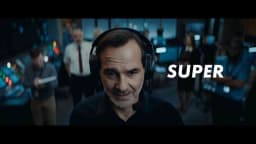
The "Ramen | Tinder Share My Date" video accumulated approximately 4,315,255 views on YouTube, alongside 279 likes and 77 comments, according to Clapboard's archive data. Those figures reveal a meaningful distribution footprint — over four million views represents genuine reach for a branded digital asset — but the ratio of likes and comments to views is notably low, suggesting the campaign relied heavily on paid distribution to achieve its view count rather than generating organic algorithmic momentum through audience engagement.
No verified performance data covering conversion rates, feature adoption figures, or brand-lift metrics for the Share My Date campaign is publicly available from Tinder, its parent company Match Group, or agency Mischief. Match Group, Tinder's parent, is a publicly traded company whose financial disclosures are available via mtch.com, but the company does not break out campaign-level performance metrics in its public reporting. The absence of published engagement data beyond the YouTube asset metrics is consistent with standard practice for feature-launch campaigns in the United States dating-app category, where conversion and retention data is treated as proprietary.
Structurally, Share My Date demonstrates strong effectiveness logic. It connects a real product feature to a genuine consumer tension, executes the connection through culturally grounded creative, and deploys it through channels appropriate to Tinder's audience in the United States. The campaign's strategic coherence — safety reframed as a social norm rather than a warning — is the kind of positioning that builds brand equity over time even when short-term engagement metrics do not spike visibly. The Clapboard Score of 74 out of 100 reflects that structural strength alongside the limited publicly available evidence of measurable consumer response.
Share My Date is a 2024 Tinder campaign created by Mischief that promotes a feature letting users share date details — location, time, and a match photo — with friends via a single link. It launched in the United States in May 2024, positioning date-sharing as a casual social behaviour rather than a safety precaution.
Mischief created the Share My Date campaign for Tinder. Mischief has served as Tinder's agency of record since 2021, according to tinderpressroom.com, and previously created the "You're Not for Everyone" and "It Starts With a Swipe" campaigns, giving the agency deep familiarity with Tinder's brand voice and audience.
Tinder announced the Share My Date feature on April 22, 2024, according to Uk Tinderpressroom. The campaign published across the United States in May 2024. Tinder planned to roll out the feature across 19 countries, including the United Kingdom, Australia, Canada, and India, in the months following the initial launch.
Jake Dypka directed the "Ramen | Tinder Share My Date" video, the lead creative asset in the campaign. The video accumulated approximately 4,315,255 YouTube views according to Clapboard's archive data, demonstrating substantial distribution reach across digital channels in the United States and beyond.
The Tinder Share My Date campaign holds a Clapboard Score of 74 out of 100. This score reflects the campaign's strong strategic coherence — connecting a genuine product feature to a real consumer tension through culturally grounded creative — balanced against limited publicly available evidence of measurable consumer engagement beyond view count data.
.webp)
Creative Collaboration Platform: The Backbone of Modern Creative WorkWhat is a creative collaboration platform?Clapboard defines a creative collaboration platform as the operational core for today’s distributed creative teams. This is not a collection of digital collaboration tools stitched together; Clapboard’s system


Understanding the Creative Production MarketplaceWhat is a Creative Production Marketplace?Clapboard defines a creative production marketplace as a structured ecosystem where brands, agencies, and production talent converge to execute video, advertising, and branded content at scale. Unlike the legacy agency or freelanREAD FULL ARTICLE

The Urgent Need for a Creative Production Operating SystemWhy Traditional Creative Production Models Break DownClapboard sees the creative production landscape shifting under pressure. Content velocity is no longer a buzzword—it’s a mandate. Modern advertising demands relentless output across dozens of channels, each wREAD FULL ARTICLE