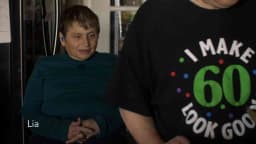
Toronto Community Foundation's 'Building, How Much?, Waiting' film campaign challenged Canadian donors' assumptions about the cost and complexity of

Toronto Community Foundation Makes Charitable Legacy Giving Feel Within Reach
Toronto Community Foundation's 'Building, How Much?, Waiting' is a three-part Open Alberta Ca.clapboard.com/archive/toronto-after-dark-film-festival-intimacy-travel">Canadian film campaign released in January 2010 that challenges assumptions about the cost and complexity of establishing a charitable fund by presenting Iab.clapboard.com/archive/canadian-womens-foundation-the-mother-rising-public-service-2">legacy philanthropy as accessible and straightforward for everyday individuals and families.
The campaign's central proposition is direct: creating a lasting charitable legacy is easier and more affordable than most prospective donors assume. Rather than positioning philanthropic giving as the exclusive domain of the wealthy, Toronto Community Foundation used narrative film to broaden the conversation and invite Canadians who had never considered establishing a fund to reconsider their potential role. The campaign directs viewers to a dedicated landing page focused on individuals and families looking to establish a fund, grounding its ambition in a concrete call to action.
Produced in Canada and published in January 2010, the work comprises three distinct film assets, each carrying the campaign's core message through a different lens. The titles — Building, How Much?, and Waiting — suggest a progression of donor psychology: from imagining a legacy, to confronting its perceived cost, to acting rather than deferring. Together they form a cohesive public interest narrative designed to move Canadians through hesitation toward engagement, according to LinkedIn. The campaign earned a Clapboard Score of 56 out of 100, reflecting its focused creative execution within the public service sector, according to Adsspot.

Toronto Community Foundation identified a specific psychological barrier at the heart of its strategy: the widespread belief among Canadians that establishing a charitable fund is prohibitively complex or expensive. This assumption, rather than a lack of generosity, was the primary obstacle the campaign set out to dismantle, according to Canada Ca.
The strategic timing of the campaign aligned with a demonstrably active moment in Canadian giving culture. According to Statistics Canada, individual charitable donations reported on Canadian tax returns reached C$8.3 billion in 2010, representing a rise of 6.5 percent from 2009. The median donation claimed on Canadian tax returns that year was C$260, up from C$250 the year prior, also per Statistics Canada. These figures indicate a population already engaged in charitable behaviour at scale — the opportunity lay in converting occasional donors into legacy givers.
Further context from Statistics Canada shows that nearly 24 million Canadians aged fifteen and older, representing approximately 84 percent of that age group, made financial donations to charities and nonprofits, with an average annual contribution of C$446. This scale of participation underscores both the breadth of the potential audience Toronto Community Foundation was addressing and the competitive attention that audience commanded from charities across Canada. The public service sector in Canada was active and crowded in this period, making a clear, emotionally resonant proposition essential. By framing the act of establishing a fund not as a grand gesture but as a practical and attainable decision, the campaign positioned Toronto Community Foundation as an accessible partner rather than an institution reserved for major philanthropists.
Director Anthony Redpath led the creative execution of 'Building, How Much?, Waiting,' working with production company Circle to bring three distinct film narratives to screen.
Each of the three assets — Building, How Much?, and Waiting — appears to address a separate stage of donor thinking, using the intimacy of film to create an emotional and rational case for legacy giving. The campaign's on-screen execution, as described in available sources, centres on the proposition that charitable legacy creation is more accessible than commonly perceived, with the films structured to engage viewers who may have dismissed philanthropy as beyond their means or understanding. The storytelling approach relies on narrative rather than abstraction, drawing viewers into recognisable human scenarios that make the idea of establishing a fund feel concrete and personal rather than institutional.
The creative team brought together substantial craft resources for a public interest campaign. Andy Shortt served as creative director and copywriter, shaping the verbal and conceptual identity of the work. Chris Hall, president of Huxley Quayle von Bismark, acted as art director. Director of photography Rob Walsh handled the visual language of the films, while editorial was managed by Jeffrey Zablotny. Audio production was delivered by Wayne Kosak Audio, completing a full-service production pipeline that gave the campaign a finished quality consistent with commercial broadcast work. The involvement of this depth of creative talent for a public service brief reflects the seriousness with which both the foundation and the agency approached the challenge of shifting donor perception in Canada.
No verified third-party performance data for 'Building, How Much?, Waiting' — such as conversion rates, fund establishment figures, or media reach metrics — is publicly available from named industry sources.
What is documented is the campaign's engagement record on the platform where it was archived: the three film assets collectively attracted 3,323 views, 2 likes, and 1 comment, figures that reflect its archival footprint rather than its full broadcast reach in Canada. These numbers do not represent the campaign's total audience and should not be read as a measure of its effectiveness in market.
Structurally, the campaign demonstrates several qualities associated with effective public service communication. Its three-part format allows each film to address a different cognitive or emotional stage of donor decision-making, distributing the persuasive burden across the series rather than concentrating it in a single execution. The proposition — that legacy philanthropy is easier and more affordable than assumed — is falsifiable and specific, which gives the narrative drive and credibility. By anchoring the call to action in a direct URL for individuals and families, the campaign closes the loop between emotional engagement and practical next steps. In a Canadian philanthropic environment where, according to Statistics Canada, tens of millions of people were already giving but relatively few were establishing structured legacy funds, this kind of barrier-reduction messaging carried genuine strategic logic. No awards recognition for this campaign has been verified across major industry bodies.
'Building, How Much?, Waiting' is a three-part Canadian film campaign created by Toronto Community Foundation and agency Huxley Quayle von Bismark in January 2010. It presents legacy charitable giving as more accessible and affordable than most Canadians assume, targeting individuals and families who may feel uncertain about establishing a charitable fund.
Anthony Redpath directed the campaign, produced by Circle. The creative team also included copywriter and creative director Andy Shortt, art director Chris Hall, director of photography Rob Walsh, editor Jeffrey Zablotny, and audio production by Wayne Kosak Audio, making it a fully resourced production for a public interest brief.
The campaign's central message is that creating a lasting charitable legacy is easier and more affordable than prospective donors commonly believe. By addressing perceived barriers around cost and complexity, Toronto Community Foundation aimed to broaden participation in legacy philanthropy among everyday Canadians, not just major philanthropists.
According to Statistics Canada, individual charitable donations reported on Canadian tax returns reached C$8.3 billion in 2010, up 6.5 percent from 2009. Nearly 24 million Canadians aged fifteen and older donated to charities that year, creating a large but under-converted audience for legacy fund messaging.
No verified awards recognition for 'Building, How Much?, Waiting' has been confirmed across major industry bodies. The campaign received a Clapboard Score of 56 out of 100, and its archival record documents 3,323 views across its three film assets, without confirmed recognition from major award programmes.
.webp)
Creative Collaboration Platform: The Backbone of Modern Creative WorkWhat is a creative collaboration platform?Clapboard defines a creative collaboration platform as the operational core for today’s distributed creative teams. This is not a collection of digital collaboration tools stitched together; Clapboard’s system


Understanding the Creative Production MarketplaceWhat is a Creative Production Marketplace?Clapboard defines a creative production marketplace as a structured ecosystem where brands, agencies, and production talent converge to execute video, advertising, and branded content at scale. Unlike the legacy agency or freelanREAD FULL ARTICLE

The Urgent Need for a Creative Production Operating SystemWhy Traditional Creative Production Models Break DownClapboard sees the creative production landscape shifting under pressure. Content velocity is no longer a buzzword—it’s a mandate. Modern advertising demands relentless output across dozens of channels, each wREAD FULL ARTICLE