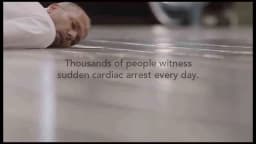
Tysabri's 'Cathy, Rick, Lindy' campaign, created by RTC in December 2013, uses three patient-led films to humanise multiple sclerosis treatment in the United

How Tysabri's 'Cathy, Rick, Lindy' Puts Patients at the Center of MS Advertising
Tysabri's 'Cathy, Rick, Lindy' is a pharmaceutical film campaign created by Washington, D, according to Mmm-Online.C.-based agency RTC, published in the United States in December 2013, comprising three individual films — each named for and centred on a distinct patient living with multiple sclerosis.
The campaign's structure is its most defining characteristic. Rather than producing a single omnibus advertisement, RTC built three separate film assets, each carrying the name of its subject: Cathy, Rick, and Lindy. This tripartite approach allowed Tysabri — a natalizumab-based treatment for relapsing forms of multiple sclerosis manufactured by Biogen Idec, now known as Biogen — to present the lived experience of MS as individual and varied rather than monolithic. In the United States, where direct-to-consumer pharmaceutical advertising operates within a highly regulated framework, the decision to anchor a film campaign in named, differentiated patient narratives represented a considered creative position, according to Forbes. Uber Content is documented as a production partner on the campaign alongside RTC, as noted in agency databases.
The campaign arrived during a commercially significant period for the brand, according to Nam Edu. Tysabri worldwide revenue reached approximately 1.5265 billion dollars in 2013, a rise of 34.4 percent from the prior year, according to Biogen's 2013 annual filing. That financial momentum provided context for a marketing investment oriented not toward clinical feature comparison but toward emotional identification with the patient. The United States market remained Tysabri's primary commercial territory, and 'Cathy, Rick, Lindy' addressed the US audience directly. The Clapboard Score for this campaign is 54 out of 100, reflecting competent execution within a genre that rarely invites formal creative risk.
Tysabri competed in one of the most commercially intense categories within United States pharmaceutical advertising in 2013. The branded multiple sclerosis disease-modifying therapy market was valued in the high-single-digit to low-double-digit billions of dollars globally at that time, though precise segmentation for the US alone was not independently confirmed. Copaxone, marketed by Teva, held a significant share of the relapsing MS market in the United States, while Rebif recorded worldwide revenue of approximately 2.5 billion dollars in 2012 according to Biogen's own 2013 filing disclosures. Against that competitive backdrop, Tysabri required advertising that could do more than list clinical endpoints.
RTC's strategic answer was patient individuation. The agency chose to separate the campaign into three distinct film units — Cathy, Rick, and Lindy — rather than aggregating patient voices into a single testimonial montage, according to Sec Gov. This architecture implied that MS does not produce a uniform experience and that Tysabri's value is personal rather than purely pharmacological. In the United States, where patient advocacy has long shaped pharmaceutical brand relationships, this approach aligned the brand with an audience that is informed, digitally active, and resistant to abstraction. The film medium, chosen deliberately over print or digital display, gave each patient's story space to develop with the narrative depth that a 30-second spot cannot accommodate. Uber Content's involvement as production partner reinforced a commitment to quality of execution that the category does not always prioritise.
The campaign launched in December 2013, a month that in the United States carries both end-of-year reflective sentiment and the final push of annual pharmaceutical marketing cycles, adding a further layer of strategic timing to RTC's deployment of the work.
Production credits for the 'Cathy, Rick, Lindy' campaign are not publicly documented beyond the confirmed involvement of RTC as the creating agency and Uber Content as production partner, as identified in agency databases. No director, cinematographer, or creative director is named in the campaign archive record.
What the archive does confirm is the formal structure of the work: three films, three subjects, three names used as titles. The decision to title each asset with a first name alone — Cathy, Rick, Lindy — is a craft choice that operates at the level of the brief rather than the execution. It signals to a viewer that what follows is a person's account, not a brand's argument. In the United States pharmaceutical film tradition, that is a meaningful distinction. The dominant mode of DTC drug advertising in 2013 built narratives around symptomatic relief shown through activity montages and voice-over risk disclosures. 'Cathy, Rick, Lindy' appears to have worked against that convention by foregrounding identity over indication.
The Film medium selection also speaks to production intent. Film, as opposed to broadcast television spots or digital pre-roll, carries connotations of documentary seriousness and character-driven storytelling. The involvement of Uber Content — a production entity with documented associations with higher-craft branded content — suggests that RTC and Biogen Idec sought a register closer to editorial documentary than traditional pharmaceutical advertising. Whether the execution fully delivered on that ambition cannot be assessed from the archive record alone, but the structural and nomenclatural decisions embedded in the campaign point toward a coherent, if conventional, creative philosophy for the category.
No verified performance data for the 'Cathy, Rick, Lindy' campaign is publicly available. No campaign-specific sales lift, brand-tracking results, or media-reach figures have been confirmed in publicly accessible sources, and no awards recognition for this work appears in the records of Cannes Lions, the Effie Awards, The One Show, D&AD, the Clio Awards, the Webby Awards, or WARC.
What can be established is that Tysabri as a brand performed strongly in the period surrounding the campaign's release. Worldwide Tysabri revenue reached approximately 1.5265 billion dollars in 2013, a 34.4 percent increase from the prior year, according to Biogen's 2013 annual filing. Biogen's broader MS portfolio — comprising Avonex, Tysabri, and Tecfidera — generated approximately 3.94 billion dollars in revenue during the first nine months of 2013, representing close to 80 percent of Biogen's total revenue in that period, as reported in filings cited by financial and industry sources including genengnews.com. That commercial context does not validate the specific contribution of 'Cathy, Rick, Lindy,' but it establishes that Tysabri's US market position was strengthening precisely when RTC's campaign was in market.
Structurally, the campaign's three-film format offered Biogen Idec durable content assets — each film independently deployable across patient education platforms, healthcare professional environments, and digital channels in the United States. The absence of a single hero spot may have limited mass-market resonance while increasing the campaign's utility at the point of care, a trade-off consistent with RTC's apparent strategic focus on individual patient identification.
Tysabri's 'Cathy, Rick, Lindy' is a pharmaceutical film campaign created by RTC for Biogen Idec, published in the United States in December 2013. It comprises three separate films, each named for and centred on an individual patient living with multiple sclerosis, using personal narrative to humanise the brand's treatment proposition.
RTC, a Washington, D.C.-based advertising agency, created the campaign. Uber Content is documented as a production partner on the work. The campaign was published in December 2013 in the United States and is the sole Tysabri campaign attributed to RTC in the relevant advertising archive.
Cathy, Rick, and Lindy are the named subjects of each of the three films in the campaign. Each film takes its title from its patient subject, a structural choice by RTC that places individual identity at the centre of the advertising rather than clinical claims or symptom-relief imagery common in US pharmaceutical advertising of the period.
Tysabri recorded worldwide revenue of approximately 1.5265 billion dollars in 2013, a 34.4 percent year-over-year increase, according to Biogen's 2013 annual filing. No campaign-specific sales data linking this growth directly to 'Cathy, Rick, Lindy' is publicly available.
No awards recognition for 'Cathy, Rick, Lindy' has been confirmed. A review of records from Cannes Lions, the Effie Awards, The One Show, D&AD, the Clio Awards, the Webby Awards, and WARC found no entries or wins attributed to this Tysabri campaign created by RTC in 2013.
The Clapboard Score for 'Cathy, Rick, Lindy' is 54 out of 100. This score reflects competent execution within the United States pharmaceutical film category, acknowledging the campaign's patient-centred structure while noting that its creative ambition remains within established conventions for branded healthcare advertising of the 2013 period.
.webp)
Creative Collaboration Platform: The Backbone of Modern Creative WorkWhat is a creative collaboration platform?Clapboard defines a creative collaboration platform as the operational core for today’s distributed creative teams. This is not a collection of digital collaboration tools stitched together; Clapboard’s system


Understanding the Creative Production MarketplaceWhat is a Creative Production Marketplace?Clapboard defines a creative production marketplace as a structured ecosystem where brands, agencies, and production talent converge to execute video, advertising, and branded content at scale. Unlike the legacy agency or freelanREAD FULL ARTICLE

The Urgent Need for a Creative Production Operating SystemWhy Traditional Creative Production Models Break DownClapboard sees the creative production landscape shifting under pressure. Content velocity is no longer a buzzword—it’s a mandate. Modern advertising demands relentless output across dozens of channels, each wREAD FULL ARTICLE