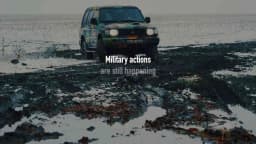
Unicef Slovenia's 'The Real-Life Escape Room' by Agencija 101 staged a hidden pop-up activation built around a real abuse survivor to drive adult reporting of

Unicef Slovenia's Real-Life Escape Room Puts Child Abuse in Plain Sight
Unicef Slovenia's 'The Real-Life Escape Room' is a 2018 experiential public service campaign created by Agencija 101 in which participants unknowingly entered a physical recreation of a real childhood sexual abuse location, guided by an actual survivor, to confront how trapped abused children feel and why adults must act to report suspected abuse.
Published in Slovenia in April 2018, the campaign — known in Slovenian as 'Skriti Escape Room' or 'Hidden Escape Room' — operates at the intersection of experiential design and social advocacy. Its central mechanic transforms a popular entertainment format into a vehicle for visceral, first-person empathy. Participants believed they were entering a conventional escape room puzzle experience. Instead, they were placed inside a faithful physical reconstruction of a real location where prolonged child sexual abuse had occurred, guided through it by the survivor of that abuse. The dissonance between expectation and reality is the campaign's primary creative instrument.
The campaign's objectives are direct: raise awareness of the scale of child sexual abuse in Slovenia, challenge widespread public misconceptions about who perpetrates abuse and where it happens, and encourage ordinary adults to report suspected cases to professional authorities. In the Slovenian context, where public discourse around child protection has historically been limited, that call to action carries particular weight. The activation ran for two days, operating as a genuine pop-up installation rather than a media-only stunt, and targeted adults capable of intervening when children around them show signs of abuse. The campaign contains a single primary media asset, reinforcing the campaign's commitment to concentrated, high-impact execution over broad distribution. Agencija 101 and Unicef Slovenia chose depth of experience over reach of impression — a strategic decision that would prove consequential at industry award ceremonies across Europe and globally.
Agencija 101 built the campaign's strategy on a single, uncomfortable truth: most adults who witness warning signs of child sexual abuse do not report them. The agency identified that inaction is not primarily caused by indifference but by disbelief — a widespread cultural assumption that abuse is perpetrated by strangers rather than trusted family members, and that it could not be happening in a household one knows. The strategic goal was therefore not to inform but to physically displace that disbelief.
The escape room format is the strategic mechanism that makes this displacement possible. By 2018, escape rooms had become a mainstream leisure activity across Slovenia and broader European markets, carrying strong associations with fun, safety, and consensual puzzle-solving. Agencija 101's decision to appropriate this format — and then fundamentally subvert it — creates a precise emotional gap between what participants expect and what they encounter. That gap is the campaign's argument. The participant's inability to simply leave the room, or to dismiss the experience as abstract, mirrors the structural entrapment experienced by abused children within family environments.
No verified standalone market-size figure for Slovenian public-service advertising in 2018 is publicly available. In the broader global advertising landscape, digital advertising reached significant scale by 2018, according to data cited by Clapboard, though Slovenia's domestic advertising economy operates at a far smaller scale than major Western European markets. In the public-interest category, Unicef competes for attention and donor engagement with organisations including Save the Children and SOS Children's Villages, both of which maintain active presences across Central and Eastern Europe. Where those organisations frequently rely on emotional broadcast media, Agencija 101's experiential strategy for Unicef Slovenia represents a deliberate departure: one person's irreversible real experience in place of thousands of passive impressions.
The creative execution of 'The Real-Life Escape Room' rests on three interlocking decisions: the physical fidelity of the reconstructed space, the presence of the real survivor as guide, and the withholding of context until participants are already inside the experience. Each decision amplifies the others, and together they produce a piece of experiential advertising that functions less like a campaign and more like a documentary encounter.
The reconstructed location was built to reflect the actual physical environment in which the featured survivor experienced prolonged childhood sexual abuse. This is not a stylised or symbolic set design but a deliberate act of documentary realism — the creative equivalent of a courtroom exhibit rather than an advertising set. The survivor's participation as guide is the campaign's most consequential creative choice. Her presence transforms the experience from simulation to testimony, and transfers the ethical weight of the subject matter directly onto every participant. Production credits for 'The Real-Life Escape Room' as documented in Clapboard's archive include the involvement of Agencija 101 as the creating agency. Among the individuals associated with the broader creative and strategic work at Agencija 101 during this period, Amadea Ris, Sašo Petek, and Jure Korenč are publicly identified in connection with the agency's Slovenian market output, though specific credited roles on this individual campaign are not fully detailed in publicly available documentation.
The campaign's single media asset — a documentary-style filmed record of the activation — extends the experience beyond its two-day physical run. The film preserves the participant reactions, the survivor's narration, and the spatial reality of the room itself, functioning as both evidence of the campaign's existence and as a standalone piece of content capable of generating the same emotional confrontation in viewers who were not present at the original installation.
 ARCHIVE
The Real-Life Escape Room earns a Clapboard Score of 63 out of 100, reflecting strong creative ambition and meaningful award recognition offset by limited public performance data and a deliberately constrained distribution footprint. No independently verified engagement metrics, reach figures, or behavioural outcome data for the campaign — such as reported increases in abuse reporting rates in Slovenia — are publicly available at the time of this writing.
The campaign's award record is, however, substantive and externally verifiable. At Cannes Lions 2018, the campaign received a Shortlist in PR Lions under the Corporate Social Responsibility category, as documented in the Cannes Lions public archive. The Clio Awards 2018 awarded Agencija 101 and Unicef Slovenia a Bronze in Public Relations, as reported in Clio Awards records. At the Sempl Awards 2018, the campaign received the Grand Sempler for Best Media Strategy, as documented by media-marketing.com. The Slovenian Advertising Festival, known as SOF, awarded the campaign its Grand Prix — the overall festival winner — at the 2019 ceremony, as reported by Sof Si and confirmed by media-marketing.com. The European Excellence Awards also recognised Unicef Slovenia and Agencija 101 in the NGOs and Associations category in 2018, as listed on excellence-awards.com.
Structurally, the campaign's effectiveness argument is coherent. A two-day physical installation with one media asset is not designed to maximise impressions; it is designed to maximise the depth and credibility of a single experience, then allow earned media and award visibility to carry that experience outward. The documentary film becomes the campaign's distribution engine, and the award recognitions function as third-party validation that extends the campaign's reach across professional and public-interest communities well beyond Slovenia.
'The Real-Life Escape Room' was a 2018 experiential public service campaign by Agencija 101 for Unicef Slovenia. Participants entered a physical reconstruction of an actual childhood sexual abuse location, guided by the real survivor, to experience the entrapment abused children feel and to encourage adults to report suspected abuse to authorities.
Agencija 101, a Slovenian advertising agency, created the campaign for Unicef Slovenia. The activation was published in Slovenia in April 2018. Amadea Ris, Sašo Petek, and Jure Korenč are publicly associated with Agencija 101's creative output in the Slovenian market during this period, though specific individual credits on this campaign are not fully documented publicly.
The campaign received a Cannes Lions 2018 Shortlist in PR Lions, a Clio Awards 2018 Bronze in Public Relations, the Grand Sempler for Best Media Strategy at Sempl Awards 2018 as reported by media-marketing.com, and the Grand Prix overall at the Slovenian Advertising Festival 2019 as documented by sof.si and media-marketing.com.
Agencija 101 chose the escape room format because it carried mainstream associations of safety and fun in Slovenia by 2018, making its subversion — a real abuse reconstruction — more psychologically disorienting. The format physically mirrors the entrapment experienced by abused children, turning participant discomfort into the campaign's core argument for adult intervention.
The campaign targeted adults in Slovenia who might witness warning signs of childhood sexual abuse in their communities or networks. Its call to action was to encourage reporting of suspected abuse to professional authorities, addressing the specific barrier of disbelief — the assumption that abuse is perpetrated by strangers rather than trusted family members.
The Unicef Slovenia 'The Real-Life Escape Room' campaign receives a Clapboard Score of 63 out of 100. The score reflects the campaign's strong creative concept, verified international award recognition across Cannes Lions, Clio Awards, Sempl, and the Slovenian Advertising Festival, alongside limited publicly available performance or behavioural outcome data.
.webp)
Creative Collaboration Platform: The Backbone of Modern Creative WorkWhat is a creative collaboration platform?Clapboard defines a creative collaboration platform as the operational core for today’s distributed creative teams. This is not a collection of digital collaboration tools stitched together; Clapboard’s system


Understanding the Creative Production MarketplaceWhat is a Creative Production Marketplace?Clapboard defines a creative production marketplace as a structured ecosystem where brands, agencies, and production talent converge to execute video, advertising, and branded content at scale. Unlike the legacy agency or freelanREAD FULL ARTICLE

The Urgent Need for a Creative Production Operating SystemWhy Traditional Creative Production Models Break DownClapboard sees the creative production landscape shifting under pressure. Content velocity is no longer a buzzword—it’s a mandate. Modern advertising demands relentless output across dozens of channels, each wREAD FULL ARTICLE