 ARCHIVE
Scania Bets on Brotherhood and Avicii to Define Premium Truck Identity
How Scania 's 'It's Just Special' Campaign Claims the Premium Truck Territory Scania's 'It's Just...
Västtrafik Bus Words Reframes Public Transport as the Future of Driving
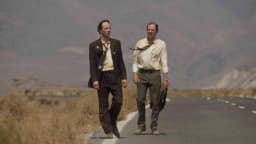
Västtrafik's Bus Words is a 2017 Swedish film campaign, created by Forsman & Bodenfors, that borrowed the visual and verbal language of premium automotive launch advertising to argue that a city bus already delivers everything those car commercials promise, reaching audiences across western Sweden via cinema, Facebook, and Instagram.
Västtrafik is a publicly owned regional transport authority operating in western Sweden, not an automotive manufacturer. That institutional identity sits at the heart of Bus Words. Rather than promoting public transport on its own conventional terms — reliability, affordability, environmental benefit — the campaign adopted the aesthetic grammar of the private car industry wholesale. Rapid edits, dramatic orchestral music, close-up vehicle imagery, and future-oriented technology copy fill the film in exactly the manner audiences recognise from premium car launches. The reveal lands when the product is confirmed to be an ordinary bus. The joke is structural: everything the car industry claims to offer, the bus already does, and has for decades.
The campaign launched in March 2017, as reported by The Verge, nine years into the documented agency relationship between Forsman & Bodenfors and Västtrafik, a partnership that according to forsman.com extended from 2008 through 2022. In Sweden, where private car ownership remained the dominant competitor to public transit for commuting journeys, the strategic stakes of that argument were directly commercial. Bus Words appeared in movie theaters in western Sweden, where the cinematic format amplified the automotive launch-film parody, and across social platforms including Facebook and Instagram, as reported by The Verge. The campaign contained a single film asset and was submitted to the international advertising archive record approximately eight years ago.
Västtrafik's primary documented competitor was the private car. In western Sweden, the commuter's default frame of reference for personal mobility has long been car ownership, and by 2017 that frame was being actively reinforced by a wave of electric and autonomous vehicle advertising from manufacturers promising freedom, technology, and environmental responsibility. Forsman & Bodenfors identified those advertising conventions themselves as a strategic vulnerability to exploit.
The insight driving Bus Words is precise. Automotive advertising in 2017 had converged on a set of recurring claims: zero-emission performance, connected technology, autonomous capability, and the liberation of the individual from infrastructure dependency. These claims were being used to sell private cars as the progressive transport choice. Bus Words systematically ran through that same vocabulary and demonstrated, term by term, that public transport — specifically the buses operated by Västtrafik — already embodied each quality. The campaign's copywriting, credited to Pontus Caresten, structured this as a direct reappropriation rather than a parody in the comedic sense. The tone remained earnest and cinematic until the reveal, which allowed the argument to land as a genuine competitive claim rather than a dismissible joke.
In Sweden, the automotive sector and public transport exist in direct tension as policy and consumer spending priorities. Västtrafik's campaign entered a conversation shaped by global manufacturers including Tesla, whose electric vehicle launch communications were already defining what aspirational transport advertising looked like in the European market. By mirroring that language precisely, Bus Words positioned Västtrafik not as the affordable alternative to the car but as the logical evolution of everything the car industry was promising. As reported by Streetsblog USA, the campaign offered a free two-week public transport trial, grounding the brand argument in a direct behavioural ask.
Is This It directed Bus Words. The production company's directorial approach was foundational to the campaign's effectiveness, because the entire strategic argument depended on the film being indistinguishable from genuine premium automotive advertising for the duration of its opening sequence.
The craft decision that defines Bus Words is the decision to play it straight. Art director Lars Jansson and copywriter Pontus Caresten constructed a creative framework in which no visual or verbal signal alerts the viewer to the parody before the reveal. The cinematography employs the close-cropped, detail-fetishising framing that characterises luxury car launch films — surfaces, light, components isolated from context. The edit rhythm uses the rapid, rhythmically scored cutting associated with performance vehicle advertising. The copy deploys the future-oriented, technology-adjacent language that automotive brands used extensively in 2017 to position electric and autonomous vehicles as transformative rather than merely functional. Each of these creative choices was a studied imitation requiring fluency in the source material.
The music functions as a tonal anchor. Dramatic orchestral scoring, as reported by The Verge, sustained the premium register of the film and prevented any tonal break that might have signalled the reveal prematurely. The result was a film that could plausibly be mistaken for advertising from a major automotive manufacturer, which is precisely the condition the concept required. The single-asset campaign format concentrated all creative investment into one film, a discipline that demanded the film be fully self-sufficient as both argument and entertainment. As noted by LBBOnline in positive coverage of the campaign, the execution achieved a coherence between concept and craft that is relatively rare in public sector advertising. The choice to place the film in cinemas in western Sweden, where the full theatrical frame surrounded it, reinforced the automotive launch-film illusion at the moment of first contact.
No verified performance data for Bus Words is publicly available. Västtrafik has not published figures for campaign reach, modal shift, or trial uptake attributable to Bus Words, and no third-party measurement source has released quantified results. Assessment of the campaign's effectiveness therefore rests on structural and contextual analysis.
The structural case for effectiveness is strong. Bus Words achieved international editorial coverage within 48 hours of publication, with The Verge reporting on the campaign on March 28, 2017, and Streetsblog USA following on March 29, 2017. Both are publications with audiences well beyond Sweden's domestic market, which suggests the campaign generated earned media at a scale disproportionate to a regional transit authority's typical paid distribution. The cinematic and social placement strategy — movie theaters in western Sweden and Facebook and Instagram, as documented by The Verge — combined a contextually resonant premium environment with broadly scalable digital reach.
The free two-week public transport trial offer, as reported by Streetsblog USA, attached a direct response mechanism to the brand argument, creating a pathway from persuasion to behaviour that is measurable in principle, even if Västtrafik has not released that data publicly. The campaign's longevity in the advertising archive record, submitted approximately eight years ago and still actively referenced, suggests sustained creative relevance. As a Forsman & Bodenfors work produced in the fourteenth year of a documented agency relationship with Västtrafik, according to forsman.com, Bus Words sits within a long creative lineage rather than as an isolated activation. Clapboard assigns Bus Words a score of 63 out of 100, reflecting a concept with genuine strategic clarity and strong craft execution, offset by the absence of verifiable impact data and a single-asset format that limited campaign breadth.
Bus Words is a 2017 film campaign for Västtrafik, created by Forsman & Bodenfors in Sweden. It mimicked premium automotive launch advertising — using rapid edits, dramatic music, and technology-oriented copy — before revealing the product was a city bus, arguing public transport already delivers what car advertising promises.
Bus Words was created by Forsman & Bodenfors, with Lars Jansson as art director, Pontus Caresten as copywriter, and Is This It as the production company and director. The campaign was published in March 2017 as part of the long-running agency relationship between Forsman & Bodenfors and Västtrafik, which began in 2008.
Bus Words ran in movie theaters across western Sweden and on social platforms Facebook and Instagram, as reported by The Verge. The cinema placement reinforced the automotive launch-film format. Västtrafik also offered a free two-week public transport trial, as reported by Streetsblog USA, connecting the campaign to a direct behavioural response.
Bus Words argued that automotive advertising vocabulary — autonomous capability, zero emissions, connected technology — already described public transport. By adopting the visual language of a premium car launch film, Västtrafik positioned the city bus as the logical fulfilment of promises the private car industry was making about the future of mobility in Sweden.
Forsman & Bodenfors worked with Västtrafik from 2008 through 2022, representing approximately fourteen years of documented agency relationship, according to forsman.com. Bus Words was produced in 2017, nine years into that partnership, and reflects the creative confidence typical of a mature, long-term agency and client collaboration.
Clapboard assigns Bus Words a score of 63 out of 100. The rating reflects strong strategic clarity and precise craft execution rooted in a genuinely original concept. The score is moderated by the absence of publicly verified performance data and a single-asset campaign format that constrained the work's overall reach and breadth.
.webp)
Creative Collaboration Platform: The Backbone of Modern Creative WorkWhat is a creative collaboration platform?Clapboard defines a creative collaboration platform as the operational core for today’s distributed creative teams. This is not a collection of digital collaboration tools stitched together; Clapboard’s system


Understanding the Creative Production MarketplaceWhat is a Creative Production Marketplace?Clapboard defines a creative production marketplace as a structured ecosystem where brands, agencies, and production talent converge to execute video, advertising, and branded content at scale. Unlike the legacy agency or freelanREAD FULL ARTICLE

The Urgent Need for a Creative Production Operating SystemWhy Traditional Creative Production Models Break DownClapboard sees the creative production landscape shifting under pressure. Content velocity is no longer a buzzword—it’s a mandate. Modern advertising demands relentless output across dozens of channels, each wREAD FULL ARTICLE