 ARCHIVE
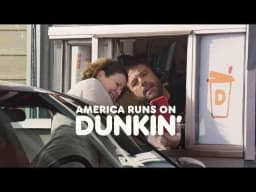
Drive-Thru - Dunkin' | Clapboard Ad Archive
Dunkin’s 2023 Drive-Thru campaign thrusts Ben Affleck into the fluorescent-lit frontline of the...
Wendy's Where's the Beef Became America's Most Unlikely Catchphrase
Wendy's "Where's the Beef" is a television advertising campaign created by Dancer Fitzgerald Sample and launched in the United States on January 10, 1984, in which elderly actress Clara Peller demanded to know the whereabouts of the meat inside a competitor's oversized bun, turning a simple product-superiority argument into one of the most recognisable catchphrases in American cultural history.
The campaign arrived at a moment when Wendy's needed to sharpen its competitive identity in a crowded US fast-food market dominated by McDonald's and Burger King. Rather than matching those rivals dollar for dollar on feel-good imagery, Dancer Fitzgerald Sample constructed a direct attack framed as comedy. The fictional rival restaurant — named the "Home of the Big Bun" — served as a thinly veiled composite stand-in for the brand's two primary competitors, allowing Wendy's to land punches without naming names. The original spot, known internally as "Fluffy Bun," debuted nationally on January 10, 1984, according to encyclopedia.com and campaignlive.co.uk.
The campaign operated in two distinct phases across the United States. The first ran from January through April 1984 at an approximate cost of nineteen million dollars, according to bnd.com. A second, authorised phase began in late August 1984 with a thirty-million-dollar investment, again per bnd.com, bringing total combined spending across both phases to approximately forty-nine million dollars. That second phase represented fifty-one percent of Wendy's total 1984 advertising budget, which itself exceeded ninety million dollars, according to bnd.com. The scale of that commitment signals how completely the brand had placed its faith in three words delivered by an octogenarian manicurist. The Clapboard Score for this campaign is 63 out of 100.
Dancer Fitzgerald Sample won the Wendy's account in 1980 following a three-agency competition, according to En Wikipedia. The strategic challenge the agency inherited was substantial: Wendy's occupied a distant third position in the US fast-food hamburger market behind two entrenched giants. According to latimes.com, McDonald's held approximately thirty-seven percent of the US fast-food hamburger market by 1987, with Burger King at sixteen percent and Wendy's at ten percent. Earlier in the decade the gap was even starker — McDonald's reported approximately seven billion dollars in US revenue in 1981, compared with Wendy's four hundred and ninety-three million dollars, according to chowhound.com.
The strategic insight that shaped "Where's the Beef" was straightforward and devastatingly effective: consumers in the United States intuitively understood that a larger bun did not mean a larger burger, and that understanding could be weaponised through humour rather than hectoring. By anchoring the campaign's argument in a recognisable, almost universal frustration — paying a premium price for a product that does not deliver on its visual promise — Dancer Fitzgerald Sample gave Wendy's a populist voice. The choice to cast Clara Peller, an elderly manicurist who became nationally famous in her eighties according to en.wikipedia.org, amplified that populism. She was not an aspirational spokesperson; she was an audience surrogate.
The campaign's structural intelligence lay in the specificity of its target. The fictional "Home of the Big Bun" was an indirect but unmistakable reference to both McDonald's and Burger King, as noted by en.wikipedia.org, allowing Wendy's to run comparative advertising without the legal and reputational risk of direct naming. That indirection also gave consumers the pleasure of decoding the joke themselves, deepening engagement in the United States market in a way that a more explicit attack never could have achieved.
Copywriter Cliff Freeman wrote the line "Where's the beef?" according to en.wikipedia.org and campaignlive.co.uk. That single question — four words compressed to three in its famous delivery — is the structural foundation on which the entire campaign rests. Freeman's creative partner on the Wendy's assignment was art director Donna Weinheim, according to en.wikipedia.org. Together they constructed a scenario of deadpan absurdity: three elderly women confronted by an enormous, pillowy bun sheltering a barely visible meat patty, one of them breaking from polite bewilderment into outright indignation.
Director Joe Sedelmaier helmed the production for Dancer Fitzgerald Sample. Sedelmaier was already known in US advertising circles for a style that leaned into awkward pacing, non-professional or character-actor talent, and a deliberately unglamorous visual register that made commercial scenarios feel simultaneously strange and entirely real. His direction of Clara Peller — flanked onscreen by companions Mildred Lane and Elizabeth Shaw, according to en.wikipedia.org — extracted maximum comic tension from minimal movement. Peller's delivery was not polished in any conventional advertising sense; it was blunt, impatient, and completely believable.
Sedelmaier later reflected on the campaign's cultural reach by noting, as quoted by campaignlive.co.uk, that "If Mondale could have said the line like Clara, he would have been our president" — a reference to the phrase's unexpected insertion into the 1984 US presidential primary race, when candidate Walter Mondale deployed it against Gary Hart. That the line crossed from television commercial into live political debate is a measure of the production's tonal precision: Sedelmaier and Freeman had created something that felt less like advertising and more like a piece of shared vernacular. The original spot's title, "Fluffy Bun," according to encyclopedia.com, was quietly ironic — a soft name for a campaign built entirely on hard-edged scepticism.
No independently verified, publicly available performance audit specifically covering the full run of the "Where's the Beef" campaign has been located by Clapboard's editorial team. What the historical record does carry is a directional signal of considerable magnitude. Wendy's reported a thirty-two percent sales increase in the first half of 1984, according to orlandosentinel.com — a period that maps directly onto the campaign's initial phase in the United States. That figure, if taken at face value, represents a rate of commercial acceleration that most consumer brands in the US food industry would regard as extraordinary for a single campaign window.
The campaign's structural effectiveness is independently legible without proprietary data. A combined spend of approximately forty-nine million dollars across two phases, per bnd.com, with the second phase accounting for fifty-one percent of Wendy's total 1984 advertising budget according to the same source, reflects a corporate decision to double down rather than diversify — a posture that only makes sense when early response signals are strongly positive. The cultural penetration of the phrase into the 1984 US presidential primary, as noted by encyclopedia.com, provides a secondary non-commercial measure: earned media at the level of national political discourse is a form of reach no paid media budget can simply purchase. Structurally, "Where's the Beef" demonstrates how a single, precisely written line, cast with counterintuitive talent and directed with tonal control, can generate returns that exceed the boundaries of paid advertising entirely.
Wendy's "Where's the Beef" is a 1984 television campaign created by Dancer Fitzgerald Sample in the United States. It featured Clara Peller demanding more meat from a fictional competitor's oversized bun. The campaign ran in two phases and became one of the most recognisable advertising catchphrases in US history, crossing into presidential politics the same year.
Copywriter Cliff Freeman wrote the line "Where's the beef?" at Dancer Fitzgerald Sample, according to en.wikipedia.org. His creative partner on the Wendy's assignment was art director Donna Weinheim. Director Joe Sedelmaier helmed the production. Clara Peller, an elderly manicurist, delivered the line onscreen and became nationally famous as a result, according to en.wikipedia.org.
Wendy's spent approximately forty-nine million dollars combined across two campaign phases in 1984, according to bnd.com. The first phase cost roughly nineteen million dollars and ran through April. A second phase beginning in August carried a thirty-million-dollar budget, representing fifty-one percent of Wendy's total 1984 advertising spend, per bnd.com.
Clara Peller was an elderly manicurist who became nationally famous in her eighties through the "Where's the Beef" campaign, according to en.wikipedia.org. Director Joe Sedelmaier cast her alongside Mildred Lane and Elizabeth Shaw. Her blunt, impatient delivery gave the campaign authenticity and comic force that a conventional advertising spokesperson could not have provided in the US market.
Presidential candidate Walter Mondale used the phrase against rival Gary Hart during the 1984 US Democratic primary race. Director Joe Sedelmaier later noted the line's political reach, as quoted by campaignlive.co.uk. The crossover from paid television advertising into live political debate illustrates the campaign's exceptional cultural penetration across the United States that year.
The fictional rival in the "Where's the Beef" campaign was called the "Home of the Big Bun," an indirect reference to McDonald's and Burger King, according to en.wikipedia.org. This device allowed Dancer Fitzgerald Sample to run comparative advertising in the United States without naming competitors directly, reducing legal risk while still landing a precise competitive argument for Wendy's.
.webp)
Creative Collaboration Platform: The Backbone of Modern Creative WorkWhat is a creative collaboration platform?Clapboard defines a creative collaboration platform as the operational core for today’s distributed creative teams. This is not a collection of digital collaboration tools stitched together; Clapboard’s system


Understanding the Creative Production MarketplaceWhat is a Creative Production Marketplace?Clapboard defines a creative production marketplace as a structured ecosystem where brands, agencies, and production talent converge to execute video, advertising, and branded content at scale. Unlike the legacy agency or freelanREAD FULL ARTICLE

The Urgent Need for a Creative Production Operating SystemWhy Traditional Creative Production Models Break DownClapboard sees the creative production landscape shifting under pressure. Content velocity is no longer a buzzword—it’s a mandate. Modern advertising demands relentless output across dozens of channels, each wREAD FULL ARTICLE