WHO Smallpox Film Imagines a World Without Vaccines
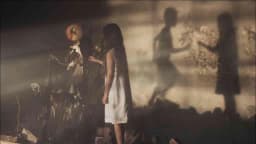
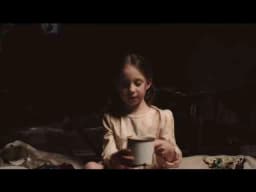
The WHO Smallpox film is a 2022 German student spec campaign by Filmakademie Baden-Württemberg that dramatises a counterfactual world without vaccines, following a girl named Janet who contracts smallpox and her older sister Mary who carries her toward the only place where help might exist.
The campaign was published in Germany in August 2022 and created for the World Health Organization by students at Filmakademie Baden-Württemberg, one of Germany's most respected film and media schools. The work takes the form of a single film asset, categorised under Public Interest, and operates as a standalone educational piece rather than a component of any broader WHO communications initiative. Its purpose is implicit rather than declarative: by removing vaccines entirely from the narrative world, the film forces its audience to confront what their absence would mean at the most human level.
In Germany, public-health communication has increasingly leaned on emotional narrative as a vehicle for vaccine advocacy, particularly in the years following the COVID-19 pandemic. The Smallpox film fits within that tradition while choosing an unusual subject. Smallpox was eradicated globally in 1980 — a fact confirmed by the World Health Organization — making it the only human infectious disease to have been fully eliminated through vaccination. By resurrecting smallpox as a present-tense threat in a world stripped of vaccines, director Mario Dahl and his collaborators at Filmakademie Baden-Württemberg construct an argument that is simultaneously historical and urgent. The film does not lecture. It places a child in danger and an older sister in the position of desperate caregiver, and it allows that dynamic to carry the entire weight of the pro-vaccine message.
Filmakademie Baden-Württemberg chose a counterfactual premise — a world in which vaccines do not exist — to sidestep the confrontational register that vaccine communications often adopt. Rather than arguing against hesitancy directly, the film builds a world where the audience can feel, rather than be told, what vaccination has prevented. The strategic insight is straightforward: emotional experience changes minds more durably than statistical persuasion.
In Germany, vaccine hesitancy has been a documented concern among public-health authorities. The World Health Organization has identified vaccine hesitancy as one of the ten threats to global health, and in the European context — which includes Germany — hesitancy has contributed to the resurgence of measles and other preventable diseases, according to the WHO. Against that backdrop, a student-produced spec film addressing the consequences of a vaccine-free world carries genuine strategic relevance even without an official WHO commissioning mandate.
WHO's primary competitors in the public-health and vaccination communication space include UNICEF, the United States Centers for Disease Control and Prevention, Médecins Sans Frontières, Gavi the Vaccine Alliance, and the European Centre for Disease Prevention and Control, ranked by mission overlap according to the WHO's own published programme documentation. Each of these organisations produces public-facing health communication, and each tends to rely on data-led or testimony-driven formats. The Smallpox film's choice of pure narrative fiction distinguishes it from the dominant modes used by those organisations. By grounding its argument in a specific disease that vaccination demonstrably defeated, the film gives its counterfactual scenario historical credibility. That credibility is what elevates the emotional stakes beyond melodrama into something that functions as a genuine public interest argument.
Director Mario Dahl led the production at Filmakademie Baden-Württemberg, scripting as well as directing the film — a dual role that ensured the visual and narrative logic remained unified throughout. The film's German title describes Janet contracting the deadly pox virus and receiving no proper medical care at home, while her older sister Mary despairs at the situation and promises to take her to a place where she will receive help. That narrative compression — a single promise, a single journey, a single disease — reflects disciplined screenwriting.
Cinematographer Marvin Schatz shot the film, and the visual texture of the work draws on production design by Verena Metzger, Johanna Schroers, Pia Schunck, and Ronja Röchling, whose collective work establishes a time and place stripped of modern medical infrastructure. The make-up department, led by Jill Dahm alongside Svenja Gentz and Paolo Celano, carried one of the film's most demanding responsibilities: rendering smallpox lesions with enough clinical accuracy to make the disease feel real without tipping into exploitation. Editor Simon Hartl shaped the film's pacing, while Alexander Wolf David composed the original score and Julian Berg and Marco Dahl handled both sound design and sound mixing — a tight audio team whose work in a disease-narrative context carries significant atmospheric weight.
Executive producers Tristan Schneider and Julius Wieler oversaw the production, with casting handled by Aline Wyrwich and costume design credited to Johanna Alscheken and Lia Bardehle. The scale of the crew — running to more than thirty named collaborators across departments — speaks to the institutional seriousness with which Filmakademie Baden-Württemberg approached what is formally a student exercise. The result is a production that sits closer to short-film craft than to conventional advertising.
The Smallpox film earns a Clapboard Score of 71 out of 100. No verified performance data for the Smallpox campaign is publicly available across the databases of Cannes Lions, the Effies, The One Club, D&AD, the Clio Awards, the Webby Awards, or WARC. No documented metrics exist for vaccination attitude shift, public reach, or audience engagement attributable to this specific film.
That absence of measurable outcome data is consistent with the film's status as a student spec work rather than a commissioned and distributed campaign. As reported by the WHO, smallpox eradication — achieved in 1980 — stands as the defining proof-of-concept for mass vaccination programmes globally, and that historical record is the implicit authority the film borrows. The film's structural effectiveness rests on that borrowed credibility. By choosing smallpox specifically, rather than a fictionalised pathogen, the filmmakers anchored their counterfactual in a disease outcome that every informed viewer knows was real and reversible only through vaccination.
In the Germany public-interest film category, student-produced spec work rarely generates quantifiable impact data, and the Smallpox film is no exception. What can be assessed is the coherence between its strategic intent and its creative execution. The counterfactual premise, the restrained narrative, the period-accurate production design, and the absence of on-screen messaging all point toward a film built for persuasion through emotional identification rather than information transfer. For a vaccine-advocacy message targeting an audience already resistant to data-led communication, that is a structurally sound approach.
The Smallpox film is a 2022 student spec campaign produced by Filmakademie Baden-Württemberg in Germany for the World Health Organization. It depicts a girl named Janet who contracts smallpox in a world without vaccines, and her older sister Mary's attempt to find her medical help, arguing implicitly for the necessity of vaccination.
Mario Dahl directed and scripted the Smallpox film at Filmakademie Baden-Württemberg. He worked alongside cinematographer Marvin Schatz, editor Simon Hartl, and composer Alexander Wolf David, with executive producers Tristan Schneider and Julius Wieler overseeing a crew of more than thirty named collaborators across production departments.
The film removes vaccines from its narrative world to let audiences feel, rather than be told, what vaccination has prevented. Smallpox was eradicated in 1980 through vaccination, according to the World Health Organization, giving the counterfactual scenario historical weight and making the emotional argument for vaccines concrete rather than abstract.
No verified awards for the Smallpox film have been found across the Cannes Lions, Effies, One Show, D&AD, Clio, Webby, or WARC databases. The film carries a Clapboard Score of 71 out of 100, reflecting strong creative coherence as a student public interest work produced in Germany in 2022.
The campaign addresses the consequences of a world without vaccines by dramatising a smallpox infection with no available treatment. The World Health Organization has identified vaccine hesitancy as one of the ten threats to global health, and the film's German production context reflects ongoing European public-health concern about preventable disease resurgence.
.webp)
Creative Collaboration Platform: The Backbone of Modern Creative WorkWhat is a creative collaboration platform?Clapboard defines a creative collaboration platform as the operational core for today’s distributed creative teams. This is not a collection of digital collaboration tools stitched together; Clapboard’s system


Understanding the Creative Production MarketplaceWhat is a Creative Production Marketplace?Clapboard defines a creative production marketplace as a structured ecosystem where brands, agencies, and production talent converge to execute video, advertising, and branded content at scale. Unlike the legacy agency or freelanREAD FULL ARTICLE

The Urgent Need for a Creative Production Operating SystemWhy Traditional Creative Production Models Break DownClapboard sees the creative production landscape shifting under pressure. Content velocity is no longer a buzzword—it’s a mandate. Modern advertising demands relentless output across dozens of channels, each wREAD FULL ARTICLE