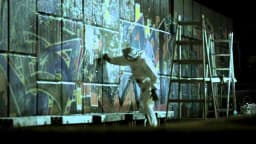
WWF's Earth Hour 2013 Swiss film campaign by Spinas Civil Voices dramatised inefficient appliances as villains, pairing environmental urgency with a 15%

WWF Earth Hour 2013 Turns Energy Guzzlers Into Swiss Campaign Villains
WWF's Earth Hour 2013 is a Swiss film campaign created by Spinas Civil Voices in March 2013 that dramatises inefficient household appliances as villains, delivering an environmental call to action reinforced by a 15% discount on energy-efficient alternatives.
Earth Hour 2013 belongs to a global annual event that, according to Wwf Id, reached more than 150 countries and territories and more than 7,000 cities, towns, and municipalities. Within that worldwide framework, the Swiss execution takes a distinctly local and consumer-oriented form. Rather than asking audiences simply to switch off their lights, the campaign targets the appliances responsible for persistent energy drain — reframing them not as neutral objects but as active antagonists in the home. The German-language tagline, "Die letzte Stunde der Stromfresser hat geschlagen" — translating as "The final hour of the energy guzzlers has struck" — frames the campaign as a reckoning, lending dramatic weight to what might otherwise be a passive symbolic gesture.
In Switzerland, where the campaign was published in March 2013, the execution comprises a single film asset. The creative approach moves beyond awareness into behavioural territory: a 15% discount on efficient appliance alternatives converts the film's emotional argument into a transactional prompt. This pairing of documentary-style dramatisation with a concrete consumer incentive distinguishes the Swiss Earth Hour 2013 work from earlier iterations of the campaign. Spinas Civil Voices, the Zurich-based agency behind the work, structured the communication to operate simultaneously as a public interest statement and a retail-adjacent call to action. The campaign carries a Clapboard Score of 63 out of 100, reflecting solid structural craft in the public service category.
WWF Switzerland launched its local participation in Earth Hour in 2009, following the event's origin as a 2007 collaboration between WWF Australia and the city of Sydney. By 2013, the global campaign had matured into a platform capable of carrying more sophisticated behavioural propositions. The 2013 edition adopted the theme "I Will If You Will," according to Wwf Ca, shifting the call to action from a passive one-hour light switch-off toward conditional social commitments — a structure designed to generate peer-driven participation and accountability.
The Swiss execution by Spinas Civil Voices reads this strategic shift and applies it to a specific consumer behaviour: appliance replacement. Household energy consumption is a durable environmental concern in Switzerland, where energy efficiency standards and consumer awareness have been consistent policy priorities. By targeting the appliances themselves — labelling them "Stromfresser" or power guzzlers — the campaign makes inefficiency visible and culpable rather than abstract. This reframing is strategically precise: it moves the audience's attention from a one-night symbolic act toward a lasting purchasing decision.
The 15% discount incentive anchors the campaign's persuasive logic in economic self-interest, broadening its appeal beyond environmentally committed audiences. According to clickz.com, Earth Hour 2013 used challenge mechanics to build participation and social momentum globally, and the Swiss campaign's discount offer operates on a comparable logic — lowering the barrier to action by making the right choice the more immediately rewarding one. No competitors are named in available sources, though the Swiss public interest and environmental communication space at the time included multiple organisations competing for audience attention and behavioural change.
Spinas Civil Voices produced the Earth Hour 2013 Swiss campaign as a single film asset, directed by Oliver Conrad. The creative team includes creative director Lorenz Spinas, art director Philipp Lengyel, and copywriter Tom Malecha — a compact unit whose roles reflect the focused, single-asset nature of the production.
On screen, the film dramatises common household appliances — refrigerators, washing machines, televisions and similar devices — as menacing energy-wasting antagonists. The appliances are framed not as benign domestic objects but as active villains whose inefficiency costs the household and the environment alike. The tone draws on the visual and narrative grammar of documentary and social experiment filmmaking, lending the piece an atmosphere of investigation and exposure rather than conventional advertising persuasion. This approach allows the film to function as a genuine piece of public interest communication, holding the audience's attention through story rather than slogan.
The German-language tagline — "Die letzte Stunde der Stromfresser hat geschlagen" — is woven into the film's conclusion, arriving as a verdict after the appliances have been indicted by the narrative. The phrasing carries the cadence of a legal or historical pronouncement, amplifying the sense that an era of waste is being formally closed. The 15% discount message is integrated as a behavioural resolution: having cast the old appliances as the enemy, the film offers the audience an immediate and rewarded path to action. No verified awards for this specific Swiss execution have been identified across Cannes Lions, Effie, One Show, D&AD, Clio, Webby, or WARC records, and no trade press reviews have been confirmed in available sources.
No verified campaign-specific performance data for the Swiss Earth Hour 2013 film — such as view counts, conversion rates, or media reach figures attributable to this execution — is publicly available. The assessment below draws on structural evidence and verifiable global campaign data.
At the global level, Earth Hour 2013 demonstrated substantial reach. According to wwf.id, more than 2 million people participated across 152 countries through the event's campaign platform. According to wwf.ca, the "I Will If You Will" theme generated conditional commitments that extended participation beyond the single hour. These figures speak to the strength of the Earth Hour platform into which the Swiss film fed, rather than to the isolated performance of the Spinas Civil Voices execution itself.
Structurally, the Swiss campaign demonstrates several characteristics associated with effective public service communication. The villain framing of inefficient appliances creates narrative tension that sustains attention — a measurable creative advantage over informational formats. The pairing of that narrative with a 15% discount offer introduces a behavioural conversion mechanism rarely present in environmental campaigns of this period, suggesting an intentional strategy to move audiences beyond awareness into action. The single-asset format concentrates creative and media investment, which is consistent with the resource realities of non-profit public interest campaigns in Switzerland. The campaign's Clapboard Score of 63 out of 100 reflects these structural strengths while acknowledging the limitations of a single-asset execution without verified amplification or outcome data.
WWF's Earth Hour 2013 is a Swiss film campaign created by Spinas Civil Voices and published in March 2013. It dramatises inefficient household appliances as energy-wasting villains and pairs that environmental message with a 15% discount on efficient alternatives, connecting a symbolic global event to a direct consumer behaviour change.
Spinas Civil Voices created the Earth Hour 2013 campaign for WWF Switzerland. The team included creative director Lorenz Spinas, art director Philipp Lengyel, copywriter Tom Malecha, and director Oliver Conrad. The agency is based in Zurich and produced the campaign as a single film asset for the Swiss market in March 2013.
The tagline "Die letzte Stunde der Stromfresser hat geschlagen" translates as "The final hour of the energy guzzlers has struck." It frames inefficient household appliances as villains whose era of waste is formally ending, lending the film the tone of a verdict and reinforcing the campaign's call to replace energy-draining devices.
Earth Hour 2013 reached more than 150 countries and territories and more than 7,000 cities, according to wwf.id. WWF Indonesia also reported more than 2 million participants across 152 countries. The "I Will If You Will" theme, noted by wwf.ca, shifted participation toward conditional social commitments rather than a single symbolic gesture.
No verified awards for the Swiss Earth Hour 2013 execution have been identified. A search of Cannes Lions, Effie, One Show, D&AD, Clio, Webby, and WARC records found no entries or wins attributed to this specific campaign. The work carries a Clapboard Score of 63 out of 100 based on structural creative assessment.
The 2013 Swiss campaign introduced a more consumer-action-oriented approach than previous Earth Hour editions. Rather than a passive light switch-off, it cast inefficient appliances as active villains and paired that narrative with a 15% discount incentive on efficient replacements — connecting an environmental public interest message directly to a purchasable behavioural outcome.
.webp)
Creative Collaboration Platform: The Backbone of Modern Creative WorkWhat is a creative collaboration platform?Clapboard defines a creative collaboration platform as the operational core for today’s distributed creative teams. This is not a collection of digital collaboration tools stitched together; Clapboard’s system


Understanding the Creative Production MarketplaceWhat is a Creative Production Marketplace?Clapboard defines a creative production marketplace as a structured ecosystem where brands, agencies, and production talent converge to execute video, advertising, and branded content at scale. Unlike the legacy agency or freelanREAD FULL ARTICLE

The Urgent Need for a Creative Production Operating SystemWhy Traditional Creative Production Models Break DownClapboard sees the creative production landscape shifting under pressure. Content velocity is no longer a buzzword—it’s a mandate. Modern advertising demands relentless output across dozens of channels, each wREAD FULL ARTICLE