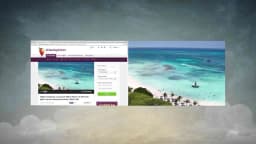
British Airways and Ageisobar transformed bookstore barcode scanners in Brazil into live flight search tools with the 2013 ambient campaign Barcode Reader.

British Airways Barcode Reader Turns Bookstores Into a Flight Search Tool
British Airways' "Barcode Reader" is a 2013 ambient advertising campaign created by Ageisobar São Paulo in which modified barcode scanners in Brazilian bookstore travel sections displayed live British Airways flight information and fares whenever a customer scanned a travel guidebook, connecting the act of browsing destinations with the ability to book a flight in a single physical gesture.
The campaign launched in January 2013 in Brazil, targeting consumers already engaged with travel as a category — people physically holding destination guides in their hands. The strategic mechanic was elegantly simple: the barcode readers were modified so that scanning the barcode of a travel book triggered British Airways route information and pricing for the corresponding destination rather than the book's retail price. A customer flicking through a guide to New York, London, or Dubai would scan the cover and receive British Airways flight details immediately. The point of purchase became a point of departure.
Ageisobar, the São Paulo-based agency operating under the Isobar network, conceived and produced the activation as an ambient, small-scale execution. The campaign contained a single media asset and was designed for high contextual relevance rather than broad reach. Its objective, as documented by famouscampaigns.com, was to broaden Brazilian consumer perception of British Airways beyond its home market of Britain and to establish the airline as a carrier serving an international network of destinations. By intercepting travellers at the moment of aspiration — the bookshop aisle — rather than at a conventional advertising touchpoint, the campaign made British Airways part of the journey before the journey began. The Clapboard Score for "Barcode Reader" is 63 out of 100, reflecting a sharply conceived idea with limited documented reach but clear creative and strategic coherence.
British Airways entered the Brazilian market with a specific positioning challenge. The airline needed to shift consumer perception beyond its identity as a carrier to and from the United Kingdom and demonstrate the breadth of its international network to Brazilian travellers considering long-haul flights. According to famouscampaigns.com, that repositioning objective shaped the entire strategic architecture of "Barcode Reader."
The choice of bookstore travel sections as the activation environment was not incidental. Brazilian consumers browsing travel guides represent a self-selecting audience of high-intent travellers at an early but emotionally engaged stage of trip planning. The ambient medium intercepted that intent at its most receptive moment, without competing in the cluttered space of digital advertising or conventional out-of-home formats. In Brazil, where the travel and leisure sector was expanding on the back of a growing middle class and rising domestic and international air travel demand, that moment of aspiration carried real commercial weight.
The competitive landscape in 2013 made the precision of this approach strategically meaningful. According to data cited by onemileatatime.com, British Airways recorded traffic growth of approximately 3.6 percent in 2013, outpacing Lufthansa at approximately 2.3 percent and Air France-KLM at approximately 2.2 percent among major European carriers. In a market where rivals including Lufthansa and Air France-KLM were also competing for Brazilian long-haul passengers, British Airways chose depth of context over breadth of reach. The International Civil Aviation Organization reported approximately 3.1 billion passenger journeys globally in 2013, a year-on-year increase of roughly 5 percent, underscoring a buoyant environment in which airlines with strong brand positioning stood to benefit most from precise, memorable consumer contact.
Carlos Domingos served as creative director on "Barcode Reader" for British Airways, leading the Ageisobar São Paulo team responsible for the campaign, according to adruby.com and famouscampaigns.com. Art direction was handled by Henrique Mattos, Cícero Souza, and Cristiano Rodrigues, with copywriting credited to Daguito Rodrigues and Nicholas Berganti, per the same sources.
The creative execution demanded both conceptual clarity and technical precision. The team identified that bookstore barcode scanners — hardware present in every retail environment but invisible to most consumers as an advertising medium — could be repurposed as a live data delivery channel. By modifying the scanners so they queried British Airways route and fare data rather than a retail inventory system, the agency created a functional media placement inside an entirely non-advertising context. The creative idea and the technical solution were inseparable: neither existed without the other, and that fusion is the defining quality of the execution.
The campaign produced a single media asset, as documented by Clapboard, but its physical presence in the bookstore environment meant each individual interaction was immersive and unmediated. There was no screen, no banner, no poster to ignore — only a device the consumer was already reaching for. The ambient format, categorised as small-scale by the Cannes Lions jury that shortlisted the work in its Direct category in 2013, privileged the quality of the encounter over the quantity of impressions. In a discipline where ambient advertising frequently prioritises spectacle, "Barcode Reader" achieved its effect through restraint and relevance, allowing the destination itself — encoded in the guidebook barcode — to do the persuasive work.
No verified sales or reach performance data for "Barcode Reader" is publicly available, and British Airways' media centre has not published campaign-specific metrics for this activation. What is documented, however, is a pattern of industry recognition that provides a structural measure of the campaign's creative and strategic credibility.
"Barcode Reader" received a Cannes Lions shortlist in the Direct category, specifically in the Ambient Media: Small Scale subcategory, in 2013, according to famouscampaigns.com. The same source documents that the campaign also received a Bronze award and a Merit recognition from the Brazilian Creative Club in 2013. These are externally verifiable distinctions awarded through peer jury processes, and they confirm that the campaign was judged effective in concept and execution by practitioners operating in both the global and Brazilian creative markets.
Structurally, the campaign's effectiveness rests on the alignment between medium, message, and moment. A consumer scanning a travel guide is already in a decision-adjacent mental state; receiving British Airways flight information at that precise point converts aspiration into a potential transaction with minimal friction. The mechanic required no consumer education, no app download, and no secondary step — the existing retail behaviour became the advertising interaction. For a campaign with a single media asset and small-scale ambient classification, that efficiency of persuasion is measurable in design terms even where impression data is absent. The Clapboard Score of 63 out of 100 reflects exactly this profile: a tightly executed, contextually intelligent idea whose impact was real but whose documented reach limits a higher rating.
British Airways' "Barcode Reader" was a 2013 ambient campaign created by Ageisobar São Paulo in Brazil. Modified bookstore barcode scanners displayed British Airways flight information and fares when customers scanned travel guidebooks, turning a retail browsing moment into a live flight search interaction at the point of travel inspiration.
Ageisobar São Paulo created the campaign. The agency operated under the Isobar network and was led creatively by Carlos Domingos as creative director, with art directors Henrique Mattos, Cícero Souza, and Cristiano Rodrigues, according to famouscampaigns.com and adruby.com.
"Barcode Reader" received a Cannes Lions shortlist in the Direct category, specifically in the Ambient Media: Small Scale subcategory, in 2013, according to famouscampaigns.com. The campaign also won a Bronze award and a Merit recognition from the Brazilian Creative Club in 2013.
British Airways targeted Brazil to broaden local consumer perception of the airline beyond its British identity. According to famouscampaigns.com, the campaign aimed to communicate that British Airways served a wide network of international destinations, addressing a specific positioning gap in the Brazilian travel market.
The Clapboard Score for "Barcode Reader" is 63 out of 100. The score reflects a conceptually sharp and contextually precise ambient execution whose creative and strategic coherence is acknowledged through Cannes Lions and Brazilian Creative Club recognition, tempered by its small-scale reach and limited publicly documented performance metrics.
.webp)
Creative Collaboration Platform: The Backbone of Modern Creative WorkWhat is a creative collaboration platform?Clapboard defines a creative collaboration platform as the operational core for today’s distributed creative teams. This is not a collection of digital collaboration tools stitched together; Clapboard’s system


Understanding the Creative Production MarketplaceWhat is a Creative Production Marketplace?Clapboard defines a creative production marketplace as a structured ecosystem where brands, agencies, and production talent converge to execute video, advertising, and branded content at scale. Unlike the legacy agency or freelanREAD FULL ARTICLE

The Urgent Need for a Creative Production Operating SystemWhy Traditional Creative Production Models Break DownClapboard sees the creative production landscape shifting under pressure. Content velocity is no longer a buzzword—it’s a mandate. Modern advertising demands relentless output across dozens of channels, each wREAD FULL ARTICLE