Child Focus launched Cross out Child Pornography in Belgium in May 2012, a Grey Brussels digital social experiment shortlisted at Cannes Lions 2012 PR Lions.

Child Focus Puts Child Pornography Back on Belgium's Public Agenda
Child Focus launched Cross out Child Pornography in Belgium in May 2012, a digital public-interest campaign created by Grey Brussels that used a documentary-style social experiment to place collective action at the heart of the fight against child sexual exploitation online.
The campaign repositions Child Focus as a proactive mobiliser of public conscience, moving beyond identification work to invite direct participation from Belgian citizens. The central mechanic is disarmingly simple: audiences are asked to make a symbolic cross against child pornography through an online interaction, transforming a passive awareness moment into a declared act of solidarity. That gesture of crossing out becomes both the campaign's creative device and its call to action, anchoring an emotional and urgent message in something tangible and repeatable.
Developed as a documentary and social experiment hybrid, the campaign uses an authentic, unscripted register to build credibility and emotional proximity. Digital platforms serve as the primary distribution channel, allowing the campaign to circulate widely across Belgium and reach international audiences. The case film produced by Grey Brussels documents the campaign's mechanics and public response, functioning as a secondary persuasion tool targeted at industry and media stakeholders. That film was subsequently shortlisted at Cannes Lions 2012 in the PR Lions category, Public Awareness section, confirming the campaign's standing within international creative and communications communities. The Clapboard Score for this campaign is 66 out of 100, reflecting solid craft and strategic clarity within a category where emotional resonance frequently outpaces formal production scale.
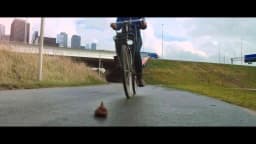
Child Focus identifies a specific strategic problem the campaign is designed to solve: child pornography had slipped from the top of public consciousness in Belgium, requiring a deliberate effort to restore urgency. Rather than delivering another information-led public service announcement, Grey Brussels chose a documentary social experiment format precisely because it generates authentic human reactions that inform campaigns carry a higher chance of dismissal.
The participatory mechanic reflects a broader understanding of how digital publics engage with social causes. When audiences are offered a low-barrier act of commitment, such as making a cross online, the psychological distance between awareness and action collapses. The campaign taps into a documented pattern in public interest communication: affective engagement and perceived agency substantially improve message retention and advocacy behaviour. This approach was particularly well-suited to Belgium's digitally connected population and the relatively intimate scale of Belgian civil society, where visible public mobilisation can carry disproportionate weight.
Child Focus had previously focused its creative output on missing-child identification, most notably through its 2009 Age Progression campaign, which digitally aged long-term missing children's faces. The 2012 campaign represents a strategic expansion into the domain of online child sexual exploitation, according to LinkedIn documentation associated with the campaign team. This shift acknowledges the growing centrality of the internet to child protection challenges. According to Missingchildreneurope Eu, Child Focus operates within a European framework of missing and exploited children's organisations, lending the Belgium-based charity regional authority that the campaign draws upon implicitly. No specific competitor organisations are named in available research, though Child Focus operates within a broader landscape of child protection charities active across Western Europe.
Grey Brussels structures the Cross out Child Pornography campaign around the grammar of documentary filmmaking rather than traditional advertising production. The campaign places real people, real reactions, and real stakes at the centre of its creative universe, using the social experiment format to strip away the mediated quality that often weakens public service communication.
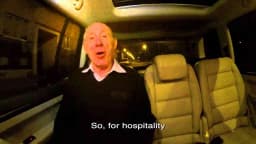
On screen, the campaign follows a social experiment scenario in which participants encounter the issue of child pornography in a direct, structured context designed to elicit genuine responses. The experiment captures the moment individuals are invited to make their cross, documenting the authentic emotional weight of that act. The resulting footage functions simultaneously as campaign content and as evidence of public engagement, a dual purpose that is fundamental to the documentary approach Grey Brussels selected.
Creative Director Koen Nuyts leads the team responsible for the campaign's overall direction and tone. Art Director Emmanuel Colin shapes the visual language, while Copywriter Gilles De Bruyère crafts the written and verbal register that keeps the work precise without being clinical. Digital Strategist Thierry De Vynck, who served as Online Strategic Planner at Grey Brussels according to LinkedIn, develops the online component that transforms viewing into participation, extending the campaign's reach beyond passive consumption. The integration of the symbolic cross mechanic into the digital experience reflects a considered design decision: the action must feel meaningful rather than perfunctory if it is to generate the emotional commitment the campaign requires. The case film assembled from this material was submitted for Cannes Lions 2012 and earned a shortlist placement in the PR Lions Public Awareness category, as documented in the campaign's own case film description.
No comprehensive verified performance data measuring public reach, online participation volume, or media coverage figures for Cross out Child Pornography is publicly available. The campaign's impact is instead evidenced through the competitive recognition it received following its May 2012 release in Belgium.
The campaign earned a shortlist placement at Cannes Lions 2012 in the PR Lions category, Public Awareness section, as documented in the campaign case film and confirmed by Yes I Cannes. No medal level has been reported for this entry, placing it among the recognised work of that cycle without a Lion. The campaign also won the ADSA Best of Unconventional award in Italy, as reported via LinkedIn documentation connected to Digital Strategist Thierry De Vynck, representing meaningful international validation outside the Cannes ecosystem.
Structurally, the campaign's effectiveness rests on the alignment of its mechanic with its message. The act of crossing out is both easy to perform and emotionally coherent with the subject matter, reducing friction for participation while maintaining gravity. The documentary format lends the work a credibility that scripted public service advertising rarely achieves, and the case film format ensures the campaign can travel across industry channels long after its initial Belgian release. These structural qualities suggest a campaign built not only for public impact but for sustained professional conversation, which the Cannes shortlist placement affirms. The Clapboard Score of 66 out of 100 reflects these strengths while acknowledging the limited scale of a single verified media asset and the absence of publicly reported participation metrics.
Child Focus launched Cross out Child Pornography in Belgium in May 2012. Created by Grey Brussels, it is a digital public-interest campaign using a documentary social experiment format to mobilise public action against child sexual exploitation online, inviting participants to make a symbolic cross as a direct act of solidarity.
Grey Brussels created the campaign with Creative Director Koen Nuyts, Art Director Emmanuel Colin, Copywriter Gilles De Bruyère, and Digital Strategist Thierry De Vynck leading production. Each role contributed to integrating the documentary format with a participatory online mechanic central to the campaign's public engagement strategy in Belgium.
The Child Focus Cross out Child Pornography campaign received a Cannes Lions 2012 shortlist placement in the PR Lions Public Awareness category. No medal level has been publicly reported for this entry. The campaign also won the ADSA Best of Unconventional award in Italy, as documented via LinkedIn records connected to the campaign team.
The Child Focus Cross out Child Pornography campaign holds a Clapboard Score of 66 out of 100. This reflects solid strategic alignment and creative craft in the public service category, balanced against a single verified media asset and the absence of publicly reported participation or reach metrics from the 2012 Belgian campaign.
Grey Brussels structured the campaign as a documentary social experiment, capturing authentic participant reactions when confronted with the issue of child pornography in a direct setting. The resulting footage served as campaign content and evidence of real public engagement, lending credibility that scripted public service advertising rarely achieves in the Belgian market.
Child Focus had focused earlier creative work on missing-child identification, including the 2009 Age Progression campaign, which digitally aged long-term missing children's faces. The 2012 campaign marked a strategic shift toward public mobilisation against online child sexual exploitation, expanding the organisation's communications scope within Belgium and internationally.
.webp)
Creative Collaboration Platform: The Backbone of Modern Creative WorkWhat is a creative collaboration platform?Clapboard defines a creative collaboration platform as the operational core for today’s distributed creative teams. This is not a collection of digital collaboration tools stitched together; Clapboard’s system


Understanding the Creative Production MarketplaceWhat is a Creative Production Marketplace?Clapboard defines a creative production marketplace as a structured ecosystem where brands, agencies, and production talent converge to execute video, advertising, and branded content at scale. Unlike the legacy agency or freelanREAD FULL ARTICLE

The Urgent Need for a Creative Production Operating SystemWhy Traditional Creative Production Models Break DownClapboard sees the creative production landscape shifting under pressure. Content velocity is no longer a buzzword—it’s a mandate. Modern advertising demands relentless output across dozens of channels, each wREAD FULL ARTICLE