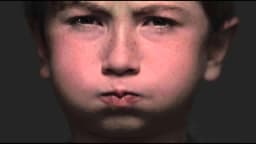
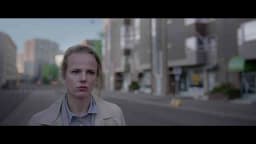
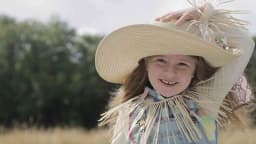
Fragile Childhood's 'Monsters' PSA, created by Euro RSCG Helsinki in 2012, reframed parental alcohol misuse through a child's eyes, earning a Golden Drum and

Fragile Childhood Turns Parental Drinking Into a Monster Movie
Fragile Childhood's 'Monsters' is a 55-second Finnish public interest film released in September 2012 that depicts children confronting grotesque, horror-film creatures who are revealed to be their own intoxicated parents, using the visual language of fear to communicate the psychological impact of parental alcohol misuse on children in Finland.
Created by Euro RSCG Helsinki for the Finnish nonprofit Fragile Childhood — known in Finland as Lasinen Lapsuus — the campaign launched on 11 September 2012 via YouTube, available in both Finnish and English. The film's central objective was to shift the perspective on a culturally sensitive social issue: rather than addressing alcohol misuse through the lens of adult behaviour or public health statistics, 'Monsters' placed the camera at the child's eye level, making the subjective terror of living with an intoxicated parent viscerally legible to adult audiences. In doing so, it transformed an abstract social problem into an immediate emotional experience.
The campaign operates as a single-film public service announcement distributed through digital platforms, with the Finnish market as its primary geographic target. Finland has a documented history of public awareness efforts around alcohol harm, and Fragile Childhood has long positioned itself as the leading advocacy voice for children affected by parental drinking in that country. 'Monsters' represents the organisation's most internationally visible creative output. The film earned a Clapboard Score of 86 out of 100, reflecting its strong creative execution and measurable cultural impact. Its reach extended well beyond Finland's borders, accumulating more than 1.6 million YouTube views within two weeks of launch, as reported by shots.net, and generating more than 9,000 media hits in the month following release, according to D&AD.
Fragile Childhood identified a persistent gap in alcohol awareness communication in Finland. Most public health messaging directed at parental drinking addressed adult behaviour through statistics, warnings, or appeals to self-interest. The organisation recognised that this framing left untouched the most emotionally resonant dimension of the issue: how a drinking parent appears to a frightened child. 'Monsters' was built entirely around that insight.
The strategic decision to use horror-genre visual codes was deliberate and precise. By rendering intoxicated parents as literal monsters — grotesque, physically distorted, and threatening — the film did not ask adult viewers to imagine a child's experience abstractly. It made them inhabit it directly. The approach transformed empathy from an intellectual exercise into an involuntary response, which is precisely the condition required for a public service film to move beyond awareness and toward behavioural reflection.
Finland's relationship with alcohol harm in family contexts provided the campaign with a culturally specific foundation. The country's public health infrastructure and nonprofit sector have historically engaged with alcohol misuse as a family welfare issue, not merely a personal health matter. Fragile Childhood, as the principal advocacy organisation for children of alcohol-dependent parents in Finland, operated within that tradition while choosing a creative register — horror cinema — that departed from it entirely. The competitive landscape for public service advertising in Finland and across the Nordic region is defined by well-funded government health bodies and established charities, all competing for limited public attention. By adopting the aesthetic language of genre filmmaking rather than conventional PSA formats, 'Monsters' secured a distinctive position in that environment and achieved organic international sharing that no media buy could have replicated.
The creative architecture of 'Monsters' rests on a precise collaboration between Euro RSCG Helsinki's creative leadership and a production team with the technical range to execute genre filmmaking within the constraints of a nonprofit brief. Marko Vuorensola served as both creative director and art director on the campaign, shaping the film's core visual concept and ensuring the horror-genre aesthetic was applied with enough craft to be genuinely unsettling rather than merely referential. Copywriters Annu Terho and Paul Earl developed the narrative framework, while account director Nina Myllyharju and project planner Muusa Salminen managed the client and production relationships.
The film was directed by Mikko Lehtinen and produced by Sauna@Grilli Films, with executive producer Petteri Lehtinen overseeing the production. Hana Kovic served as producer. Service production was provided by Studio Arkadena in Ljubljana, bringing an international production dimension to what remained a distinctly Finnish campaign in its subject matter and audience. Director of photography Jure Verovsek was responsible for the film's visual texture, which shots.net, reviewing the work on 20 September 2012, described as evoking the register of a Wes Craven film — a comparison that speaks directly to the precision of the cinematographic choices made.
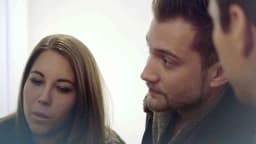
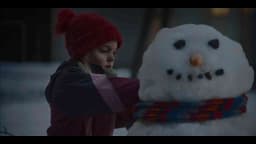
On screen, the film follows young children in ordinary domestic settings as they encounter figures that appear, through the visual language of horror cinema, as monstrous and threatening. As the camera reveals the true identity of these figures, the audience understands that the monsters are the children's own parents, seen through the distorting prism of intoxication. The 55-second runtime disciplines the storytelling to its essential emotional beat, leaving no space for didactic narration or explanatory text. The horror effects and production design were executed with sufficient fidelity to genre conventions that the reveal lands as both a formal surprise and a moral statement.
The impact of 'Monsters' is documented across multiple independent sources and award bodies. According to shots.net, the film accumulated more than 1.6 million YouTube views within two weeks of its September 2012 launch — a scale of organic reach unusual for a nonprofit PSA originating in Finland. D&AD reported that the campaign generated more than 9,000 media hits in the month following release, underscoring the film's ability to travel beyond its intended Finnish audience and provoke coverage across international media.
The awards record for 'Monsters' is extensive and spans the most rigorous creative evaluation frameworks in European and global advertising. The campaign received a Bronze at the 2012 Epica Awards in the TV and Cinema Commercial category for Public Interest work. In 2013, it won the Grand Prix at the EACA Care Awards in the Government Bodies and Related Organisations category. Also in 2013, it was awarded the Golden Drum in the Film category for Social and Charity work — one of the most significant honours available to advertising produced in Central and Eastern Europe and the Nordic region. The campaign additionally received a Gold at the Cresta Awards in the TV, Cinema and Online Film category for Public Services, as documented by musebyclios.com.
Taken together, these results position 'Monsters' as one of the most decorated Finnish public service campaigns of its era. The film's structural effectiveness derives from the alignment between its creative concept and its distribution strategy: a single, highly shareable film with no media spend dependency, designed to earn attention rather than purchase it. That architecture proved correct.
Fragile Childhood's 'Monsters' is a 55-second Finnish public service film released on 11 September 2012. Created by Euro RSCG Helsinki with creative direction by Marko Vuorensola, it depicts children seeing their intoxicated parents as literal horror-film monsters, communicating the psychological impact of parental alcohol misuse from a child's perspective.
Mikko Lehtinen directed 'Monsters' for Fragile Childhood. The film was produced by Sauna@Grilli Films, with Marko Vuorensola as creative director and art director, Annu Terho and Paul Earl as copywriters, and director of photography Jure Verovsek handling the film's distinctive horror-genre visual style, as documented by shots.net.
Fragile Childhood's 'Monsters' won the Golden Drum in Film for Social and Charity in 2013, the EACA Care Awards Grand Prix in 2013, a Cresta Awards Gold, and a Bronze at the 2012 Epica Awards in the Public Interest category. These awards span the leading European and global creative evaluation bodies.
According to shots.net, 'Monsters' accumulated more than 1.6 million YouTube views within two weeks of its September 2012 launch. D&AD also reported that the film generated more than 9,000 media hits in the month after release, reflecting organic international reach well beyond the Finnish market.
Fragile Childhood's 'Monsters' addresses parental alcohol misuse and its effect on children in Finland. The film is produced for Fragile Childhood, known in Finland as Lasinen Lapsuus, the country's principal nonprofit advocacy organisation for children living with alcohol-dependent parents.
Euro RSCG Helsinki used horror-genre visual codes to place adult viewers directly inside a child's subjective experience of fear. Rather than relying on statistics or conventional health messaging, the approach made the terror of living with an intoxicated parent involuntarily felt, increasing the film's emotional impact and shareability beyond Finland.
.webp)
Creative Collaboration Platform: The Backbone of Modern Creative WorkWhat is a creative collaboration platform?Clapboard defines a creative collaboration platform as the operational core for today’s distributed creative teams. This is not a collection of digital collaboration tools stitched together; Clapboard’s system


Understanding the Creative Production MarketplaceWhat is a Creative Production Marketplace?Clapboard defines a creative production marketplace as a structured ecosystem where brands, agencies, and production talent converge to execute video, advertising, and branded content at scale. Unlike the legacy agency or freelanREAD FULL ARTICLE

The Urgent Need for a Creative Production Operating SystemWhy Traditional Creative Production Models Break DownClapboard sees the creative production landscape shifting under pressure. Content velocity is no longer a buzzword—it’s a mandate. Modern advertising demands relentless output across dozens of channels, each wREAD FULL ARTICLE