SOS Children's Villages Uses a Flat to Reframe Child Homelessness
SOS Children's Villages' 'The perfect flat' is a Swiss ambient campaign created by Streuplan in December 2014 that uses the concept of an idealised home to draw attention to the reality faced by children without stable family environments in Switzerland.
The campaign operates within the public interest sector and was built around a single media asset, a disciplined creative constraint that places all communicative weight on one precise, well-constructed idea. Rather than relying on the volume of media impressions or the breadth of paid distribution, 'The perfect flat' invests in the resonance of a single encounter between the audience and the work. This approach reflects a wider shift in Swiss and European charity communications toward ambient formats that intercept audiences in everyday environments, prompting reflection rather than demanding attention. In Switzerland, where public trust in charitable institutions shapes donation behaviour, the ambient format carries particular strategic weight because it meets people on their own terms, in spaces they already occupy.
SOS Children's Villages is an international non-governmental organisation with a long-standing presence in Switzerland, dedicated to supporting children who have lost parental care or who are at risk of losing it. The organisation's Swiss operations provide the local credibility that grounds this campaign's message. 'The perfect flat' sits at the intersection of that institutional mission and a sharply observed creative truth: that what most people consider ordinary domestic comfort is, for many children, an aspiration rather than a given. The campaign was created by Streuplan, a Zurich-based agency, with Thomas Back serving as creative director, Ennio Cadau as copywriter, and Basil Renz as account director. Film production was handled by Futurelite, directed by Claudio Catrambone. The Clapboard Score for this campaign is 72 out of 100.
SOS Children's Villages chose the ambient format deliberately, recognising that the Swiss public interest landscape rewards ideas that earn attention rather than purchase it. The campaign targets an audience already familiar with charitable appeals, requiring Streuplan to find an angle that bypasses habituation and lands with fresh emotional force. The concept of 'the perfect flat' achieves this by inverting a familiar aspiration: the search for the ideal home, a preoccupation deeply embedded in Swiss urban culture, is recast as a measure of what vulnerable children lack rather than what comfortable adults seek.
The charity advertising environment in which 'The perfect flat' appeared was competitive and resource-intensive. According to data cited by the Charity Commission for England and Wales, charities spent £3.4 billion on advertising over the preceding ten years, with £2.4 billion directed at direct mail, making direct mail the largest single charity advertising expense as of 2014. While this figure reflects the broader European and UK market rather than Switzerland specifically, it contextualises the boldness of choosing a single ambient asset over conventional volume-driven channels. In Switzerland, where donor fatigue and media fragmentation were already shaping how non-profits communicated, the decision to concentrate creative and production resources into one precise intervention reflects a sound strategic instinct.
SOS Children's Villages operates in a sector where peer organisations command significant resources. UNICEF USA raised $606.8 million in fiscal 2014, according to UNICEF USA's own published financials, and Save the Children International reported income exceeding $1 billion that same year, as stated in Save the Children's official reporting. Against that backdrop, a focused ambient campaign built on a single asset represents a different kind of strategic bet: depth of impact over breadth of reach, in a market where Swiss audiences respond to restraint and precision.
Thomas Back directed the creative vision for 'The perfect flat', with Ennio Cadau shaping the copywriting and Basil Renz overseeing the account. Film production was executed by Futurelite under the direction of Claudio Catrambone, bringing a production discipline to the ambient format that elevates the single media asset beyond a static installation.
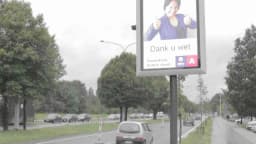
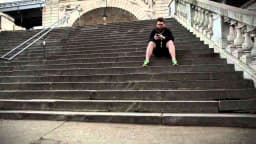
On screen, the work presents the idea of a flat — described as perfect — in a way that gradually recontextualises what perfection means for a child without stable family care. The execution draws its power from the gap between the aspirational language of the concept and the lived reality it quietly exposes. The viewer is led through a scenario in which the ordinary markers of domestic comfort are framed from the perspective of a child for whom such markers represent security rather than lifestyle. The action does not rely on explicit distress imagery; instead, it uses the language of real estate and domestic aspiration to create an emotional shift that arrives with quiet force rather than loud urgency.
Claudio Catrambone's direction for Futurelite gives the piece a measured visual quality that respects the audience's intelligence, a characteristic consistent with effective Swiss public interest communication. The ambient medium itself functions as part of the creative statement: by placing the work in environments where people already encounter property listings, residential signage, or domestic imagery, 'The perfect flat' gains a layer of contextual meaning that a television or digital placement would not deliver. Streuplan's decision to commit entirely to one asset rather than a multi-format campaign concentrates the creative idea to its most essential form, which is both a risk and a demonstration of confidence in the concept's singular strength.
No verified performance data for 'The perfect flat' is publicly available. No documented metrics for donation uplift, reach, earned media impressions, or audience engagement have been published by SOS Children's Villages, Streuplan, or any third-party source. The campaign does not appear in the award databases of Cannes Lions, the Effies, the One Show, D&AD, the Clios, the Webby Awards, or WARC's effectiveness archive. No trade press reviews were found in Campaign, Ad Age, Adweek, The Drum, or Contagious.
Structural analysis offers a partial substitute for absent metrics. The campaign's reliance on a single ambient asset is a double-edged strategic choice: it concentrates creative impact but limits scalability and measurability by design. In Switzerland, where ambient placements typically reach defined geographic audiences in specific urban contexts, the work's effectiveness would have depended heavily on placement quality, dwell time, and the degree to which the surrounding environment amplified the central idea. Claudio Catrambone's film production for Futurelite suggests the campaign had a visual ambition consistent with public festival or high-footfall placement rather than low-cost guerrilla execution, which implies a considered approach to audience selection even in the absence of documented reach figures.
The Clapboard Score of 72 out of 100 reflects the campaign's creative coherence and the precision of its concept, balanced against the absence of measurable outcomes and limited public documentation. For an ambient public interest campaign produced in Switzerland in 2014, that score positions 'The perfect flat' as a disciplined piece of craft with a strong conceptual foundation, even if its real-world impact remains unverified.
'The perfect flat' is a Swiss ambient campaign created by Streuplan for SOS Children's Villages in December 2014. It uses the concept of an idealised home to highlight what children without stable family care lack. The campaign comprises a single media asset, produced by Futurelite and directed by Claudio Catrambone.
Streuplan, a Zurich-based agency, created 'The perfect flat' for SOS Children's Villages. The creative team comprised Thomas Back as creative director, Ennio Cadau as copywriter, and Basil Renz as account director. Film production was handled by Futurelite, with Claudio Catrambone directing the work in Switzerland in 2014.
'The perfect flat' used the ambient medium, placing its single creative asset within everyday environments in Switzerland. This format intercepts audiences in spaces they already occupy, creating a moment of reflection without demanding attention. The ambient approach suited SOS Children's Villages' goal of reaching Swiss audiences in a non-intrusive, contextually resonant way.
'The perfect flat' does not appear in the award records of Cannes Lions, the Effies, the One Show, D&AD, the Clios, the Webby Awards, or WARC's effectiveness archive. No documented recognition from major international or Swiss advertising award programmes has been identified for this 2014 SOS Children's Villages campaign.
'The perfect flat' holds a Clapboard Score of 72 out of 100. This score reflects the campaign's strong conceptual foundation and creative coherence as a single-asset ambient work, balanced against the absence of publicly available performance data and limited documentation of its real-world impact in the Swiss market.
.webp)
Creative Collaboration Platform: The Backbone of Modern Creative WorkWhat is a creative collaboration platform?Clapboard defines a creative collaboration platform as the operational core for today’s distributed creative teams. This is not a collection of digital collaboration tools stitched together; Clapboard’s system


Understanding the Creative Production MarketplaceWhat is a Creative Production Marketplace?Clapboard defines a creative production marketplace as a structured ecosystem where brands, agencies, and production talent converge to execute video, advertising, and branded content at scale. Unlike the legacy agency or freelanREAD FULL ARTICLE

The Urgent Need for a Creative Production Operating SystemWhy Traditional Creative Production Models Break DownClapboard sees the creative production landscape shifting under pressure. Content velocity is no longer a buzzword—it’s a mandate. Modern advertising demands relentless output across dozens of channels, each wREAD FULL ARTICLE