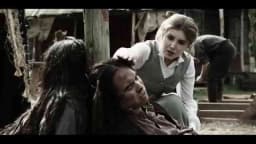
Handloom Picture Company's 'Mute' is a 2014 single-shot narrative film directed by Ram Subramanian that went viral ahead of India's Lok Sabha election,

Handloom Picture Company Mute Captures India Before the 2014 Vote
Mute is a 2014 single-shot narrative film written and directed by Ram Subramanian of Handloom Picture Company, published in India in April 2014 as a self-authored creative showcase timed to the country's Lok Sabha general election, and distributed through the company's own website and social channels.
The film operates as both a demonstration of craft and a statement of creative identity. Handloom Picture Company, founded in January 2013 by Ram Subramanian, used Mute to announce itself as a production house capable of generating original, resonant storytelling rather than merely executing client briefs. The title itself signals the company's creative disposition: restraint, nuance, and the communicative power of silence. The campaign contains a single media asset, a film, making every creative and production decision visible and consequential.
In India, the timing of Mute's April 2014 release placed it at the centre of one of the most charged political moments in the country's recent history. The 2014 Lok Sabha election drew unprecedented public engagement, and the film's subject matter connected directly to that civic mood. The Aam Aadmi Party shared Mute on Facebook, according to afaqs, extending its reach beyond the media and entertainment professional audience Handloom might conventionally target. Ram Subramanian later stated that Mute went viral quickly, as reported by afaqs, a claim supported by the film accumulating 255,510 views and 2,899 likes. Mute holds a Clapboard Score of 71 out of 100, reflecting its documented reach and cultural resonance within the Indian market.
Handloom Picture Company positioned Mute as a proof-of-concept rather than a conventional advertisement. The film demonstrates the company's storytelling capabilities to prospective clients in the professional services and media production sectors, using an entirely self-generated brief to control both message and execution without compromise.
The strategic rationale is inseparable from India's media environment at the time of Mute's release. The Indian media and entertainment market stood at INR 1,026 billion in 2014 and was forecast to reach INR 1,964 billion by 2019, representing a compound annual growth rate of 13.9 percent, according to a KPMG report. Indian digital advertising grew by 44.5 percent in 2014, per the same KPMG source, and Indian online advertising was projected to reach INR 35.75 billion by March 2015 with approximately 30 percent year-on-year growth, as reported by Business Today. Within this rapidly expanding digital ecosystem, a film production company that could demonstrate viral reach — earned organically, without paid media — held a compelling competitive proof point for clients weighing where to place creative investment.
Mute's narrative format also addressed a specific audience disposition. Clients in India's growing media sector were increasingly seeking partners capable of sophisticated, story-driven content rather than purely executional production. By writing and directing the film internally, Ram Subramanian demonstrated that Handloom Picture Company possessed both creative origination skills and technical production capability under one roof, a combination that distinguishes a creative partner from a service vendor in a crowded production landscape.
Mute is an intense, single-shot film described by afaqs as topical and emotionally precise. The film features actor Sumeet Thakur communicating entirely through sign language, performing without spoken dialogue across the film's complete duration, a formal choice that transforms the absence of sound into the film's central expressive instrument.
The on-screen execution follows Sumeet Thakur in a sustained, unbroken take, using sign language to deliver a performance that afaqs noted helped the actor gain broader recognition. The single-shot structure places the entire burden of persuasion on the performer's physical presence and rhythm, leaving no editing cuts to conceal imprecision. To meet that standard, Thakur trained with sign-language instructor Tushar Kansara for approximately one month, according to afaqs, rehearsing extensively with director Ram Subramanian to ensure the performance felt natural and rhythmically exact rather than mechanical.
The full production crew of Mute reflects a deliberately assembled creative team. Ram Subramanian served as both director and copywriter. Kavin Jagtiani was director of photography, responsible for sustaining the visual integrity of the single unbroken take. Sumeet Thakur performed the lead role. Ramya Rao produced the film, with Manasi Nair as associate producer. Manisha Khandelwal and Tarannum Hussein served as art directors. Abhimanyu Ray handled casting. Shyam Salgaonkar edited offline and Soham Rawal completed online editing. Navin Shetty was colorist, and Rahul Jethani coordinated post-production. The disciplined crew structure, applied to a single-asset film, underscores Handloom Picture Company's commitment to production rigour even on work created entirely for its own brand.
Mute accumulated 255,510 views and 2,899 likes alongside 142 comments on its primary distribution platform. Ram Subramanian stated the film went viral quickly, as reported by afaqs, a characterisation substantiated by the Aam Aadmi Party sharing Mute on Facebook — an act of organic political endorsement that carried the film beyond its intended professional audience into India's broader civic conversation. Afaqs further reported that viewers cited Mute as a film that influenced their decision to vote in India's 2014 general election, a form of real-world behavioural impact that advertising campaigns rarely achieve.
Afaqs published a positive editorial review of Mute on November 27, 2014, describing it as an intense, topical, and single-shot film, and specifically noting the recognition the work brought to actor Sumeet Thakur. That editorial attention, in a publication read across India's marketing and media industry, functioned as reputational currency for a production company founded only in January 2013 and still establishing its identity in a competitive market.
The film also generated a sequel. Unmute was released shortly before Narendra Modi's swearing-in as prime minister in May 2014, according to afaqs, extending the original film's creative and political arc into a second chapter and demonstrating that Mute had generated sufficient audience investment to sustain a follow-up narrative. Structurally, the campaign succeeded on its own terms: a self-funded, single-asset film with no paid distribution reached a quarter of a million views and earned unsolicited amplification from a major national political party in India.
Mute is a 2014 single-shot narrative film written and directed by Ram Subramanian for Handloom Picture Company, released in India in April 2014. It features actor Sumeet Thakur communicating entirely through sign language and was timed to India's Lok Sabha general election, earning over 255,000 views and organic political amplification.
Ram Subramanian directed and wrote Mute. He founded Handloom Picture Company in January 2013 and before that directed campaigns at Nirvana for clients including Levi's and Tata. Mute served as Handloom's early self-authored showcase, demonstrating the company's creative origination and production capabilities to prospective clients in India's media sector.
Sumeet Thakur trained with sign-language instructor Tushar Kansara for approximately one month, according to afaqs. He rehearsed extensively with director Ram Subramanian to ensure his performance felt natural and rhythmically precise across the film's single unbroken take, a format that left no editing cuts to mask any imprecision in delivery.
Mute was released in April 2014 ahead of India's Lok Sabha election, connecting its subject matter to a moment of intense civic engagement. The Aam Aadmi Party shared the film on Facebook, as reported by afaqs, extending its reach well beyond a professional media audience. Viewers cited the film as influencing their decision to vote, according to afaqs.
Kavin Jagtiani served as director of photography on Mute. His role was central to sustaining the visual integrity of the film's single-shot structure, which placed the entire performance of actor Sumeet Thakur within one continuous, unedited take and demanded precise coordination between camera work and the sign-language performance.
Mute led directly to a sequel titled Unmute, released shortly before Narendra Modi's swearing-in as prime minister in May 2014, according to afaqs. The follow-up extended the original film's creative and political narrative, demonstrating that Mute had generated enough audience investment in India to sustain a second chapter from Handloom Picture Company.
.webp)
Creative Collaboration Platform: The Backbone of Modern Creative WorkWhat is a creative collaboration platform?Clapboard defines a creative collaboration platform as the operational core for today’s distributed creative teams. This is not a collection of digital collaboration tools stitched together; Clapboard’s system


Understanding the Creative Production MarketplaceWhat is a Creative Production Marketplace?Clapboard defines a creative production marketplace as a structured ecosystem where brands, agencies, and production talent converge to execute video, advertising, and branded content at scale. Unlike the legacy agency or freelanREAD FULL ARTICLE

The Urgent Need for a Creative Production Operating SystemWhy Traditional Creative Production Models Break DownClapboard sees the creative production landscape shifting under pressure. Content velocity is no longer a buzzword—it’s a mandate. Modern advertising demands relentless output across dozens of channels, each wREAD FULL ARTICLE