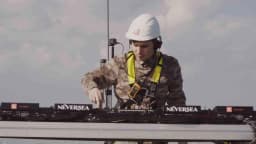
Hasbro's Mega Manager campaign, created by Marvelous in Russia in 2016, used experiential and digital storytelling to overcome parental hesitation and sell

How Hasbro Turned Parental Fear Into a Nerf Mega Mastodon Sales Moment
Hasbro's Mega Manager campaign, created by Moscow-based agency Marvelous and launched in Russia in November 2016, used an experiential and interactive digital approach to overcome a specific purchase barrier: mothers' apprehension about the sheer size of the Nerf Mega Mastodon blaster, repositioning the oversized toy as an exciting and confident family choice rather than an intimidating risk.
The Nerf Mega Mastodon presented a genuine commercial challenge at its Russian launch. As a product defined by its scale — the largest Nerf blaster released to that point — it risked alienating the very parent-purchasers whose approval determined whether children received it. Marvelous identified this hesitation as the central strategic problem and built the entire campaign around dissolving it. The creative mechanism placed a brave Hasbro brand manager at the centre of the narrative, using his willingness to personally champion the product as a signal of confidence designed to transfer directly to consumers.
In Russia, the toys and children's entertainment category depends heavily on parental confidence at the point of purchase, and experiential activations that dramatise product benefits in memorable ways carry particular weight in influencing family purchasing decisions. The campaign's objective was straightforward: support the launch of a new Nerf product and drive sell-through in a market where the product's dominant physical characteristic was simultaneously its greatest selling point and its most significant barrier. By centering the narrative on a real individual within Hasbro's own organisation, Mega Manager gave the launch an authenticity that conventional product advertising rarely achieves. The campaign contained one media asset, as documented in the Clapboard archive, and earned a Clapboard Score of 63 out of 100.

Marvelous built the Mega Manager strategy on a consumer insight rooted in a universal parenting tension. The Nerf Mega Mastodon's size made it spectacular for children and alarming for mothers managing household space, noise, and safety considerations. Rather than minimising the product's scale, the agency chose to confront the concern directly, treating it as a dramatic story rather than an obstacle to be softened.
The global toys and games market in 2016 was increasingly driven by interactive and experiential products rather than traditional static toys, a shift documented across the category. In the United States, the toy market reached retail sales of approximately $20.4 billion in 2016, up around five percent year over year, according to NPD data as reported by The Toy Book. While that figure describes the North American market rather than Russia specifically, it contextualises the broader momentum Hasbro was operating within as it expanded Nerf's footprint globally. Hasbro itself competed directly with Mattel and LEGO, which together with Hasbro were identified as the industry's dominant three players, according to reporting by digitalagencynetwork.com and pbn.com. LEGO held an estimated ten to fifteen percent of the global branded toys and games market across this period, according to those same sources.
In Russia, children's toy marketing faces the structural reality that purchase decisions for large-format products are almost always mediated by parents, making caregiver sentiment as commercially important as child desire. Marvelous recognised that no amount of product demonstration aimed at children could substitute for parental reassurance. The Mega Manager concept addressed both audiences simultaneously: it gave children a hero figure who shared their enthusiasm for the product, while giving parents a credible, human-led argument for why the Nerf Mega Mastodon was a sound purchase. The experiential and digital channels chosen for the campaign allowed the activation to reach Russian families in contexts where the emotional dynamic of the insight could be felt rather than simply described.
Creative Director Artem Sinyavskiy led the Marvelous team that constructed the Mega Manager execution, with Digital Creative Director Pavel Gusev shaping the interactive digital dimension of the campaign and Creative Group Head Marat Shakirov overseeing the creative development process, as documented in the campaign credits.
The campaign's central creative device was character-led storytelling. By placing a named, real Hasbro brand manager inside the narrative as a protagonist — someone willing to stake personal credibility on the product — Marvelous created a format that blurred the boundary between corporate communication and entertainment. This was not a spokesperson endorsement in the conventional sense; it was a performance of belief, designed to feel spontaneous and documentary in its texture. For the Russian children's toys market in 2016, this represented a relatively unconventional approach, using the experiential medium to generate a story rather than simply a demonstration.
Copywriter Andrey Raputo and Art Directors Elisey Soloviev and Georgiy Serov developed the visual and verbal language of the campaign, while SMM leads Alexey Shalygin and Rafael Mkrtchan extended the activation into social channels where Russian parents and children could encounter the narrative organically. Producer Aliza Rizatdinova and Account Manager Margarita Sergeenko completed the core team credited with delivering the campaign. The integration of experiential mechanics with a digital distribution layer gave Mega Manager a reach beyond any single physical activation, allowing the character-driven story to travel through social media in ways that amplified the campaign's core reassurance message. The production approach prioritised authenticity of tone over production gloss, a deliberate choice that reinforced the brand manager protagonist's credibility as an ordinary person with an extraordinary product conviction.
The Mega Manager campaign produced a commercially decisive result. According to the Marvelous case study presentation documented on slideshare.net, the Nerf Mega Mastodon's complete product stock sold through entirely within the first two months of the campaign's launch in Russia. This outcome represents the clearest possible measure of a launch-support campaign's effectiveness: the product it was designed to sell was no longer available to purchase because demand had exhausted supply.
No campaign-specific media spend or budget figures are publicly available for Mega Manager, and no third-party-verified audience reach or engagement metrics have been independently documented. The sell-through result, as reported via slideshare.net, stands as the primary verified performance indicator. For a market launch defined by a purchase-barrier insight — parental concern about the Nerf Mega Mastodon's size — complete sell-through within sixty days is structurally significant. It suggests the campaign successfully transferred confidence from the brand manager protagonist to purchasing parents, collapsing the hesitation that represented the central strategic problem Marvelous had identified.
The campaign's experiential and digital combination gave it the dual capacity to create memorable moments in-person while extending reach through social channels, a structure that suits launch activations in markets where word-of-mouth among parent communities carries commercial weight. In Russia specifically, where the toys category depends on parental endorsement at the point of decision, this dual-channel architecture appears to have amplified the core insight effectively. The Clapboard Score of 63 out of 100 reflects the campaign's functional commercial achievement while acknowledging that limited documented creative assets and the absence of third-party-verified audience metrics constrain a fuller creative evaluation.
Hasbro's Mega Manager was a launch-support campaign for the Nerf Mega Mastodon, created by Marvelous in Russia in November 2016. It used experiential and interactive digital formats to address mothers' concerns about the product's large size, positioning the blaster as a confident, exciting choice for families rather than an intimidating purchase risk.
Marvelous, a Moscow-based creative agency, created the Mega Manager campaign for Hasbro. The team was led by Creative Director Artem Sinyavskiy and Digital Creative Director Pavel Gusev, with the campaign launching in Russia in November 2016 to support the Nerf Mega Mastodon product introduction to the Russian market.
The Nerf Mega Mastodon sold through its complete product stock within the first two months of the campaign's launch, according to the Marvelous case study documented on slideshare.net. This sell-through result represented the primary commercial objective of the Mega Manager campaign in Russia and confirmed that the strategy of addressing parental hesitation was effective.
Marvelous identified that mothers in Russia felt apprehensive about purchasing the Nerf Mega Mastodon due to its unusually large size. This purchase hesitation became the campaign's central creative problem, resolved by placing a brave Hasbro brand manager at the heart of the narrative as a confident, humanising advocate for the product's scale and playability.
The Hasbro Mega Manager campaign received a Clapboard Score of 63 out of 100. The score reflects the campaign's clear commercial result — complete Nerf Mega Mastodon sell-through within two months in Russia — balanced against limited publicly documented creative assets and the absence of independently verified audience reach or engagement metrics.
.webp)
Creative Collaboration Platform: The Backbone of Modern Creative WorkWhat is a creative collaboration platform?Clapboard defines a creative collaboration platform as the operational core for today’s distributed creative teams. This is not a collection of digital collaboration tools stitched together; Clapboard’s system


Understanding the Creative Production MarketplaceWhat is a Creative Production Marketplace?Clapboard defines a creative production marketplace as a structured ecosystem where brands, agencies, and production talent converge to execute video, advertising, and branded content at scale. Unlike the legacy agency or freelanREAD FULL ARTICLE

The Urgent Need for a Creative Production Operating SystemWhy Traditional Creative Production Models Break DownClapboard sees the creative production landscape shifting under pressure. Content velocity is no longer a buzzword—it’s a mandate. Modern advertising demands relentless output across dozens of channels, each wREAD FULL ARTICLE