 ARCHIVE
St John Ambulance Turns Parental Fear Into a First Aid Argument
How Break the Barrier Reframed First Aid Training as a Parental Responsibility Break the Barrier is...
Hubwin Mamans Missing Campaign Reframes Maternal Isolation in France
"Missing" is the September 2012 launch film campaign created by La Chose for Hubwin Mamans, a French social network built by mothers for mothers, dramatising the experience of maternal isolation to position the platform as an essential community resource in France.
Hubwin Mamans entered the French digital landscape in 2012 as a social network dedicated exclusively to mothers, designed around the sharing of personal experiences, practical advice, and recommendations among peers. The platform's founding premise held that motherhood, despite being a near-universal experience, could become profoundly isolating — and that structured community could serve as a meaningful corrective. The launch campaign, titled "Missing," translated that premise into a single film asset, released for web distribution on September 13, 2012, according to cbnews.fr, with a television media plan scheduled for 2013.
The campaign operated within the professional services and family healthcare support space in France, addressing an audience of mothers who might feel disconnected from the kind of practical, emotionally grounded guidance that only lived experience can provide. Rather than present Hubwin Mamans through product features or platform mechanics, "Missing" chose to lead with feeling — specifically, with the particular ache of navigating early parenthood without an adequate support network. The Clapboard Score for "Missing" is 63 out of 100, reflecting a campaign that demonstrates clear strategic coherence and emotional intent, though without the volume of verifiable performance data that would push it higher. In France, where digital community platforms for parents were still establishing their cultural legitimacy in the early 2010s, the decision to launch via a cinematic, emotionally led film rather than a functional product demonstration placed Hubwin Mamans firmly in the values-first tradition of brand storytelling.
Hubwin Mamans identified a specific and underserved emotional need among mothers in France. As described by cbnews.fr, the platform was conceived as a social network "made by mothers and for mothers," with sharing, advice, and practical recommendations forming its operational core. That positioning was not simply a product category choice — it reflected a broader cultural reality about how maternal support networks function, or fail to function, in contemporary life.
La Chose built the campaign strategy around what cbnews.fr described as the universal value of mutual help, anchoring the creative platform in something emotionally accessible to any mother regardless of personal circumstance. This was a deliberate act of strategic restraint: rather than attempting to enumerate the platform's features or advantages over competing services, the agency chose to dramatise the need the platform was designed to meet. By making maternal isolation the subject of the film rather than the product itself, La Chose created a campaign that could function as both brand introduction and social statement.
In France, the broader context for a service like Hubwin Mamans in 2012 was one of expanding digital community formation, with mothers increasingly seeking peer networks beyond traditional family structures. The competitive landscape for maternal digital communities in France at the time included various parenting forums and general social platforms, though no direct named competitor to Hubwin Mamans is identified in available sources. What distinguished the Hubwin Mamans positioning, as documented by cbnews.fr and linkedin.com, was its specificity — a network built by mothers, for mothers, rather than a generic parenting or family platform. The choice of film as the launch medium, rather than display advertising or search, signalled ambition commensurate with that positioning.
"Missing" was directed by Luis Gerard and produced by Magali Films, with Pascal Grégoire serving as creative director, Guillaume Ganty as art director, and Victor Sidoroff as copywriter. The film's director of photography was Jaime Costas, and the original score was composed by Michel Korb — a creative team whose collective presence points to a production investment unusual for a platform launch campaign.
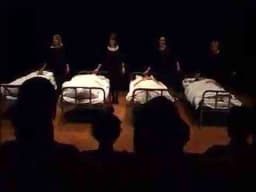
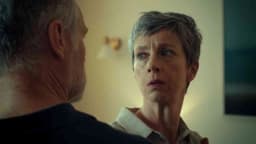
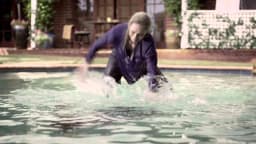
On screen, "Missing" dramatises the experience of a mother navigating daily life in a state of quiet disconnection — the film renders maternal isolation not as crisis but as absence, the specific, low-grade loneliness of feeling unseen within an experience shared by millions. The creative device that cbnews.fr described as "surprising" operates by inverting expectation: rather than celebrating motherhood or showcasing community in action, the film sits with what is missing before offering the platform as its answer. This structural choice — deprivation before resolution — gives the film an emotional weight that a straightforward brand introduction would not achieve.
The production timeline ran from June to July 2012, with the campaign released for web distribution in September of that year. Michel Korb's score functions as a critical narrative element, lending the film the tonal quality of a short cinematic work rather than a conventional advertising spot. The single-asset structure of the campaign — one film, carrying the entire communicative burden of the launch — placed considerable pressure on the creative execution to deliver both emotional resonance and brand clarity. Under Pascal Grégoire's creative direction, the team at La Chose in Paris resolved that tension by grounding the film in recognisable human experience rather than platform messaging, allowing Hubwin Mamans to introduce itself through empathy rather than explanation.
No verified performance data for "Missing" is publicly available in terms of view counts, platform sign-ups attributed to the campaign, or audience reach figures. The campaign was structured for initial web distribution from September 13, 2012, with a television media plan projected for 2013, as reported by cbnews.fr — a phased approach that suggests Hubwin Mamans anticipated building audience gradually rather than through a single saturating media moment.
What is documented is the campaign's reception within the French advertising trade press. CB News published positive coverage on September 17, 2012, characterising the La Chose launch film as built around the universal value of mutual help and noting its "surprising" creative device — an assessment that points to creative distinctiveness, if not measurable commercial outcome. Coverage in cbnews.fr at launch, alongside archiving and commentary across linkedin.com and culturepub.fr, confirms that "Missing" reached professional advertising audiences in France and was treated as a notable creative work rather than a routine platform launch.
Structurally, the campaign's effectiveness rests on the alignment between its creative premise and its strategic objective. A social network that exists to combat maternal isolation chose to dramatise that isolation as its opening argument — a formally coherent choice that makes the platform's value proposition felt before it is stated. For a first-time brand entering a competitive digital landscape in France, the decision to invest in a cinematic, emotionally grounded film as a launch vehicle reflects confidence in the brand's positioning and in the audience's capacity to respond to narrative over product demonstration.
"Missing" is the 2012 launch film created by La Chose for Hubwin Mamans, a French social network for mothers. Released in France in September 2012, the campaign used a single cinematic film to dramatise maternal isolation and position Hubwin Mamans as a community built by mothers for mothers, emphasising mutual help over product features.
La Chose, the Paris-based advertising agency, created "Missing" for Hubwin Mamans. Pascal Grégoire served as creative director, Guillaume Ganty as art director, and Victor Sidoroff as copywriter. Luis Gerard directed the film, which was produced by Magali Films with music composed by Michel Korb and photography by Jaime Costas.
"Missing" was released in France in September 2012. According to cbnews.fr, the film was scheduled for web distribution from September 13, 2012, with a television media plan planned for 2013. The production phase ran from June to July 2012, making it the launch campaign for the Hubwin Mamans platform.
Hubwin Mamans is a French social network created by mothers for mothers, focused on sharing experiences, advice, and practical recommendations, as described by cbnews.fr. "Missing" represents the brand by dramatising the maternal isolation the platform is designed to address, making the community's value felt through emotion rather than product explanation.
La Chose built "Missing" around the universal value of mutual help, using what cbnews.fr described as a surprising creative device. Rather than showcasing platform features, the film dramatises maternal isolation before offering Hubwin Mamans as its resolution — a deprivation-then-answer structure that prioritises emotional resonance over conventional brand introduction.
The Clapboard Score for "Missing" is 63 out of 100. The score reflects the campaign's clear strategic coherence and emotional intent as a healthcare-adjacent professional services film in France. The absence of publicly verified performance metrics limits a higher rating, though the creative execution received positive coverage in the French advertising trade press.
.webp)
Creative Collaboration Platform: The Backbone of Modern Creative WorkWhat is a creative collaboration platform?Clapboard defines a creative collaboration platform as the operational core for today’s distributed creative teams. This is not a collection of digital collaboration tools stitched together; Clapboard’s system


Understanding the Creative Production MarketplaceWhat is a Creative Production Marketplace?Clapboard defines a creative production marketplace as a structured ecosystem where brands, agencies, and production talent converge to execute video, advertising, and branded content at scale. Unlike the legacy agency or freelanREAD FULL ARTICLE

The Urgent Need for a Creative Production Operating SystemWhy Traditional Creative Production Models Break DownClapboard sees the creative production landscape shifting under pressure. Content velocity is no longer a buzzword—it’s a mandate. Modern advertising demands relentless output across dozens of channels, each wREAD FULL ARTICLE