JWT Amsterdam's 'The new JWT Amsterdam website – It's magic!' is a 2012 digital self-promotion campaign from The Netherlands built around a mock user-testing

JWT Amsterdam Bets on Magic to Launch Its New Website
JWT Amsterdam's 'The new JWT Amsterdam website – It's magic!' is a 2012 digital self-promotion campaign published in The Netherlands in September of that year, using a mock user-testing film to announce the agency's newly launched website and its promise of 'Seriously Surprising' content updated daily.
The campaign arrived at a moment when agency self-promotion was an increasingly competitive discipline. JWT Amsterdam chose not to announce the site through a press release or a standard social post but instead through a single crafted film asset — a format that demanded creative credibility from an organisation whose entire commercial proposition rested on exactly that. The campaign's tagline, 'It's magic!', framed the website not as a functional digital property but as an experience worth seeking out. That framing set the terms for everything that followed in the execution. The Clapboard Score for this campaign is 57 out of 100, reflecting a campaign with a clear strategic premise and a competent creative device that stops short of exceptional formal ambition.
In The Netherlands, the digital advertising environment in 2012 was expanding rapidly as part of a broader global shift. The campaign operated in that context as a purely owned-media play — one asset, one message, one invitation: 'Experience it for yourself.' The geographic focus was local, directed at an Amsterdam and Netherlands-based industry audience, though the digital format gave it the structural capacity to travel further.
Agency self-promotion occupies a distinctive strategic position in the media and entertainment landscape. JWT Amsterdam directed this campaign at a professional audience — potential clients, collaborators, and industry observers in The Netherlands — rather than at a mass consumer base, which shaped every creative and tonal decision in the work.
The campaign's central proposition, 'Seriously Surprising new content every day,' signalled a commitment to ongoing creative production rather than a one-time launch moment. That framing positioned the website itself as a live editorial platform, not merely a portfolio showcase. For an agency competing for attention in a market where creative credentials are the primary currency, the promise of daily fresh content was a meaningful differentiator, provided the site could sustain it.
The choice of a mock user-testing format was strategically shrewd. User-testing is a familiar ritual in digital product development, and by appropriating its conventions for comic effect, the campaign demonstrated the kind of lateral creative thinking that JWT Amsterdam was implicitly claiming as its own signature. The format also gave the work an air of authenticity — reactions from real-looking participants carry more persuasive weight than a polished agency showreel. Digital advertising was forecast at $98.2 billion globally in 2012, up 16 percent year on year, according to MediaPost, and was expected to account for 43 percent of total global advertising growth that year. That broader climate of digital expansion gave JWT Amsterdam's digital-first self-promotion a timely relevance, even as the campaign itself remained anchored in the Netherlands market and aimed squarely at a local industry peer group.
Director Delano Sookha shot the campaign film, which runs approximately one minute and twenty-three seconds, as uploaded to YouTube by JWTAms on September 24, 2012, according to YouTube. Creative direction and art direction were handled by Esin Cittone, with Dom Nash serving as creative director and copywriter, as documented by adsspot.me.
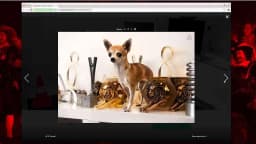
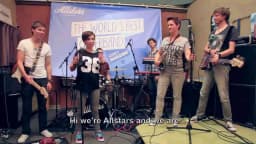
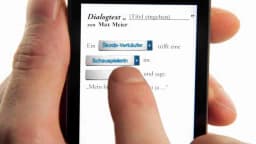
On screen, a character named David opens the film by welcoming participants to what presents itself as a formal usability session. David addresses each tester directly: 'Thank you for coming in today to test our new website. My name is David and I will be asking you a few questions as you browse the site.' What follows is a succession of participants responding to the JWT Amsterdam website with exaggerated sensory and emotional reactions — astonishment, delight, apparent overwhelm — that escalate the mock-documentary premise into something closer to absurdist comedy. One tester is heard saying, 'That's so beautiful,' in a tone that the film plays entirely straight before the artifice becomes clear. The gap between the clinical framing of a user test and the melodramatic responses it produces is where the humour and the brand argument live simultaneously.
The production deploys a single media asset to carry the full weight of the campaign, which makes the economy of the execution a creative constraint as much as a production decision. The handheld, observational visual language typical of user-research documentation lends the film a low-affect texture that makes the emotional outbursts land harder. Sookha's direction keeps the pacing brisk enough to sustain the joke across the full running time without allowing the concept to exhaust itself before the call to action arrives.
No verified performance data for 'The new JWT Amsterdam website – It's magic!' is publicly available. The campaign has not been found in the public awards records of Cannes Lions, the Effies, The One Show, D&AD, the Clios, or the Webby Awards, and no independent metrics for view counts, site traffic uplift, or audience reach have been published by JWT Amsterdam or any third-party source.
Structural analysis offers some indication of the campaign's likely effectiveness within its intended scope. A single-asset digital campaign targeting a professional audience in The Netherlands carries inherently limited reach ambitions — it was not designed to generate mass impressions but to signal creative authority to a defined peer group. On that measure, the mock user-testing device is well-calibrated: it is memorable, it demonstrates craft without requiring a large production budget, and it communicates the 'Seriously Surprising' brand promise through its form rather than merely its copy. The weakness is equally structural. One asset, however well-executed, provides limited evidence of the daily content cadence the campaign promised. The website itself was the product being advertised, and without visibility into whether that 'Seriously Surprising new content every day' commitment was sustained, the campaign's long-term persuasive impact remains unverifiable. The Clapboard Score of 57 out of 100 reflects that gap between a sound creative premise and the evidence needed to confirm its delivery.
'The new JWT Amsterdam website – It's magic!' is a digital self-promotion campaign published in The Netherlands in September 2012. JWT Amsterdam created a mock user-testing film to announce its new website and its daily 'Seriously Surprising' content promise, using exaggerated participant reactions to demonstrate the agency's creative positioning.
Delano Sookha directed the campaign film. The creative team included Esin Cittone as creative director and art director, and Dom Nash as creative director and copywriter. The film was uploaded to YouTube by JWTAms on September 24, 2012, and runs approximately one minute and twenty-three seconds.
A character named David conducts a mock usability session, welcoming participants to test the new JWT Amsterdam website. Testers respond with escalating emotional and sensory reactions — including declarations like 'That's so beautiful' — played straight against the clinical user-research format, generating an absurdist comic effect that embodies the 'Seriously Surprising' brand claim.
No verified award recognition for this campaign has been found. A search of public records at Cannes Lions, the Effies, The One Show, D&AD, the Clios, and the Webby Awards returned no entries for 'The new JWT Amsterdam website – It's magic!' published in The Netherlands in September 2012.
The campaign positioned the new JWT Amsterdam website around the promise of 'Seriously Surprising new content every day.' This framing presented the site as a live editorial platform rather than a static portfolio, and 'Seriously Surprising' appears to have been a newly formalised expression of JWT Amsterdam's creative identity at the time.
.webp)
Creative Collaboration Platform: The Backbone of Modern Creative WorkWhat is a creative collaboration platform?Clapboard defines a creative collaboration platform as the operational core for today’s distributed creative teams. This is not a collection of digital collaboration tools stitched together; Clapboard’s system


Understanding the Creative Production MarketplaceWhat is a Creative Production Marketplace?Clapboard defines a creative production marketplace as a structured ecosystem where brands, agencies, and production talent converge to execute video, advertising, and branded content at scale. Unlike the legacy agency or freelanREAD FULL ARTICLE

The Urgent Need for a Creative Production Operating SystemWhy Traditional Creative Production Models Break DownClapboard sees the creative production landscape shifting under pressure. Content velocity is no longer a buzzword—it’s a mandate. Modern advertising demands relentless output across dozens of channels, each wREAD FULL ARTICLE