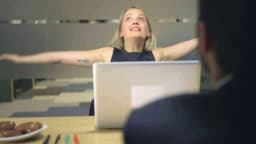
Tele2's Greeting machine, created by Ogilvy Vilnius in December 2011, used a digital web application to deliver personalised festive messaging across Lithuania.

Tele2 Greeting Machine Brought Interactive Festive Messaging to Lithuania
Tele2's Greeting machine is a digital campaign created by Ogilvy Vilnius and launched in Lithuania in December 2011, using an interactive web application to let users generate and share personalised seasonal greetings through a narrative-driven digital experience.
Published at the close of 2011, the campaign arrived at a moment when Lithuanian audiences were increasingly engaging with digital platforms as a primary means of personal communication. Tele2, one of the most prominent telecommunications operators active in the Lithuanian market, used the campaign to position its brand at the centre of seasonal connection rather than simply promoting a product or service. The vehicle was a bespoke web application — the Greeting machine — designed to transform the act of sending a holiday message into something participatory and memorable.
The campaign belongs to a broader strategic tradition within Tele2's Lithuanian marketing activity, where digital interaction and social mechanics have consistently taken precedence over conventional broadcast formats. The Greeting machine extended this approach into a festive context, inviting users to engage with the brand's identity through a creative, self-directed experience rather than passive consumption. The single media asset at the campaign's core concentrated the entire creative and technical effort into one cohesive digital execution, reflecting the team's intent to deliver depth rather than scale. In Lithuania, where the digital advertising landscape was developing rapidly in line with broader European trends, campaigns of this interactive nature represented a meaningful step forward in how telecommunications brands chose to speak to consumers during culturally significant moments in the calendar.

Tele2 built the Greeting machine on a consumer insight that seasonal communication is emotionally significant and behaviorally active. Rather than interrupting that moment with a conventional advertisement, the campaign sought to become the instrument through which the moment itself was enacted. This distinction — between advertising at people and enabling people — was the strategic core of the entire effort.
The timing was deliberate. December 2011 placed the campaign directly within the peak period of interpersonal digital communication in Lithuania, when users were actively seeking ways to reach friends and family. By offering a Greeting machine as the mechanism for that reach, Tele2 embedded its brand identity inside a behavior that audiences were already motivated to perform. The digital medium was the natural choice: it allowed immediate personalisation, easy sharing, and cost-efficient distribution without the production overhead of broadcast formats.
Tele2's history with Ogilvy Vilnius informed the strategic confidence behind this execution. According to adsspot.me, the agency's relationship with Tele2 began as early as August 2008, when a campaign for the Pildyk prepaid brand introduced a virtual currency called Bonai through Lithuania's One.lt social network, using Flash games, a branded online world, and interactive mechanics rather than traditional advertising. That lineage established a consistent philosophy: use digital interactivity to create brand engagement rather than brand awareness alone. The Greeting machine was a natural evolution of that philosophy into the seasonal gifting context, positioning Tele2 as a brand that understood how Lithuanian consumers actually used digital tools in their daily emotional lives.
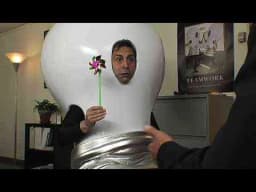
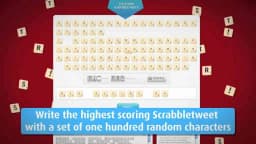
The Greeting machine took the form of a web application designed to generate personalised seasonal greetings. On screen, the experience presented users with an interactive machine metaphor — a mechanical, generative interface through which a greeting could be composed, customised, and produced as a shareable output. The application's visual and narrative logic treated the greeting not as a static card but as something manufactured, with the implied warmth of a handmade object given the precision of a digital tool. The on-screen interaction placed the user in the role of operator, guiding inputs through the machine to produce a result that felt both personal and crafted.
The production drew on a full creative and technical team assembled by Ogilvy Vilnius and production house Motion Group. Creative directors Tomas Karpavičius and Adell Taivas oversaw the conceptual and visual direction of the campaign, while programmers Mantas Gudauskas and Tadas Domarkas built the web application's functional architecture. Motion artist Aldona Unikienė contributed the animated and motion design elements that gave the machine its distinctive visual character, and photographer Vaidotas Aukštaitis handled photographic assets within the production. Producer Jurga Adomonytė-Radziuvienė managed the execution, with art direction and project management carried out by Indrė Aleliūnaitė-Kulbokė. The breadth of this credited team for a single-asset digital campaign reflects the degree of craft investment the production required, combining programming, motion design, photography, and art direction into one coherent experience.
The decision to channel all creative resources into a single media asset gave the campaign a coherence that multi-asset productions can sometimes dilute. Every element — interface design, motion, narrative logic, photography — served the same mechanical metaphor, reinforcing the campaign's central idea with consistency across every frame of the user journey.
No verified performance data for the Greeting machine is publicly available. No published figures covering sales lift, market-share movement, user engagement metrics, or reach have been identified in trade press or public records. No award wins or shortlist placements for the campaign have been identified across Cannes Lions, the Effies, The One Show, D&AD, the Clios, the Webby Awards, or WARC's effectiveness databases. No trade-press reviews of the work appear in Campaign, Ad Age, Adweek, The Drum, or Contagious.
Structurally, the campaign's effectiveness rests on the appropriateness of its mechanism to its objective. A web application designed to generate shareable personalised greetings creates a natural distribution loop: each greeting produced by one user becomes a piece of branded content received by another, extending the campaign's reach organically without additional media spend. This architecture is well-suited to a telecommunications brand in Lithuania, where the value proposition of connection is directly enacted rather than merely described. The choice of December 2011 as the launch window aligned the experience with peak seasonal motivation, reducing the friction between the campaign's ask and the audience's existing intent.
The Greeting machine holds a Clapboard Score of 62 out of 100, reflecting a competent and strategically coherent digital execution that demonstrates craft and creative logic, while the absence of measurable outcomes and documented industry recognition limits its score within the broader archive.
The Greeting machine is a digital campaign created for Tele2 by Ogilvy Vilnius in Lithuania in December 2011. It took the form of an interactive web application allowing users to generate and share personalised seasonal greetings, positioning Tele2 as a facilitator of festive human connection rather than a conventional advertiser.
Ogilvy Vilnius created the Greeting machine for Tele2 in Lithuania. The campaign was produced in partnership with Motion Group, with creative direction by Tomas Karpavičius and Adell Taivas, programming by Mantas Gudauskas and Tadas Domarkas, and motion design by Aldona Unikienė.
The Greeting machine was launched in Lithuania in December 2011. The timing placed it directly within the peak seasonal communication period, aligning the campaign's interactive greeting mechanism with a moment when Lithuanian audiences were already highly motivated to reach friends and family digitally.
No award wins or shortlist placements for the Tele2 Greeting Machine have been identified. Available records show no recognition from Cannes Lions, the Effies, The One Show, D&AD, the Clios, or the Webby Awards, and no trade-press reviews of the campaign appear in major industry publications.
The Greeting machine used a mechanical metaphor to transform seasonal greeting creation into an interactive, generative experience. Users operated a digital machine interface to compose and produce personalised greetings, combining the warmth of a handmade message with the precision of a digital tool, all within a single cohesive web application.
.webp)
Creative Collaboration Platform: The Backbone of Modern Creative WorkWhat is a creative collaboration platform?Clapboard defines a creative collaboration platform as the operational core for today’s distributed creative teams. This is not a collection of digital collaboration tools stitched together; Clapboard’s system


Understanding the Creative Production MarketplaceWhat is a Creative Production Marketplace?Clapboard defines a creative production marketplace as a structured ecosystem where brands, agencies, and production talent converge to execute video, advertising, and branded content at scale. Unlike the legacy agency or freelanREAD FULL ARTICLE

The Urgent Need for a Creative Production Operating SystemWhy Traditional Creative Production Models Break DownClapboard sees the creative production landscape shifting under pressure. Content velocity is no longer a buzzword—it’s a mandate. Modern advertising demands relentless output across dozens of channels, each wREAD FULL ARTICLE