Lifespan's 2017 campaign by Nail Communications features real Rhode Islanders in everyday life moments, repositioning the health system around lived experience

Lifespan Reframes Healthcare Advertising Around the Moments That Make Life Worth Living
Lifespan's 2017 campaign titled 'Water fountain, Pumpkin patch, Football, Crying baby, Cho...' is a film-led brand platform created by Nail Communications that positions the Rhode Island health system not as a provider of clinical services but as the enabler of life's most meaningful everyday moments, using real community members filmed in authentic local settings across the United States.
The campaign launched on January 17, 2017, as reported by Providence Business News, and was archived in February of that year. It was developed for Lifespan, a Rhode Island-based health system, by Providence agency Nail Communications, with production support from Gnarly Bay. The work spans six media assets across film, outdoor, print, social, and other supporting formats — a deliberately broad deployment designed to surround Rhode Island communities with a consistent brand narrative rather than a single broadcast moment.
The central strategic idea is that Lifespan's true product is not a hospital bed, a physician, or a piece of medical technology. It is the capacity for people to experience as much of life as possible. That philosophical repositioning drives every creative decision in the campaign, from casting to location to tone. In the United States, where healthcare advertising has long defaulted to clinical reassurance and institutional authority, this campaign takes the opposite position: it foregrounds life before it foregrounds medicine. The Clapboard Score for this campaign is 55 out of 100, reflecting a coherent brand concept delivered with sincerity, though without the formal creative distinction that would elevate it to benchmark status within the health industry.
Lifespan's campaign addresses a tension that sits at the core of healthcare advertising in the United States. Alec Beckett, Creative Director at Nail Communications, stated directly: 'The gap between what is being sold and how it sold is greater in healthcare than any other category I can think of. Our client's product is literally life itself.' That observation — reported by golocalprov.com — identifies the strategic fault line the campaign is built to close. Most health systems sell procedures, facilities, and credentials. Lifespan, through this work, sells the reason any of that matters.
The market context in 2017 gave this insight real competitive weight. According to bia.com, the US healthcare local advertising market in 2017 was valued at approximately $10.85 billion, with hospital advertising representing the single largest subcategory at approximately $4.90 billion. In that environment, the volume of competing messages is considerable, and differentiation through emotional narrative rather than clinical specification becomes a defensible strategic choice. The campaign does not compete on feature claims. It competes on meaning.
Jane Bruno, Vice President of Marketing and Communications at Lifespan, articulated the community logic behind the approach. As reported by golocalprov.com, Bruno stated: 'We wanted to be about the community, for the community, so the community would embrace it, and what better way to show that than showing real people in their real lives.' That framing — community as both subject and audience — is a disciplined strategic move. It transforms the campaign from institutional broadcasting into something closer to a mirror held up to Rhode Island itself. The health system becomes inseparable from the lives it appears alongside, not above them.
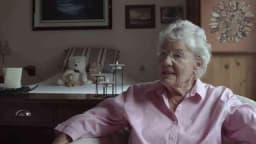
Lifespan's campaign is built on the decision to cast real Rhode Islanders rather than actors. That single production choice determines the visual register of every asset in the campaign. The scenes are drawn from the textures of ordinary community life: children at a water fountain, families at a pumpkin patch, the energy of a football game, a mother with a crying baby, a cancer patient, and other recognisable moments that accumulate into a portrait of a life fully lived. The on-screen logic is not medical. It is biographical.
As reported by golocalprov.com, Jane Bruno described the television campaign as featuring 'real Rhode Islanders doing Rhode Island things' — a phrase that signals both the casting philosophy and the geographic specificity the creative team deliberately built into the work. The campaign does not aspire to universal stock-footage generality. It is rooted in a particular place, and that rootedness is part of its argument: Lifespan belongs to Rhode Island in the same way these moments do.
The campaign was produced by Gnarly Bay, with creative direction by Alec Beckett and creative partnership with Brian Gross at Nail Communications, as documented across coverage from pbn.com and golocalprov.com. The film medium is the primary vehicle, supported by outdoor, print, and social extensions that carry the same visual and narrative logic across different points of contact. The title itself — a list of life moments rather than a conventional campaign name — functions as a creative statement. It signals that the campaign's architecture is episodic and accumulative, building a sense of a life's breadth rather than making a single linear argument. The production approach prioritises authenticity of setting and subject over polish, which is consistent with the strategic intent to feel like community rather than institution.
No verified performance data for the 'Water fountain, Pumpkin patch, Football, Crying baby, Cho...' campaign is publicly available. No figures for brand tracking shifts, media reach, patient volume change, or earned media value have been reported by Providence Business News, golocalprov.com, or any other named source in the public record. Assessment of the campaign's effectiveness must therefore rest on structural analysis.
The structural case for the campaign's potential resonance is grounded in its deployment logic. Six media assets distributed across film, outdoor, print, social, and supporting formats represent a commitment to consistent narrative frequency across multiple touchpoints — a pattern associated with brand platform campaigns designed to shift perception over time rather than drive immediate transactional response. In a US hospital advertising market where, according to bia.com, the average local advertising spend per hospital was approximately $880,500 in 2017, Lifespan's choice to invest in a coherent brand narrative rather than a fragmented product-feature schedule represents a deliberate strategic posture.
The campaign's most structurally durable element is its positioning clarity. By defining Lifespan's value as the preservation of life's moments rather than the delivery of clinical services, the work establishes a brand territory that cannot be easily replicated through feature-based claims. That clarity is a meaningful asset in a competitive health industry landscape where institutional messaging frequently converges around similar quality and safety credentials. Whether the campaign generated measurable brand equity movement remains undocumented, but its conceptual architecture is coherent and its community-first execution aligns directly with the stated intent of Lifespan's marketing leadership.
Lifespan's 2017 campaign positions the Rhode Island health system as the enabler of everyday life moments rather than a clinical services provider. Created by Nail Communications and produced by Gnarly Bay, the work features real Rhode Islanders in authentic community settings, arguing that Lifespan's true product is the capacity to experience as much of life as possible.
Nail Communications, a Providence, Rhode Island agency, created the campaign. Production was handled by Gnarly Bay. According to Providence Business News, the campaign launched on January 17, 2017, with archive publication recorded in February 2017. Creative direction was led by Alec Beckett, with Brian Gross as a creative partner on the work.
Lifespan's Vice President of Marketing, Jane Bruno, explained the decision in comments reported by golocalprov.com. The intent was to be genuinely community-facing, with real people in real lives making the health system feel inseparable from Rhode Island itself rather than positioned as an institutional authority speaking down to its audience.
Creative Director Alec Beckett identified a fundamental gap in healthcare advertising, as reported by golocalprov.com: health systems sell life itself but rarely advertise that way. The campaign closes that gap by foregrounding the pumpkin patches, football games, and family moments that healthcare exists to protect, shifting the brand's frame from clinical to experiential.
The campaign launched into a US healthcare local advertising market valued at approximately $10.85 billion in 2017, according to bia.com. Within that crowded environment, Lifespan's narrative-led approach — prioritising community identity over clinical credentials — represents a deliberate differentiation strategy against health systems that compete primarily on facility and service claims.
The campaign deployed six media assets across film, outdoor, print, social, and other supporting formats. Film served as the primary vehicle, carrying the core narrative of real Rhode Islanders in everyday life moments. The multi-format distribution reflects a brand platform strategy designed to build consistent perception over time rather than generate a single transactional response.
.webp)
Creative Collaboration Platform: The Backbone of Modern Creative WorkWhat is a creative collaboration platform?Clapboard defines a creative collaboration platform as the operational core for today’s distributed creative teams. This is not a collection of digital collaboration tools stitched together; Clapboard’s system


Understanding the Creative Production MarketplaceWhat is a Creative Production Marketplace?Clapboard defines a creative production marketplace as a structured ecosystem where brands, agencies, and production talent converge to execute video, advertising, and branded content at scale. Unlike the legacy agency or freelanREAD FULL ARTICLE

The Urgent Need for a Creative Production Operating SystemWhy Traditional Creative Production Models Break DownClapboard sees the creative production landscape shifting under pressure. Content velocity is no longer a buzzword—it’s a mandate. Modern advertising demands relentless output across dozens of channels, each wREAD FULL ARTICLE