The Ministry for Emergency Situations of the Republic of Belarus launched Never Forget Drunken Bathers in 2014, an ambient social experiment staged at a Minsk

The Ministry for Emergency Situations Turns a Beach Into a Memorial
Never Forget Drunken Bathers is a 2014 ambient public-interest campaign created by TDI Group Russia for the Ministry for Emergency Situations of the Republic of Belarus, staging a mock memorial installation at a municipal beach in Minsk to warn summer swimmers about the fatal risks of entering water while intoxicated.
The campaign launched in July 2014 at the Tsnyanskoye Reservoir municipal beach in Minsk, with its archived listing formalised in September 2014. The core statistic driving the entire creative rationale is stark: eight out of ten people who drown had been drinking. That single figure, drawn from emergency services data, gave TDI Group the strategic and moral justification to move the message off a poster and onto the sand where the behaviour actually occurs. The Ministry for Emergency Situations, the government body responsible for disaster prevention and public safety across Belarus, commissioned the work as part of its mandate to reduce preventable deaths during the summer bathing season.
In Russia and across the broader post-Soviet region, alcohol consumption and open-water swimming have long intersected with tragic regularity, making the summer months a consistent period of elevated drowning risk. By choosing an ambient format rather than a conventional broadcast or print approach, the campaign placed its warning directly inside the moment of risk, confronting beachgoers at the precise location where the behaviour it sought to change was most likely to occur. The campaign comprises one media asset, a one minute and fifty-nine second video documenting the social experiment activation, and carries a Clapboard Score of 63 out of 100.
 ARCHIVE
The Ministry for Emergency Situations of the Republic of Belarus grounded the campaign in a single, operationally sourced fact: eight out of ten drowning victims had consumed alcohol before entering the water. That statistic, cited across documentation associated with the campaign, represents the strategic spine of the entire activation. Rather than presenting the number abstractly in a television slot, TDI Group translated it into a physical experience designed to produce genuine emotional disruption in an audience that might otherwise ignore a conventional public safety message.
The strategic logic reflects a broader challenge in public-interest communications: reaching audiences who are, by definition, not in a receptive or cautious frame of mind. Beachgoers relaxing on a summer afternoon are unlikely to engage with printed warnings or recall broadcast messaging in that context. Ambient formats, by contrast, insert the communication into the lived environment of the target behaviour, creating an encounter that is difficult to dismiss. This approach aligns with established principles of behaviour-change communication, which emphasise proximity and relevance to the moment of decision.
The regulatory environment also shaped the campaign's context. According to the World Intellectual Property Organization, Belarus amended its advertising law on April 23, 2014, just months before the campaign launched, reflecting a period of active legislative attention to public communications standards in the country. In Russia, where the campaign was archived and distributed for wider attention, public-interest campaigns addressing preventable mortality have historically operated within a media landscape that rewards emotional directness. By staging the activation at a real, populated municipal beach rather than a controlled environment, TDI Group ensured the message met its audience on genuinely familiar terrain.
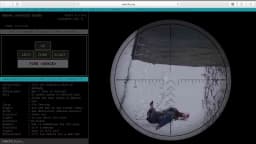
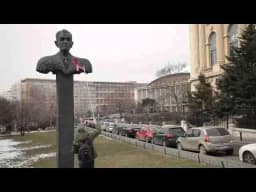
The on-screen execution documents a staged social experiment at Tsnyanskoye Reservoir's municipal beach in Minsk during the summer of 2014. A memorial installation — the kind typically associated with roadside accident sites or graveyards — is erected directly on the beach sand, complete with markers bearing the names or likenesses of drowning victims, transforming a recreational space into an unexpected site of mourning. Beachgoers encounter the installation without prior warning, and the camera captures their unscripted reactions: confusion, unease, and in several cases visible discomfort that the editing frames as the intended moment of behavioural confrontation. The juxtaposition of holiday atmosphere and funerary imagery is the campaign's primary creative device, requiring no voiceover or text to land its point before the final title card delivers the statistic.
Creative director Sergey Filazapovich led the concepting and production of the campaign at TDI Group Russia, with copywriter Miroslav Stroganov responsible for the campaign's text, including the Russian-language title Вечная память нетрезвым купальщикам, which translates literally as May the Memory of Drunk Bathers Live Forever — a phrase that deliberately borrows the cadence of a religious funeral blessing and turns it into a sardonic public warning. Project manager Maria Gerlovskaya oversaw the operational execution of the activation. The campaign was entered into the White Square 2015 festival under the reference S4-36, as documented across sources including baltic-course.com, though the precise award level achieved at that competition is not confirmed in available records. The finished one minute and fifty-nine second video, documented on YouTube, functions simultaneously as the campaign artifact and its primary distribution mechanism beyond the beach itself.
No verified performance data for Never Forget Drunken Bathers in terms of reach, recall, or measurable behavioural change is publicly available. The campaign's effectiveness must therefore be assessed through its structural and creative architecture rather than reported metrics.
As a public-interest ambient activation, the campaign's most probable impact pathway runs through earned media rather than paid distribution. The video documentation of the social experiment, hosted on YouTube and noted across sources including Times Bntu By and X, positions the activation to circulate beyond the beach itself, reaching audiences in Russia and Belarus who were not present at Tsnyanskoye Reservoir in July 2014. This is the standard amplification logic of documentary-format ambient campaigns: the installation creates a real event, the video makes that event replicable and shareable, and the combination extends the message's geographic and temporal range well past a single afternoon on a Minsk beach.
The campaign's entry into the White Square 2015 advertising festival, as reported by baltic-course.com, indicates it received recognition within the regional creative industry, suggesting the work was judged to meet a standard of professional craft and strategic coherence by its peers. The Clapboard Score of 63 out of 100 reflects moderate creative and strategic strength — acknowledging the clarity of the central insight and the boldness of the ambient format while indicating room for broader executional or distributional ambition. The campaign's most durable contribution may be demonstrating that public-interest work in Russia and Belarus can generate genuine public confrontation through environmental installation rather than media spend alone.
Never Forget Drunken Bathers is a 2014 ambient public-interest campaign created by TDI Group Russia for the Ministry for Emergency Situations of the Republic of Belarus. It staged a mock memorial installation at a Minsk beach to warn swimmers that eight out of ten drowning victims had consumed alcohol before entering the water.
The campaign activated in July 2014 at the Tsnyanskoye Reservoir municipal beach in Minsk, Belarus. It was formally archived and published in September 2014. The activation used a real, populated public beach to ensure the warning reached swimmers in the precise environment where alcohol-related drowning risk was highest.
TDI Group Russia created the campaign. Creative director Sergey Filazapovich led the concept, copywriter Miroslav Stroganov wrote the campaign text including its Russian-language title, and project manager Maria Gerlovskaya oversaw the on-ground activation at Tsnyanskoye Reservoir in Minsk during the summer of 2014.
The campaign was built on the finding that eight out of ten people who drown had been drinking before entering the water. This figure, drawn from emergency services data, gave the Ministry for Emergency Situations of Belarus the factual foundation for placing a funerary memorial installation directly on a busy public beach.
The campaign was entered into the White Square 2015 advertising festival under reference S4-36, as reported by baltic-course.com. The specific award level achieved at the festival has not been confirmed in publicly available records. The campaign carries a Clapboard Score of 63 out of 100, reflecting moderate creative and strategic strength.
An ambient installation placed the warning inside the actual moment and location of risk, reaching beachgoers who would be unlikely to engage with broadcast or print public safety messaging while relaxing on a summer afternoon. The approach ensured the message about alcohol-related drowning was encountered rather than merely seen, maximising its potential for genuine behavioural disruption.
.webp)
Creative Collaboration Platform: The Backbone of Modern Creative WorkWhat is a creative collaboration platform?Clapboard defines a creative collaboration platform as the operational core for today’s distributed creative teams. This is not a collection of digital collaboration tools stitched together; Clapboard’s system


Understanding the Creative Production MarketplaceWhat is a Creative Production Marketplace?Clapboard defines a creative production marketplace as a structured ecosystem where brands, agencies, and production talent converge to execute video, advertising, and branded content at scale. Unlike the legacy agency or freelanREAD FULL ARTICLE

The Urgent Need for a Creative Production Operating SystemWhy Traditional Creative Production Models Break DownClapboard sees the creative production landscape shifting under pressure. Content velocity is no longer a buzzword—it’s a mandate. Modern advertising demands relentless output across dozens of channels, each wREAD FULL ARTICLE