 ARCHIVE
How Tiny Toast Launched Its First New General Mills Cereal Brand in 15 Years
How Walrus Gave Tiny Toast a Digital-First Identity in the 2016 Cereal Wars Tiny Toast's 'Birds...
Moe's Southwest Grill Bets on Everyday Life in Four Films
Moe's Southwest Grill's 'Windsock, Transitions, Parenthood, Gullibility' campaign is a four-film narrative series launched in the United States in May 2016, created by Focus Brands, positioning the brand as a familiar and dependable presence within the everyday changes of American life.
Each of the four films takes its title from a distinct human experience — 'Windsock,' 'Transitions,' 'Parenthood,' and 'Gullibility' — and uses that experience as a storytelling vehicle to draw Moe's Southwest Grill into the natural rhythm of relatable, real-world moments. Rather than leading with product specifications or promotional offers, the campaign situates the brand inside sequences that reflect common life transitions: becoming a parent, navigating moments of naive trust, and adjusting to change. The result is a brand proposition built on emotional continuity rather than transactional incentive. The campaign contains four media assets in total, all produced for the film medium and released across the United States market. Moe's Southwest Grill is positioned here not as an interruption but as a consistent, comforting reference point amid the unpredictability of daily experience. The Clapboard Score for this campaign is 60 out of 100, reflecting a structurally coherent creative approach that stops short of exceptional memorability. The campaign carries forward what, according to mediapost.com, had become Moe's established creative platform around originality and genuine character — a direction that Focus Brands had been developing through internally produced work since at least the brand's first national television effort in 2013.
Moe's Southwest Grill operated in the fast-casual Mexican-inspired restaurant segment of the United States market at a moment of significant competitive pressure. According to businessinsider.com, Moe's recorded approximately 638 million dollars in U.S. sales in 2016, placing it in a distant but meaningful position relative to the segment's dominant player. Chipotle's 2016 U.S. sales stood at approximately 4.42 billion dollars, also according to businessinsider.com, while Qdoba posted fiscal-2016 sales of 415.5 million dollars, as reported by franchisechatter.com. Within that competitive reality, Moe's could not win on scale alone. The strategic logic behind 'Windsock, Transitions, Parenthood, Gullibility' is therefore rooted in differentiation through emotional relevance rather than media weight or price-led messaging.
The campaign's human-centered creative angle targets consumers who value authenticity and connection over conventional promotional tactics. By anchoring each of the four films to a recognisable life moment — parenthood, gullibility, transition, the mundane symbolism of a windsock — Focus Brands and Moe's constructed a framework in which the brand earns attention rather than demands it. According to franchising.com, Moe's opened 66 new restaurants in 2016, representing approximately ten percent unit growth from a base of around 600 to 637 locations. That expansion context matters: a brand growing its physical footprint in the United States needs awareness that travels beyond its existing customer base, and narrative film is a format suited precisely to that task. The campaign's storytelling approach builds brand salience among audiences who may not yet have a Moe's location nearby but who can already recognise the brand's character and tone.
Nick Spooner directed all four films in the 'Windsock, Transitions, Parenthood, Gullibility' campaign, working from creative direction by Matt Blackburn, copy by Brandon Friedman, and art direction by Jonathan Eller, with Sandy Tyler serving as producer. The editorial work was handled by Eddie Kessler, Andrew Pope, and Dave Pickett through the post-production company Jam Edit, while sound was managed by Acoustech with sound engineering by Gopal Swamy. The production roster reflects a tightly coordinated internal and specialist collaboration consistent with Focus Brands' model of developing creative work close to the brand.
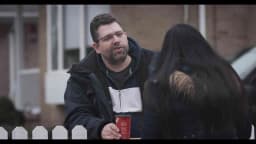
The on-screen execution places Moe's Southwest Grill within sequences drawn from the named life experiences: a windsock — that most unremarkable of directional markers — becomes a symbolic stand-in for navigating uncertainty; parenthood is rendered as a moment of tender, slightly overwhelmed transition; gullibility is treated with the kind of warm, self-aware humour that invites the viewer's recognition rather than their ridicule. Each vignette uses the texture of everyday American life as its production environment, favouring observed realism over constructed aspiration. The 'Windsock' film, originally noted as carrying a 2011 production date before the broader campaign's 2016 United States release, establishes the tonal register that the remaining three entries follow: understated, character-led, and grounded in the small decisions and mild absurdities of ordinary experience. The choice of narrative film as the primary medium — rather than more conventional quick-cut promotional formats — signals a deliberate investment in sustained viewer engagement over immediate call-to-action mechanics. It is a craft position that trusts the audience to make the associative leap between the story and the brand.
No verified campaign-specific sales lift, media performance data, or independent effectiveness metrics for 'Windsock, Transitions, Parenthood, Gullibility' are publicly available. No awards recognition for this campaign has been documented at Cannes Lions, the Effie Awards, The One Show, D&AD, the Clio Awards, the Webby Awards, or WARC. The absence of published results data does not, however, make structural analysis impossible.
The campaign's effectiveness case rests on what it was designed to do within a specific competitive and growth context. According to franchising.com, Moe's operated approximately 650 to 675 locations across the United States at the end of 2016, up from roughly 600 to 637 at the start of the year. A brand at that scale — expanding meaningfully but not yet approaching the unit density of its largest competitors — benefits most from advertising that builds distinctive brand identity over time rather than driving discrete short-term conversion events. The four-film narrative format serves that objective. It creates multiple touchpoints with the same tonal signature, reinforcing a coherent brand character across different human scenarios. The 'Windsock' film recorded 5,003 views on its upload, a figure that reflects limited organic reach in isolation but that sits within a campaign architecture designed for broadcast and digital distribution rather than platform-native virality. The Clapboard Score of 60 out of 100 reflects a campaign that executes its narrative strategy with competence and genuine creative intent, while falling short of the kind of cultural distinctiveness that would separate it from the broader landscape of brand storytelling in United States food and drink advertising.
The 'Windsock, Transitions, Parenthood, Gullibility' campaign is a four-film narrative series created by Focus Brands for Moe's Southwest Grill and launched in the United States in May 2016. Each film takes its name from a distinct human experience, using everyday American life to position Moe's as a familiar and dependable brand presence.
Nick Spooner directed the campaign. Creative Director Matt Blackburn, Copywriter Brandon Friedman, and Art Director Jonathan Eller led the creative team at Focus Brands. Producer Sandy Tyler oversaw production, with editorial work completed by Eddie Kessler, Andrew Pope, and Dave Pickett at Jam Edit.
Moe's Southwest Grill recorded approximately 638 million dollars in U.S. sales in 2016, according to businessinsider.com. The brand operated roughly 650 to 675 locations by year-end, per franchising.com, placing it as a significant but smaller competitor in the fast-casual Mexican-inspired segment relative to Chipotle.
Moe's chose narrative storytelling to build emotional brand relevance rather than compete on promotional messaging alone. The strategy targeted consumers who value authenticity, using relatable life transitions — parenthood, gullibility, and everyday change — to deepen brand affinity across the United States market during a period of active restaurant expansion.
No awards recognition for this campaign has been documented at Cannes Lions, the Effie Awards, The One Show, D&AD, the Clio Awards, the Webby Awards, or WARC. The campaign earned a Clapboard Score of 60 out of 100, reflecting competent narrative execution without reaching the level of cultural distinction required for major industry recognition.
The 2016 campaign continued a creative platform built around originality and character that Moe's had developed since at least 2013, when the brand launched its first national television effort. According to mediapost.com, that earlier work targeted adults aged 18 to 49 across major U.S. cable networks, establishing the narrative and tonal foundation the 2016 films extended.
.webp)
Creative Collaboration Platform: The Backbone of Modern Creative WorkWhat is a creative collaboration platform?Clapboard defines a creative collaboration platform as the operational core for today’s distributed creative teams. This is not a collection of digital collaboration tools stitched together; Clapboard’s system


Understanding the Creative Production MarketplaceWhat is a Creative Production Marketplace?Clapboard defines a creative production marketplace as a structured ecosystem where brands, agencies, and production talent converge to execute video, advertising, and branded content at scale. Unlike the legacy agency or freelanREAD FULL ARTICLE

The Urgent Need for a Creative Production Operating SystemWhy Traditional Creative Production Models Break DownClapboard sees the creative production landscape shifting under pressure. Content velocity is no longer a buzzword—it’s a mandate. Modern advertising demands relentless output across dozens of channels, each wREAD FULL ARTICLE