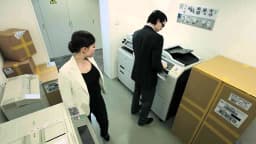
Sony's 'Showering Xperience' ambient campaign in Singapore staged outdoor public showers to demonstrate the water resistance of the Xperia Go and Xperia acro S

Sony Xperia Go and Acro S Put Water Resistance to the Test in Singapore
Sony's 'Showering Xperience' is a September 2012 ambient campaign created in Singapore by Essential Werkz to demonstrate the water resistance of the Sony Xperia Go and Xperia acro S, using outdoor public shower installations where models used the phones live in the shower to prove the devices could handle real water exposure.
The campaign launched at a pivotal moment for Sony Mobile in the Singapore market. Both devices had been announced globally on 31 May 2012, and the brand needed a way to translate hardware specifications into visceral, street-level conviction for consumers who had little reason to trust a smartphone near water. Rather than rely on print claims or laboratory footage, the team at Essential Werkz chose an ambient format — a medium capable of collapsing the distance between product promise and lived experience. The result was a public installation that invited passersby in Singapore to witness real people, in real showers, using their phones as though the scenario were entirely ordinary.
The twin creative hooks anchoring the execution were the slogans 'tweeting in the shower' and 'facebooking in the shower' — phrases that made the product's water resistance immediately legible in the language of everyday social behaviour rather than engineering specifications. By rooting the demonstration in habits that Singapore's smartphone-using public already recognised, the campaign converted a technical differentiator into a culturally resonant proposition. The Xperia Go was positioned as the smaller, more rugged model in the range, while the Xperia acro S offered a 4.3-inch 720p display, a 12-megapixel camera, NFC capability, and PlayStation certification, according to gsmarena.com. Together, the two devices gave Sony a credible water-resistance story across two distinct consumer profiles, and 'Showering Xperience' gave that story a stage.
Sony entered the Singapore ambient advertising space in 2012 with a clear strategic read: product differentiation in the smartphone category required proof, not persuasion. The global smartphone market was undergoing rapid expansion at the time, with global shipments estimated at between 653 and 712 million units in 2012, representing year-on-year growth of between 40 and 44 percent depending on the research firm, according to phys.org. Within that crowded field, Samsung held the largest global smartphone market share at between 29 and nearly 40 percent, according to appleinsider.com, while Apple followed closely behind. For Sony, carving out meaningful share in Singapore required a message that neither of those dominant players was owning at the time.
Water resistance was precisely that message. While Samsung and Apple were competing on screen quality, ecosystem depth, and camera performance in 2012, Sony Mobile chose to elevate durability and lifestyle adaptability as its defining axis. The 'Showering Xperience' ambient campaign operationalised that positioning by making the product's most unexpected capability impossible to dismiss. Consumers who might scroll past a magazine advertisement or ignore a billboard could not easily ignore a person standing in an outdoor shower, phone in hand, posting to Facebook.
The choice of an ambient format was itself a strategic signal. Singapore's urban density and high pedestrian traffic in commercial zones made a public installation a highly efficient vehicle for earned attention. The campaign also arrived at a moment when social media sharing of surprising real-world events was becoming a primary amplification channel — meaning the installation carried the structural potential to extend well beyond its physical footprint. Essential Werkz, led by founder and managing director Roger Wang, built the campaign around this logic of demonstrated truth rather than stated claim.
Essential Werkz constructed a physical outdoor public shower installation in Singapore as the central creative mechanism of the campaign. Models were engaged to stand inside operational shower units while actively using the Sony Xperia Go and Xperia acro S — browsing, posting, and demonstrating the devices in running water in full public view. The scenario was not simulated or implied; the phones were wet, the models were wet, and the interaction was live, making the water resistance claim self-evident to anyone who witnessed it. The campaign's single documented media asset captures this installation, presenting the execution as both a product demonstration and a piece of experiential theatre designed to generate conversation.
The creative language of 'tweeting in the shower' and 'facebooking in the shower' gave the installation its verbal anchor. These slogans did not describe the product's specifications — they described a behaviour, one that most smartphone users in Singapore in 2012 would have considered either impossible or irresponsible with any other device. By naming the specific platforms — Twitter and Facebook — rather than speaking abstractly about connectivity, the creative team grounded the proposition in the actual digital habits of the target audience. The specificity sharpened the campaign's relevance considerably.
Production credits for 'Showering Xperience' beyond the agency attribution to Essential Werkz are not publicly documented in available sources. The campaign was created under the direction of the Essential Werkz team, with Roger Wang serving as the agency's founder and managing director. The ambient format, by its nature, placed the creative burden on physical fabrication and scenario design rather than post-production, and in that respect the installation succeeded in making the medium and the message inseparable — a shower demonstrating a shower-proof phone is a closed creative loop that requires no additional explanation.
No verified performance data for the 'Showering Xperience' campaign is publicly available. No trade press reviews have been identified in Campaign, Ad Age, Adweek, The Drum, or Contagious, and no verifiable social media reaction data has been located across Twitter, Reddit, LinkedIn, or YouTube. Accordingly, any assessment of the campaign's impact rests on structural and strategic analysis rather than reported metrics.
Structurally, the campaign demonstrates several properties associated with effective ambient work. The execution is self-contained: the installation communicates the product's core claim without requiring supplementary media or prior brand knowledge. The scenario is inherently shareable — a person using a smartphone inside an operational outdoor shower is a visually arresting image that sits cleanly within the logic of social media circulation that was accelerating in Singapore in 2012. The dual-product focus allowed the campaign to serve two segments simultaneously without diluting its central message, and the slogan architecture translated a hardware specification into everyday social behaviour with notable economy.
The campaign's Clapboard Score of 68 out of 100 reflects this structural competence. The concept is clear, the medium is well-matched to the message, and the ambient format is used purposefully rather than decoratively. The score also acknowledges the campaign's limited documented reach and the absence of a broader media ecosystem to extend the installation's impact. As a single-asset ambient activation, 'Showering Xperience' made a coherent and confident argument for the Xperia Go and Xperia acro S in the Singapore market — the evidence for how widely that argument travelled remains, for now, undocumented.
Sony's 'Showering Xperience' was an ambient campaign launched in Singapore in September 2012. Created by Essential Werkz, it used outdoor public shower installations where models demonstrated the water resistance of the Sony Xperia Go and Xperia acro S by actively using the phones under running water in public spaces.
The campaign featured two devices: the Sony Xperia Go and the Sony Xperia acro S. Both were announced globally on 31 May 2012. The acro S offered a 4.3-inch 720p display and a 12-megapixel camera, according to gsmarena.com, while the Xperia Go was positioned as the smaller, more rugged model.
Essential Werkz, a Singapore-based agency, created the 'Showering Xperience' campaign for Sony. The agency was founded by Roger Wang, who serves as its managing director. The campaign ran as an ambient activation in September 2012, using a live outdoor shower installation to demonstrate Xperia water resistance to the Singapore public.
The campaign used two slogans: 'tweeting in the shower' and 'facebooking in the shower.' These phrases translated the Xperia Go and acro S water resistance specification into recognisable everyday social media behaviour, making the technical product claim immediately legible and personally relevant to smartphone users in Singapore in 2012.
The 'Showering Xperience' campaign holds a Clapboard Score of 68 out of 100. The score reflects strong conceptual clarity and purposeful use of the ambient format, while also acknowledging the campaign's limited documented reach and the absence of a wider media ecosystem to extend the Singapore installation's impact beyond its physical location.
.webp)
Creative Collaboration Platform: The Backbone of Modern Creative WorkWhat is a creative collaboration platform?Clapboard defines a creative collaboration platform as the operational core for today’s distributed creative teams. This is not a collection of digital collaboration tools stitched together; Clapboard’s system


Understanding the Creative Production MarketplaceWhat is a Creative Production Marketplace?Clapboard defines a creative production marketplace as a structured ecosystem where brands, agencies, and production talent converge to execute video, advertising, and branded content at scale. Unlike the legacy agency or freelanREAD FULL ARTICLE

The Urgent Need for a Creative Production Operating SystemWhy Traditional Creative Production Models Break DownClapboard sees the creative production landscape shifting under pressure. Content velocity is no longer a buzzword—it’s a mandate. Modern advertising demands relentless output across dozens of channels, each wREAD FULL ARTICLE