How SPIES Travels Proved the Science of Sunny Holidays
The Solar Charging Dummies is a 2013 film campaign created for Danish travel agency SPIES Travels by Copenhagen agency Robert/Boisen & Like-minded, in which two human-shaped dummies embedded with 6,260 flexible solar cells were placed simultaneously in Denmark and Gran Canaria for seven days to measure, literally, how much solar energy a sunny holiday generates.
SPIES Travels launched the campaign in January 2013, one of the darkest and most commercially critical months in the Danish leisure travel calendar. The timing was deliberate: Danish consumers face a well-documented seasonal trough in mood and motivation during winter, and the campaign reframed a holiday not as a luxury but as a measurable act of self-maintenance. Research cited by the campaign found that approximately one in four Danes experienced winter depression, per reporting cited by campaignsoftheworld.com, and that 58% of Danes expressed a desire to travel to warmer destinations specifically to recharge, as documented by clapboard.com. Those two figures gave the creative strategy its scientific spine.
The campaign's format is a single film asset, classified under the Transport category and produced in Denmark. The dummies, constructed to human proportions and fitted with solar-cell skin capable of capturing and converting sunlight, were deployed as instruments rather than props — their energy readings generating the empirical proof the campaign needed to argue that Gran Canaria delivers measurably more restorative power than a January in Denmark. The work earned a Cannes Lions Silver award in the PR category in 2013, as confirmed by linkedin.com in the professional profile of art director Heinrich Vejlgaard, associated with Robert/Boisen & Like-minded. That recognition placed the campaign among the most awarded pieces of travel advertising produced in Denmark that year. Clapboard rates the campaign 74 out of 100.
SPIES Travels identified a specific and underserved psychological territory in the Danish leisure travel market. The brand recognised that price-led messaging dominated the competitive landscape, with operators such as Tjæreborg and Apollo relying on destination photography and discount mechanics to drive January bookings. Rather than compete on those terms, Robert/Boisen & Like-minded pursued a strategy grounded in a behavioural truth: Danes do not merely want warmth, they need it, and that need is physiologically real.
The strategic rationale drew directly on the statistic, cited by campaignsoftheworld.com, that roughly one in four Danes experienced winter depression. This was not a niche condition but a mass-market one, and framing SPIES Travels as the brand that takes that condition seriously — seriously enough to run a seven-day scientific experiment — repositioned the brand from holiday seller to health advocate. The 58% figure, noting that the majority of Danes sought warmer destinations to recharge, provided further justification, as documented by clapboard.com.
In Denmark, the online travel booking environment was evolving rapidly in 2013. Global online travel sales reached approximately US$590 billion in 2013, representing around 27% of total travel and tourism sales, according to research sourced via Tiac-Aitc Ca. While no Denmark-specific market-share data is publicly available for this period, the global trend toward digitally influenced leisure decisions made a shareable film campaign a structurally sound media choice. The Solar Charging Dummies was built to travel online and generate earned media, reducing dependence on paid placement. The PR category entry at Cannes Lions confirms that this earned-media logic was central to how the campaign was judged and positioned.
Laurits Munch-Petersen directed The Solar Charging Dummies for production company Gobsmack, with Jan Pallesen serving as director of photography. The film's creative challenge was substantial: a scientific experiment involving inanimate dummies needed to generate narrative tension, visual interest, and enough wit to function as entertainment rather than demonstration.
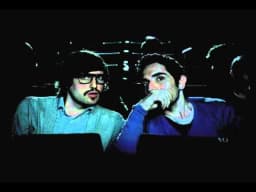
The solution was montage logic applied to documentary material. The two dummies — named Søren and Ulrik in the film, performed by the duo listed in production credits as the main cast — were placed in their respective environments and filmed undergoing a series of robotic endurance and stamina tests over seven days, as reported by adverblog.com. The juxtaposition of the grey Danish winter against the sunlit Gran Canaria landscape did not require augmentation; the camera simply recorded the contrast, and the solar-cell energy differential made the argument arithmetically.
Creative director Michael Robert and copywriter James Godfrey shaped the campaign's voice, keeping the tone dry and observational rather than promotional, which allowed the scientific conceit to carry its own credibility. Art directors Anders Kure and Heinrich Vejlgaard oversaw the visual construction of the dummies themselves — objects that needed to read as both technically convincing and faintly absurd, a tonal balance that the production achieved. Digital director Mathias Birkvad managed the online distribution architecture, and producers Emilie Brandt and Christina Erritzøe coordinated the dual-location shoot across Denmark and Gran Canaria. The result is a film that sits at the intersection of branded content, PR stunt, and science communication — a combination that the Cannes Lions jury recognised with a Silver in the PR category in 2013, as confirmed by linkedin.com.
No verified sales lift, market-share change, revenue result, or brand-tracking shift for The Solar Charging Dummies is publicly available. The campaign's measurable public record rests on its awards performance and the structural logic of its design.
The Cannes Lions Silver in the PR category in 2013 is the campaign's most verifiable external validation, as confirmed through linkedin.com via the professional profile of Heinrich Vejlgaard and further corroborated by lovethework.com. That category classification is itself analytically useful: a PR Lions entry is judged on its capacity to generate coverage, conversation, and third-party credibility at scale — not on the quality of a 30-second spot. The Solar Charging Dummies was built as a media-generating object, and its recognition in that category confirms the jury found the mechanism sound.
Structurally, the campaign demonstrates several effectiveness indicators that do not require proprietary data to assess. The seven-day dual-location experiment produced a verifiable result — a solar energy differential between Denmark and Gran Canaria — giving journalists and consumers something concrete to report and share. The 6,260-cell dummy construction, documented by clapboard.com, gave photographers and videographers a visually distinctive subject. And the statistic that one in four Danes experienced winter depression, per research cited by campaignsoftheworld.com, grounded the emotional appeal in a population-level truth. Together these elements suggest a campaign engineered for earned reach rather than paid delivery, which is consistent with both the PR Lions entry and the January launch window in Denmark.
The Solar Charging Dummies was a 2013 film campaign for Danish travel agency SPIES Travels. Created by Robert/Boisen & Like-minded, it placed two solar-cell-covered dummies in Denmark and Gran Canaria for seven days to measure how much more solar energy a sunny holiday generates, as documented by clapboard.com.
Each dummy in The Solar Charging Dummies was constructed using 6,260 flexible solar cells, according to clapboard.com. The cells covered the full surface of the human-shaped figures, enabling them to capture and convert sunlight across both the Danish winter environment and the Gran Canaria location simultaneously over seven days.
The Solar Charging Dummies won a Silver Lion in the PR category at the 2013 Cannes Lions International Festival of Creativity. The award is confirmed through linkedin.com via the professional profile of art director Heinrich Vejlgaard of Robert/Boisen & Like-minded, and further corroborated by lovethework.com.
Laurits Munch-Petersen directed The Solar Charging Dummies, with Jan Pallesen as director of photography. Production was handled by Gobsmack. The campaign was created by Copenhagen agency Robert/Boisen & Like-minded, with Michael Robert as creative director and James Godfrey as copywriter, as documented by clapboard.com.
The campaign was built on research showing approximately one in four Danes experienced winter depression, per campaignsoftheworld.com, and that 58% of Danes wanted to travel to warmer destinations to recharge, as documented by clapboard.com. Robert/Boisen & Like-minded used these findings to position a SPIES Travels holiday as a measurable health remedy rather than a discretionary purchase.
The Solar Charging Dummies by SPIES Travels holds a Clapboard Score of 74 out of 100. The rating reflects the campaign's creative ingenuity, its PR Lions recognition at Cannes 2013, and its structurally sound earned-media design, balanced against the absence of publicly verified performance data on sales or brand-tracking outcomes.
.webp)
Creative Collaboration Platform: The Backbone of Modern Creative WorkWhat is a creative collaboration platform?Clapboard defines a creative collaboration platform as the operational core for today’s distributed creative teams. This is not a collection of digital collaboration tools stitched together; Clapboard’s system


Understanding the Creative Production MarketplaceWhat is a Creative Production Marketplace?Clapboard defines a creative production marketplace as a structured ecosystem where brands, agencies, and production talent converge to execute video, advertising, and branded content at scale. Unlike the legacy agency or freelanREAD FULL ARTICLE

The Urgent Need for a Creative Production Operating SystemWhy Traditional Creative Production Models Break DownClapboard sees the creative production landscape shifting under pressure. Content velocity is no longer a buzzword—it’s a mandate. Modern advertising demands relentless output across dozens of channels, each wREAD FULL ARTICLE