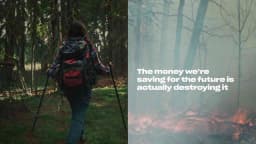
The Climate Reality Project's 2014 Pro Snow film stars Mark Abma, Michelle Parker, and Doug Stoup to connect climate change with the future of winter sports.

The Climate Reality Project Enlists Pro Athletes to Champion Snow
The Climate Reality Project's "Mark Abma, Michelle Parker, and Doug Stoup are Pro Snow" is a 2013 public service film, published in the United States in April 2014, that enlists three professional winter sports athletes to argue the case for climate action by framing the natural environment itself as a stakeholder in the conversation.
Created by Crispin Porter + Bogusky, the campaign directs viewers to iamprosnow.org and positions its three featured athletes — professional snowboarder Mark Abma, freeskier Michelle Parker, and polar guide and expedition skier Doug Stoup — as credible, emotionally invested witnesses to the degradation of winter conditions. Each athlete's livelihood depends on snow, making their advocacy neither abstract nor detached. The campaign's central creative conceit asks not what the athletes think of snow, but what snow thinks of them, inverting the conventional celebrity endorsement and lending the film a wry, disarming tone that sets it apart from traditional environmental advocacy.
The film adopts a documentary and social experiment format, foregrounding authenticity over production spectacle. In the United States, where winter sports culture intersects with outdoor recreation and environmental stewardship, this choice of voice and format speaks directly to audiences already predisposed to care about mountain ecosystems. The campaign carries a Clapboard Score of 63 out of 100, reflecting its focused creative approach within the public service category. Its geographic and cultural anchor is firmly the United States market, where the intersection of elite athlete culture and climate concern gives the message immediate relevance.
The Climate Reality Project grounds the Pro Snow campaign in a consumer insight that separates it from conventional environmental messaging. Professional athletes such as Mark Abma, Michelle Parker, and Doug Stoup carry a form of environmental testimony unavailable to scientists or policymakers: they perform their sport in direct, season-to-season contact with the natural systems that climate change is altering. Their credibility is experiential, not institutional, and that distinction is the campaign's strategic engine.
The documentary and social experiment format reinforces this logic. Rather than presenting data or policy arguments, the film invites viewers into a scenario — asking what snow itself would say about those who depend on it — that generates emotional engagement through narrative rather than persuasion. This approach reflects a broader strategic reality facing climate communicators in the United States in 2013 and 2014. According to reporting by Grist, environmental and climate groups spent at least $85 million in 2014 U.S. advocacy efforts, yet the category remained fragmented and resource-constrained, with organisations such as 350 Bay Area allocating approximately ten percent of available funds to television buys, as reported by Common Dreams. Against that backdrop, earned attention through compelling storytelling represented a cost-effective alternative to paid media saturation.
The campaign also reflects the institutional continuity of The Climate Reality Project's relationship with Crispin Porter + Bogusky. As documented by Adpulp, advertising executive Alex Bogusky, formerly of CPB, was centrally involved in The Climate Reality Project's 2011 rebranding and the launch of its global "24 Hours of Reality" live-streamed event. The Pro Snow film extends that creative partnership into athlete-led territory, broadening the organisation's audience beyond its established base of climate-engaged viewers toward the winter sports community in the United States.
Crispin Porter + Bogusky structures the Pro Snow film around a single, laterally conceived premise. Mark Abma, Michelle Parker, and Doug Stoup are presented not as spokespeople delivering a scripted message but as subjects of an inquiry — the inquiry being what snow, personified as a sentient entity, would have to say about the people who have built their lives around it. This reversal of the typical testimonial format is the film's defining creative move, replacing advocacy rhetoric with something closer to absurdist observation.
On screen, the film follows its three athlete subjects in conversation about their relationship with snow and with winter landscapes, interspersed with the campaign's central comic and philosophical conceit: that snow has its own perspective on these interactions. The footage grounds the athletes in their natural environment, emphasising the physical and emotional reality of a life spent on mountain terrain. The tone is documentary in texture — handheld in sensibility, candid in delivery — while the social experiment framing introduces enough structural playfulness to hold viewer attention beyond the opening seconds.
Production credits for the "Mark Abma, Michelle Parker, and Doug Stoup are Pro Snow" campaign are not publicly documented beyond the agency attribution to Crispin Porter + Bogusky, whose Boulder, Colorado operation was the creative originator of the work. The film was submitted to the archive in April 2014, with the production year recorded as 2013, suggesting a campaign built, tested, and distributed across a period that coincided with The Climate Reality Project's broader push to diversify the faces and voices associated with climate communication in the United States.
The Climate Reality Project's Pro Snow film recorded 5,507 views and 24 likes at the time of archiving, with no comments logged, according to the campaign's archived performance data. No verified awards are on record at Cannes Lions, the Effies, The One Show, or D&AD for this campaign, and no indexed reviews from Campaign, Ad Age, Adweek, The Drum, or Contagious have been identified. These figures situate the film as a targeted piece of climate advocacy rather than a broadly distributed media event.
Structurally, however, the campaign demonstrates several characteristics associated with durable public service communication. The use of Mark Abma, Michelle Parker, and Doug Stoup — athletes whose professional identities are inseparable from snow — creates an intrinsic credibility that generic environmental messaging cannot replicate. The documentary format removes the visual signatures of advertising, lowering the resistance that audiences in the United States typically bring to cause-based content. The iamprosnow.org call to action provides a measurable conversion point beyond passive viewing, extending the campaign's functional life past the film itself.
The campaign also arrives at a moment of institutional credibility for The Climate Reality Project. As noted by the Obama White House archives, the organisation had established itself as a significant voice in United States climate communication by 2014, lending the Pro Snow film a broader reputational platform than its direct view count alone would suggest. The Clapboard Score of 63 out of 100 reflects a campaign that executes its creative strategy with clarity and coherence, even as its measurable reach remained modest relative to larger-budget public service initiatives of the same period.
Mark Abma, Michelle Parker, and Doug Stoup are professional winter sports athletes featured in The Climate Reality Project's Pro Snow film. Abma is a professional snowboarder, Parker a freeskier, and Stoup a polar guide and expedition skier. All three lend the campaign firsthand credibility because their livelihoods depend directly on snow and winter conditions.
The Pro Snow campaign is a 2013 public service film by The Climate Reality Project that uses professional athletes to argue for climate action. It personifies snow as a character with a perspective on the athletes who depend on it, directing viewers to iamprosnow.org to deepen engagement beyond the film itself.
Crispin Porter + Bogusky created the Pro Snow film for The Climate Reality Project. The Boulder, Colorado agency had an established relationship with the organisation, rooted in Alex Bogusky's involvement in The Climate Reality Project's 2011 rebranding, as documented by Adpulp. The film was published in the United States in April 2014.
The Pro Snow campaign uses a documentary and social experiment format to prioritise authenticity over traditional advertising rhetoric. This approach reflects the strategic insight that United States audiences respond more readily to real-life narratives and credible voices than to abstract advocacy, making athlete-led storytelling a more effective vehicle for climate communication.
The Pro Snow campaign recorded 5,507 views and 24 likes based on archived performance data, with no verified awards from major industry bodies. No independent reviews from trade publications have been identified. The campaign's structural strength lies in athlete credibility, documentary authenticity, and a direct call to action at iamprosnow.org rather than in broad reach metrics.
The Climate Reality Project was introduced by Al Gore in July 2011, replacing the Alliance for Climate Protection, according to records documented at climaterealityproject.org. The Pro Snow film extends the organisation's creative strategy into athlete-led advocacy, building on the credibility established through its earlier "24 Hours of Reality" global live-streamed event and its ongoing partnership with Crispin Porter + Bogusky.
.webp)
Creative Collaboration Platform: The Backbone of Modern Creative WorkWhat is a creative collaboration platform?Clapboard defines a creative collaboration platform as the operational core for today’s distributed creative teams. This is not a collection of digital collaboration tools stitched together; Clapboard’s system


Understanding the Creative Production MarketplaceWhat is a Creative Production Marketplace?Clapboard defines a creative production marketplace as a structured ecosystem where brands, agencies, and production talent converge to execute video, advertising, and branded content at scale. Unlike the legacy agency or freelanREAD FULL ARTICLE

The Urgent Need for a Creative Production Operating SystemWhy Traditional Creative Production Models Break DownClapboard sees the creative production landscape shifting under pressure. Content velocity is no longer a buzzword—it’s a mandate. Modern advertising demands relentless output across dozens of channels, each wREAD FULL ARTICLE