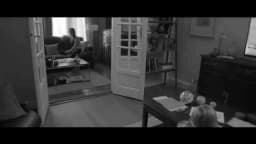
WildAid's Last Days campaign, directed by Kathryn Bigelow and created by Preacher, premiered at the 2014 New York Film Festival to expose the ivory trade's

WildAid Last Days Puts Elephant Poaching on the Film Festival Stage
WildAid's "Last Days" is a three-minute animated public service film, created by Preacher and directed by Kathryn Bigelow, that confronts the illegal ivory trade and its documented links to terrorist financing — premiering at the 52nd New York Film Festival in September 2014 before a wider digital release across the United States in December of that year.
The campaign operates at an unusual intersection of documentary sensibility and animated form. Rather than relying on live footage of poaching violence, the film uses animation to convey the brutal economics of the ivory trade, tracing the chain from elephant herds in Africa through to the revenue streams that fund organized armed groups. This creative decision was deliberate and principled: the film argues that the act of purchasing ivory is not a culturally neutral transaction but a link in a chain of harm. A dedicated campaign website, lastdaysofivory.com, extended the film's reach in the United States and beyond, giving audiences a platform to act on what the film presented.
The world premiere, as announced by the Film Society of Lincoln Center, took place on September 27, 2014, and was followed immediately by a panel discussion titled "The Crisis in Elephant Poaching." That programming decision — placing a PSA inside a major film festival and pairing it with expert dialogue — positioned "Last Days" as a cultural and journalistic event rather than a conventional advertising unit. For WildAid, the New York Film Festival served as a launch platform that conferred editorial credibility on the campaign's core argument. The Clapboard Score for "Last Days" is 79 out of 100.
WildAid built "Last Days" on a consumer insight that distinguishes it from most wildlife conservation messaging: demand, not supply, is the decisive variable in the illegal ivory trade. By addressing the buyer rather than the poacher, the campaign targets the economic root of the crisis. This demand-side logic has long defined WildAid's strategic identity, and "Last Days" applies it with particular urgency by naming the downstream consequences of purchase decisions — specifically, the documented role of ivory revenue in financing armed violence across Africa.
The choice to premiere the film in the United States, at one of the country's most prominent film festivals, reflects a deliberate targeting of culturally influential audiences. The United States represents both a significant ivory consumption market and a country whose policy environment and donor base materially affect international wildlife enforcement. By framing the ivory trade as a national security concern as well as an environmental one, "Last Days" expands the coalition of people for whom the issue is relevant. Scott Z. Burns, whose background in screenwriting informed the film's narrative construction, gave the campaign the structural discipline of a short documentary argument rather than a conventional emotional appeal.
WildAid's broader media strategy provides context for the ambition behind the campaign. According to wildaid.org, the organisation reported that its campaigns reached up to one billion viewers across Asia through more than one hundred media partners, including major broadcasters CCTV and VTV. According to wildaid.org, WildAid's donor support of approximately five point three million dollars leveraged more than one hundred ninety-seven million dollars in donated media — a ratio that underscores how strategically the organisation deploys each creative asset it produces. "Last Days" was built to function as a high-prestige centrepiece capable of anchoring that kind of amplified distribution.
Kathryn Bigelow directed "Last Days." Her involvement brought the weight of a filmmaker known for immersive, morally serious work about violence and its institutional contexts, and her creative reasoning for the project was explicit. As reported by The Boston Herald on September 28, 2014, Bigelow stated that it would have been impossible for her to sit in a cutting room and look at live footage of an animal suffering day after day. That statement is not merely personal; it is the conceptual key to the film's form. Animation became the chosen language precisely because the subject matter demanded a mode of representation that could be unflinching in argument without being exploitative in image.
Scott Z. Burns served as copywriter and treatment collaborator, bringing the structural rigour of long-form screenwriting to a three-minute format. The combination of Bigelow's directorial authority and Burns's narrative architecture gave "Last Days" a density of argument unusual in public service filmmaking. Annapurna Pictures handled production, lending the project the infrastructure of a feature-film operation. Samuel Michlap served as animation designer, shaping the film's visual language, while Paul Ottison worked as sound editor — the two craft roles that in an animated film carry the weight that cinematography and production design carry in live action.
The on-screen execution presents the journey of ivory from living elephant to finished object, using animation to map the economic and human chain that connects a consumer purchase to the killing of an animal and the financing of violence. The film does not sentimentalise its subject. It follows a logic of evidence, moving through the trade's geography and its consequences with the economy of a well-constructed documentary argument compressed into three minutes. The campaign website functioned as an extension of that argument, inviting audiences in the United States to move from witness to participant.
No comprehensive verified performance data for the United States digital rollout of "Last Days" is publicly available. What the available record does confirm is significant for a PSA operating in the public interest category. The world premiere at the 52nd New York Film Festival, as announced by the Film Society of Lincoln Center, generated the kind of editorial coverage and curatorial legitimacy that paid media cannot replicate. The panel discussion that followed the screening, titled "The Crisis in Elephant Poaching," placed the film within a journalistic and policy frame that extended its argument beyond the runtime of the film itself.
On the question of digital distribution, the campaign accumulated more than five hundred fifty thousand views on Youku within the first two days of release in China, a figure that speaks to the cross-market relevance of the ivory trade subject and to WildAid's established distribution infrastructure in Asia. According to wildaid.org, WildAid reported one hundred ninety-seven point eight million dollars in audited donated media from partners in China and Vietnam in 2014, a figure that contextualises the scale of the ecosystem into which "Last Days" was released.
Structurally, the campaign demonstrates the effectiveness of positioning a public service film as a cultural event. The film festival premiere, the named creative talent, the production company association with Annapurna Pictures, and the dedicated campaign website each functioned as amplification mechanisms — giving media, advocates, and policy audiences a reason to engage with the film on terms beyond its category classification. For WildAid, that structural design is itself a measurable output: a three-minute animated film that entered the public record as a New York Film Festival premiere occupies a different position in cultural memory than a campaign that launches solely through paid digital channels.
"Last Days" is a three-minute animated public service film confronting the illegal ivory trade. Created by Preacher and directed by Kathryn Bigelow, it argues that consumer ivory purchases finance armed violence in Africa, connecting individual buying decisions to systemic harm across an international supply chain.
Kathryn Bigelow directed "Last Days" for WildAid. Bigelow cited her inability to work with live footage of animal suffering as the reason animation was chosen as the film's format, a creative decision reported by The Boston Herald in September 2014. Scott Z. Burns served as copywriter and treatment collaborator.
"Last Days" premiered at the 52nd New York Film Festival on September 27, 2014. The Film Society of Lincoln Center announced the world premiere, which was followed by a panel discussion titled "The Crisis in Elephant Poaching" featuring experts and campaign collaborators.
Annapurna Pictures served as the production company for "Last Days." Animation design was handled by Samuel Michlap and sound editing by Paul Ottison. The campaign was created by agency Preacher and published in the United States in December 2014 as a digital public service film.
"Last Days" accumulated more than five hundred fifty thousand views on Youku within its first two days of availability in China. This figure reflects WildAid's established distribution reach in Asia, where the organisation reported campaigns reaching up to one billion viewers through more than one hundred media partners, according to wildaid.org.
The WildAid "Last Days" campaign holds a Clapboard Score of 79 out of 100. The score reflects the campaign's creative ambition, the calibre of its named collaborators including director Kathryn Bigelow and production company Annapurna Pictures, and its high-profile premiere at the New York Film Festival in 2014.
.webp)
Creative Collaboration Platform: The Backbone of Modern Creative WorkWhat is a creative collaboration platform?Clapboard defines a creative collaboration platform as the operational core for today’s distributed creative teams. This is not a collection of digital collaboration tools stitched together; Clapboard’s system


Understanding the Creative Production MarketplaceWhat is a Creative Production Marketplace?Clapboard defines a creative production marketplace as a structured ecosystem where brands, agencies, and production talent converge to execute video, advertising, and branded content at scale. Unlike the legacy agency or freelanREAD FULL ARTICLE

The Urgent Need for a Creative Production Operating SystemWhy Traditional Creative Production Models Break DownClapboard sees the creative production landscape shifting under pressure. Content velocity is no longer a buzzword—it’s a mandate. Modern advertising demands relentless output across dozens of channels, each wREAD FULL ARTICLE