

24 feb
The Clapboard Editorial Team brings readers tutorials and guides on producing video content at scale, as well as articles on independent filmmaking of all kinds. We'll soon have guides on everything from content strategy, storytelling, direction, cinematography, film theory, gig economy etc The articles on this blog will be based on studying the best creative minds out there, as well as out-in-the-trenches experience.
adf
2. Types of AI Video Generators
The advent of Artificial Intelligence (AI) has been a game-changer in many industries, and video creation is no exception. With a range of AI video generators now available, creating high-quality videos has never been easier. Let's delve into the different types of AI video generators and how they're revolutionizing video creation.
Text-to-Video AI Generators
Imagine being able to convert a written script into a captivating video in just a few clicks. This is what text-to-video AI generators offer. Utilizing Natural Language Processing (NLP) and advanced AI algorithms, these tools can analyze a text script and generate corresponding video clips, images, and even voiceover. This means you can produce engaging content at a fraction of the time and cost it would take using traditional methods.
Video Editors with AI Capabilities
Next up are video editors equipped with AI capabilities. These tools can automate many of the mundane tasks associated with video editing, such as cutting and trimming clips, adjusting lighting and color, and syncing audio. Some even have the ability to analyze the content of your videos and suggest edits that would enhance their impact and engagement. The result? High-quality videos that resonate with your audience, produced with minimal effort and expertise.
Video Productivity Platforms
Finally, we have video productivity platforms that combine traditional video editing tools with AI features. These platforms offer a comprehensive solution for video creation, allowing you to storyboard, script, shoot, edit, and share your videos all from one place. The AI capabilities can assist with tasks like content planning, shot composition, and post-production, making the video creation process more efficient and streamlined.
Each type of AI video generator has its unique features and advantages, and the best choice for you depends on your specific needs and goals. Whether you're a professional video creator looking for ways to streamline your workflow, or a business owner wanting to create engaging video content for your brand, there's an AI video generator out there for you.
In conclusion, AI video generators are a powerful tool in the video creation process. They can save time, reduce costs, and even enhance the quality and impact of your videos. As AI technology continues to advance, we can expect to see even more innovative and effective tools in this space.
3. How AI Streamlines Video Production Workflows
Artificial Intelligence (AI) is making waves in the video production industry. It's not only about automating tasks but also about making the whole process more efficient and cost-effective. In this section, we will explore how AI is streamlining video production workflows and leading to substantial savings for companies.
Automation of tasks like scene detection and color correction for faster production
AI is quite efficient at automating routine tasks in video production. One of the ways it does this is through scene detection. AI algorithms can analyze a video and detect different scenes, helping editors quickly navigate through the content. This makes the editing process quicker and more efficient.
Color correction is another task that AI can handle efficiently. AI tools can analyze each frame and adjust the colors to ensure consistency throughout the video. This not only improves the video's aesthetic quality but also significantly reduces the time spent on this labor-intensive task.
80% reduction in time and budget for companies using AI tools
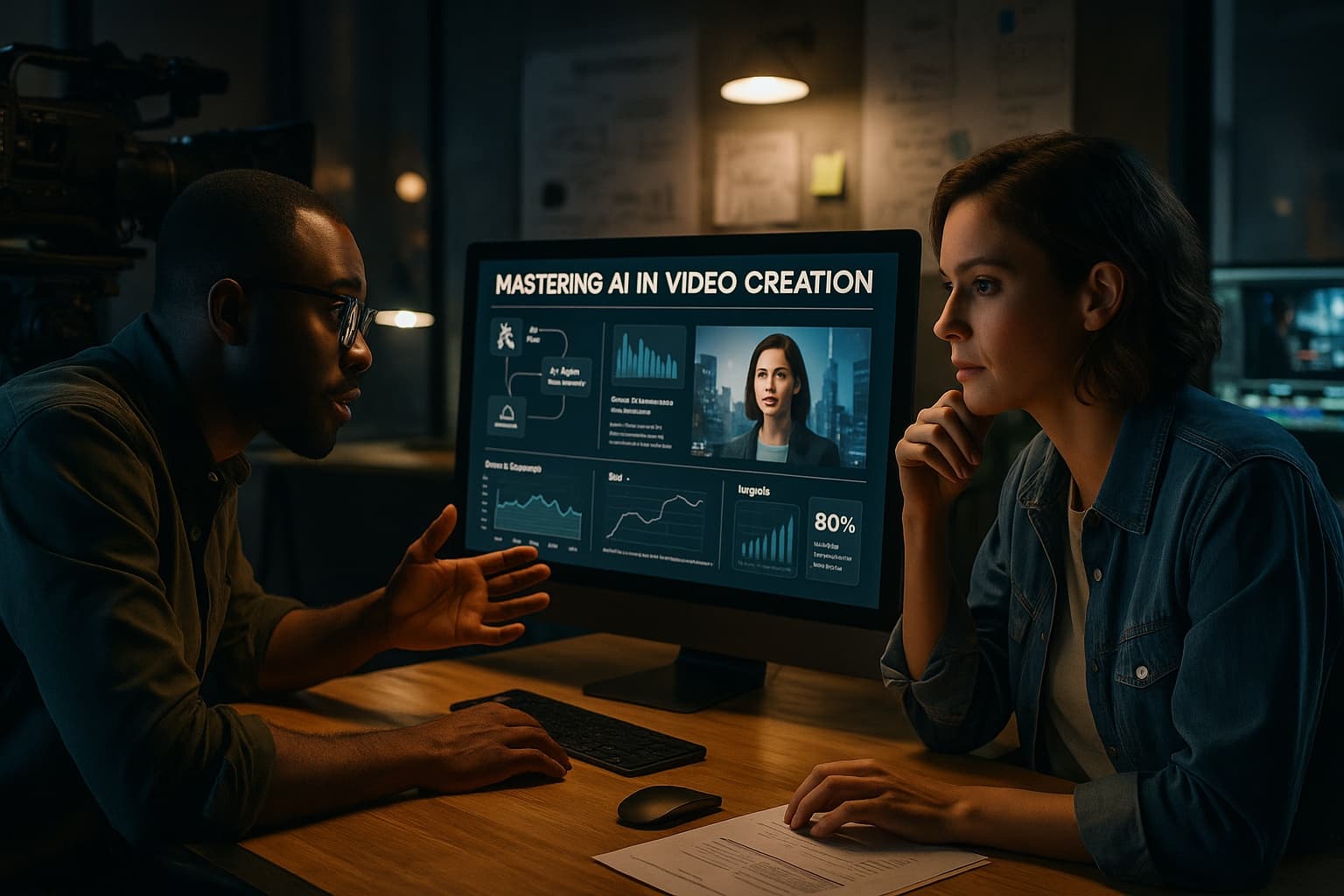
Companies that have embraced AI in their video production workflows have reported a significant decrease in both time and budget. In fact, some have reported up to an 80% reduction in time spent on video production. This significant decrease in production time results in substantial cost savings, especially for companies producing a large volume of videos.
Similarly, AI tools can help reduce the need for expensive equipment or software, further cutting down on production costs. By leveraging AI, companies can produce high-quality videos faster and at a fraction of the traditional cost.
Enhanced efficiency and cost-effectiveness leading to significant savings
Efficiency and cost-effectiveness are two of the main benefits of using AI in video production. By automating routine tasks, AI allows video editors to focus more on creative aspects of the production process. This not only improves the quality of the videos but also makes the whole process more efficient.
Moreover, AI tools can help companies make the most of their video production budget. By reducing the time and resources needed for video production, AI allows companies to produce more videos without increasing their budget. This can lead to significant savings in the long run.
In conclusion, AI is revolutionizing video production workflows by automating routine tasks, reducing production time and costs, and enhancing overall efficiency. As more and more companies embrace AI, these benefits will only continue to grow, further transforming the video production industry.
4. Insights on AI in Video Creation
Artificial Intelligence (AI) has significantly revolutionized the video creation process, making it more efficient, cost-effective, and accessible for everyone. Let's delve deeper into the role of AI in making videos more engaging, personalized, and interactive.
AI and Engaging Content Creation
AI algorithms can analyze a large volume of data to understand viewer preferences, likes, dislikes, and viewing habits. This information helps in crafting videos that are more likely to captivate the audience. Moreover, AI can automate the video editing process, allowing creators to focus more on the content and less on the technical aspects of video creation.
Personalization of Videos with AI
The advent of AI in video creation has made personalization a reality. AI can customize videos based on user data, providing a unique and individualized experience for each viewer. This not only enhances user engagement but also significantly improves conversion rates for businesses.
Interactive Videos Through AI
AI technology has made interactive video content possible. Interactive videos allow viewers to participate actively rather than passively watching the content. AI can track viewer interactions and modify the video content in real-time based on viewer inputs. This level of interactivity can significantly increase viewer engagement and retention rates.
AI and Accessibility in Video Creation
AI has also made video creation accessible to everyone, irrespective of their technical knowledge. With AI-powered video creation tools, anyone can create high-quality, professional videos without any prior experience in video editing or production. This democratization of video creation has led to a surge in user-generated content, further expanding the digital content landscape.
AI and Data-Driven Decision Making
AI allows for data-driven decision making in video creation. With AI, creators can analyze viewer engagement metrics in real-time and modify their content strategy accordingly. This data-driven approach helps in creating content that resonates with the audience, leading to increased viewer engagement and brand loyalty.
In conclusion, AI in video creation is not just about automation and efficiency. It is about creating engaging, personalized, and interactive videos that resonate with the audience. As AI technology continues to evolve, we can expect to see more innovative applications in video creation, further transforming the digital content landscape.
5. Impact of AI on Brand Communication
Artificial Intelligence is revolutionizing the way brands communicate with their target audience. By leveraging AI-powered video creation, brands can now tell compelling stories more efficiently and effectively.
Enhancing Brand Storytelling through AI-Powered Video Creation
Storytelling is an integral part of brand communication. It helps brands connect with their audience on an emotional level. With AI-powered video creation, brands can now create high-quality videos that tell their stories in the most engaging way.
AI video generators use Natural Language Processing (NLP) to understand the context and sentiment of the story, and then create a video that accurately represents the brand's message. This not only improves the quality of the video, but also ensures that the story resonates with the audience.
Improving Brand Communication Strategies with AI Tools
AI tools can also help brands improve their communication strategies. For instance, AI can analyze the performance of previous videos and provide insights into what works and what doesn't. This can help brands fine-tune their video content strategy and create videos that resonate more with their audience.
Furthermore, AI can automate the process of video editing, allowing brands to create more videos in less time. This can significantly improve the efficiency of their communication strategy, as they can now reach out to their audience more frequently and consistently.
Scalability and Efficiency in Brand Communication through AI
One of the biggest benefits of AI in brand communication is scalability. With traditional video creation, the process is time-consuming and resource-intensive, making it difficult for brands to scale their video content production. However, with AI, brands can create videos at scale without compromising on quality.
AI can automate many of the labor-intensive tasks in video production, such as scene detection and color correction. This not only speeds up the production process, but also ensures that the videos are of high quality, regardless of the volume of production.
In addition, AI can help brands communicate more efficiently. By automating the video creation process, brands can focus more on the strategic aspects of communication, such as content planning and audience engagement. This can lead to more effective and impactful communication strategies.
In conclusion, AI is playing a pivotal role in enhancing brand communication. By leveraging AI-powered video creation, brands can tell compelling stories, improve their communication strategies, and scale their video content production. As AI technology continues to evolve, we can expect it to play an even bigger role in brand communication in the future.
6. Future Trends in AI Video Creation
As we delve into the future trends of AI in video creation, it's important to remember that this field is still evolving, and the possibilities are endless. AI technology is not only becoming more sophisticated but also more accessible, opening up a world of opportunities for video creators. Let's explore some of the exciting trends we can expect to shape the future of video production.
Advancements in AI Technology Shaping the Future of Video Production
The role of AI in video production is expanding rapidly. The technology is now capable of handling more complex tasks, including auto-editing, auto-captioning, and even content creation. For instance, AI algorithms can now analyze raw footage and automatically identify and edit the most engaging parts into a cohesive video. This kind of technological advancement is expected to revolutionize video production, by automating time-consuming tasks and freeing creators to focus more on creative storytelling.
Potential Innovations in AI Video Generators and Editors
AI video generators and editors are also expected to evolve significantly. They may soon be capable of creating high-quality video content from scratch, using only textual input as a guide. Imagine being able to input a script, and the AI tool generates a complete video with appropriate visuals, transitions, and sound effects. This could drastically reduce the time and resources required for video production.
Integration of AI with AR/VR for Immersive Video Experiences
Another exciting trend is the integration of AI with augmented reality (AR) and virtual reality (VR) technologies. AI can enhance these immersive video experiences by making them more interactive and personalized. For example, AI can analyze user behavior and preferences to create AR/VR content tailored to each viewer. This could lead to more engaging and memorable video experiences, thus enhancing the effectiveness of video marketing campaigns.
Also, AI can play a crucial role in making AR/VR content creation more accessible. Currently, creating such content requires specialized skills and equipment. However, with AI, creators might be able to produce high-quality AR/VR videos using basic equipment and software.
In conclusion, the future of AI in video creation looks promising, with the potential to transform the entire video production landscape. As AI technology advances and becomes more accessible, we can expect more innovative applications and more efficient production processes. This could lead to a surge in high-quality video content, thus benefiting both creators and audiences.
Section 7 of our blog post dives into the real-world application of AI in video production. We will explore a few compelling case studies that illustrate how companies have successfully integrated AI into their video production workflows, the impact this has had on their content quality and efficiency, and the lessons they've learned along the way.
Case Study 1: IBM Watson's AI-Powered Film Trailer
IBM's AI platform, Watson, made headlines when it successfully created a trailer for the horror movie "Morgan". With the help of machine learning, Watson analyzed hundreds of horror/thriller movie trailers. It then applied the insights gained to create a trailer that accurately captured the movie's suspenseful vibe. This experiment demonstrated the potential of AI in understanding and replicating human emotional responses.
Case Study 2: Wibbitz's Automated Video Creation
Wibbitz, a text-to-video platform, uses AI to transform written content into engaging video summaries. This technology has been leveraged by publishers like Reuters and USA Today to quickly produce high-quality videos for their digital platforms. With Wibbitz, these companies were able to scale their video production while reducing costs and time spent on manual video editing.
Case Study 3: Adobe's AI-Driven Video Editing
Adobe is a prime example of a company that has integrated AI into its video editing software, Adobe Premiere Pro. With features like Auto Reframe and Color Match, Adobe uses AI to automate tedious editing tasks. This has significantly improved the efficiency of video editors and allowed them to focus on more creative aspects of video production.
These case studies highlight the transformative power of AI in video production. By automating labor-intensive tasks, AI enables companies to streamline their video production workflows and focus on the creative elements that truly engage audiences. Additionally, AI's ability to learn and replicate human emotional responses opens new possibilities for creating content that resonates with viewers on a deeper level.
However, the integration of AI into video production is not without challenges. As we have seen, AI can greatly enhance efficiency and quality, but it still requires human guidance and oversight. The lessons learned from these case studies serve as valuable guidance for other companies looking to harness the power of AI in their video production processes.
In conclusion, the successful implementation of AI in video production can lead to impressive results. It can enhance efficiency, improve content quality, and open up new creative possibilities. But it requires a thoughtful approach that balances the benefits of automation with the need for human creativity and oversight.
8. Challenges and Limitations of AI in Video Creation
As promising as AI in video creation might seem, it's not without its challenges and limitations. While AI offers incredible potential in automating labor-intensive tasks and enhancing video quality, there are still areas where it falls short. Let's delve into some of these challenges and limitations.
Addressing Ethical Considerations in AI-Generated Content
One of the biggest concerns in AI-generated content revolves around ethical considerations. There are questions about the authenticity of AI-generated content, as well as concerns around deepfakes and misinformation. While AI can generate videos from text or pre-existing footage, it can be hard to discern whether the content is genuine or manipulated. This raises issues of trust and credibility, which can significantly impact a brand's reputation. It's therefore crucial for companies to use AI responsibly and transparently, and for regulatory bodies to establish guidelines and measures to prevent misuse.
Challenges in Maintaining Human Touch and Creativity in AI-Driven Videos
Another challenge is maintaining the human touch and creativity in AI-driven videos. While AI is capable of automating tasks and generating content, it lacks the human understanding of context, emotion, and subtlety. For instance, AI might struggle to replicate the unique storytelling techniques that a human video editor might employ, or fail to capture the emotional nuances in a video. This can lead to videos that feel impersonal or lack a distinctive brand voice. Thus, even as AI tools become more sophisticated, the need for human creativity and insight remains indispensable.
Limits of Current AI Technology in Complex Video Editing Tasks
Lastly, despite the advancements in AI, there are still limitations in terms of the complexity of tasks it can handle. AI tools can automate simple tasks such as trimming clips or adjusting colors, but they struggle with more complex tasks such as crafting narratives, adjusting pacing, or creating special effects. These tasks often require human judgment, experience, and creative flair, which AI currently lacks.
In conclusion, while AI offers exciting possibilities in video creation, it's not a magic bullet. Companies need to carefully consider the ethical implications of AI-generated content, find ways to retain the human touch in their videos, and understand the limits of current AI technology. Nevertheless, with continued advancements in AI, we can expect these challenges to diminish over time, paving the way for a future where AI and human creativity work hand in hand to create compelling video content.
9. The Future of AI in Video Creation
As we look ahead, the future of AI in video creation appears to be one of immense potential and exciting possibilities. With constant technological advancements and innovations, the landscape of video production is set to undergo transformative changes.
Potential Advancements and Innovations in AI Video Production
AI is not just about automating repetitive tasks in video production; it's about creating new opportunities for storytelling and brand communication. Future advancements may include AI algorithms capable of understanding and interpreting complex narrative structures, creating engaging and emotionally resonant video content independently.
Imagine AI tools that can read a script, understand the emotional context, and select appropriate visuals, music, and even sound effects to create a video that tells a compelling story. Or AI that can analyze audience reactions in real-time, adjusting the content on the fly to maximize engagement and impact.
Impact of AI on the Democratization of Video Creation
AI is also set to democratize video creation. Advanced video editing tools, once the preserve of professionals, are becoming more accessible thanks to AI. With AI-powered platforms, anyone with a creative idea can produce high-quality videos, reducing the barriers to entry and fostering a culture of creativity and innovation.
AI's ability to automate complex tasks will allow more people to focus on the creative aspects of video creation, making it easier for individuals and small businesses to compete with larger organizations in terms of video quality and production values.
Role of AI in Shaping the Future Landscape of Brand Communication
From a brand communication perspective, AI offers the potential to personalize video content on an unprecedented scale. In the future, AI could enable brands to create bespoke videos tailored to the preferences and behavior of individual users, enhancing engagement and making brand communication more effective and impactful.
Moreover, AI could play a crucial role in analyzing video performance, providing brands with actionable insights to fine-tune their communication strategies. From identifying the best time to post a video to understanding which type of content resonates most with a particular demographic, AI could become an indispensable tool for brand communication.
In conclusion, while AI in video creation is still a rapidly evolving field, its potential to revolutionize the way we create and consume video content is undeniable. As technology continues to evolve and mature, we can look forward to a future where AI not only makes video production more efficient but also opens up new avenues for creativity and personalization.
Conclusion
As we wrap up this comprehensive exploration of AI in video creation, it's clear that this revolutionary technology is not just a passing trend. AI has taken a firm hold in the video production landscape, creating a dynamic shift that's changing the way we create, perceive and utilize videos for brand communication. Its impact is undeniable and the future holds even more potential.
The benefits of AI in video creation are substantial. It's a game-changer for businesses, offering cost-effective solutions, enhancing efficiency, and saving precious time by automating labor-intensive tasks. From text-to-video AI generators to AI-powered video editors, these tools are empowering creators, boosting productivity, and enhancing video quality.
AI is also playing a crucial role in brand communication, enabling brands to tell their stories more effectively and reach their audiences in a more engaging manner. The scalability and efficiency offered by AI are unprecedented, opening up new opportunities for brands to refine their communication strategies.
However, like any other technology, AI is not without its challenges. Ethical considerations, maintaining the human touch in AI-driven videos, and the limitations of current AI technology in complex video editing tasks are some of the obstacles that need to be addressed. But these challenges only pave the way for more innovation and advancements in this space.
The future of AI in video creation looks promising, with potential advancements and innovations on the horizon. The integration of AI with AR/VR for immersive video experiences, the democratization of video creation, and the role of AI in shaping the future landscape of brand communication are all exciting prospects that we can look forward to.
In conclusion, the fusion of AI and video production is a powerful combination that's shaping a new era of brand communication. As we continue to explore and harness the potential of this technology, it's crucial for businesses and creators to stay abreast of these developments and leverage them for their growth and success.
So, whether you're a brand looking to enhance your communication strategy, a video creator seeking to streamline your workflows, or a tech enthusiast curious about the future of AI in video creation, we hope this blog has provided you with valuable insights and sparked your imagination for what's possible.
Let's continue to embrace this exciting journey of AI in video creation, and watch as it unfolds a world of limitless possibilities and innovations.
Do you have more questions or thoughts on AI in video creation? Feel free to reach out. We'd love to hear your insights and continue this conversation.
FAQs
1. What is the role of AI in video creation?
AI plays a significant role in video creation by automating labor-intensive tasks, enhancing video quality, and providing a positive ROI for marketers. It empowers creators by combining human creativity with advanced technology, leading to improved efficiency and cost-effectiveness in video production workflows.
2. What are the types of AI video generators?
There are several types of AI video generators. Text-to-video AI generators use NLP and AI algorithms to convert text into video. Video editors with AI capabilities automate tasks, and video productivity platforms combine traditional tools with AI features for a more streamlined process.
3. How does AI impact brand communication?
AI significantly enhances brand communication by improving storytelling through AI-powered video creation. It allows for scalability and efficiency in brand communication strategies, making it easier for businesses to connect with their target audience effectively and efficiently.
4. What future trends can we expect in AI video creation?
We can anticipate advancements in AI technology that will shape the future of video production. Innovations in AI video generators and editors, and the integration of AI with AR/VR for immersive video experiences are some of the future trends to look out for.
5. Can you provide some examples of successful AI implementation in video production?
Our blog includes various case studies demonstrating successful AI implementation in video production. These companies have leveraged AI for video creation, resulting in improved production workflows and content quality. For detailed examples, please refer to our 'Case Studies' section.
6. What are the challenges and limitations of AI in video creation?
While AI has many benefits, it also presents challenges such as ethical considerations in AI-generated content, maintaining a human touch in AI-driven videos, and limitations in handling complex video editing tasks. However, with continuous advancements in technology, these challenges are being progressively addressed.
7. How will AI shape the future of video creation?
AI has the potential to democratize video creation and shape the future landscape of brand communication. With advancements and innovations in AI video production, creators can expect a more streamlined, efficient, and cost-effective video creation process.
8. What are the benefits of AI-powered video creation for businesses?
AI-powered video creation provides numerous benefits for businesses. These include automation of tasks, improved video quality, and positive ROI. It allows for faster production, leading to significant savings in time and budget. Additionally, it enhances efficiency and cost-effectiveness in video production workflows.
9. How does AI streamline video production workflows?
AI streamlines video production workflows by automating tasks like scene detection and color correction. This leads to faster production times and significant budget savings. With AI tools, companies can experience an 80% reduction in time and budget compared to traditional methods.
10. What are the ethical considerations in AI-generated content?
AI-generated content raises several ethical considerations. These include issues related to authenticity, consent, privacy, and potential misuse. It's important for creators to understand these issues and implement AI responsibly in their video production processes. change



LEAVE A COMMENT
Your email address will not be published.